Tag Archives: africa

Gecko 109 on Safari – Final Episode -Wildlife Encounters at Kruger: Elephants and More by Guest Blogger, Cathy.

Solar Struggles and Starry Nights: Tsendze and Beyond

As I mentioned in our last post, our departure for Tsendze was delayed by a bit of roadside camaraderie. Waldo and Desiré, fellow campers, had car trouble, and Alec offered to help. After a trip to Phalaborwa and some mechanical magic, the comforting roar of Waldo’s engine signalled success. We packed up, said a warm farewell to our new friends, and finally hit the road.

The drive to Tsendze was lovely—clear skies and a gentle warmth that would later climb to a blistering 37°C. We stopped at Mopani Camp to check in, where the ever-friendly ladies at reception greeted us with their usual friendly faces. Tsendze is one of the few Kruger camps where sites are allocated, so after receiving our spot, we drove the eight or so kilometres back to the entrance.

The gates at Tsendze are a bit of a landmark, and as always, Alec did a quick scan of the bush to ensure I wouldn’t become a widow before opening them. We found campsite #5 and were thrilled to see a large tree offering generous shade—much needed, as the heat had become oppressive and there’s no electricity at Tsendze. Our aircon was out of the question, so we relied solely on our 12V system to keep the fridge and lights going.

Once the van was set up and the solar panels laid out to catch what sun they could, we returned to Mopani for a lazy lunch on the deck overlooking Pioneer Dam. The elephants were having a glorious pool party—splashing, playing, and generally making us wish we could join them.

An Elephant Pool Party at Pioneer dam

Back at camp, the afternoon drifted by as we enjoyed the birds and squirrels in the surrounding bush. As evening fell and the heat softened, we settled in with our customary drinks and opted for a simple sandwich supper, still full from lunch and not quite ready to brave the stove.

As tradition goes, Roger popped by to welcome us. He’s a fixture at Tsendze — knowledgeable, kind, and always ready with a story. He apologized for the foot traffic near our site; a nest of barn owls had drawn curious children from across the camp. Roger’s passion for and knowledge of the birds and animals of the area is encyclopaedic, especially when it comes to owls. It’s always a pleasure chatting with him.

Kruger’s bird life felt like a living field guide. We enjoyed watching them in camp and on our drives. There were many different species but there are a few that are our favourites.

A majestic martial eagle
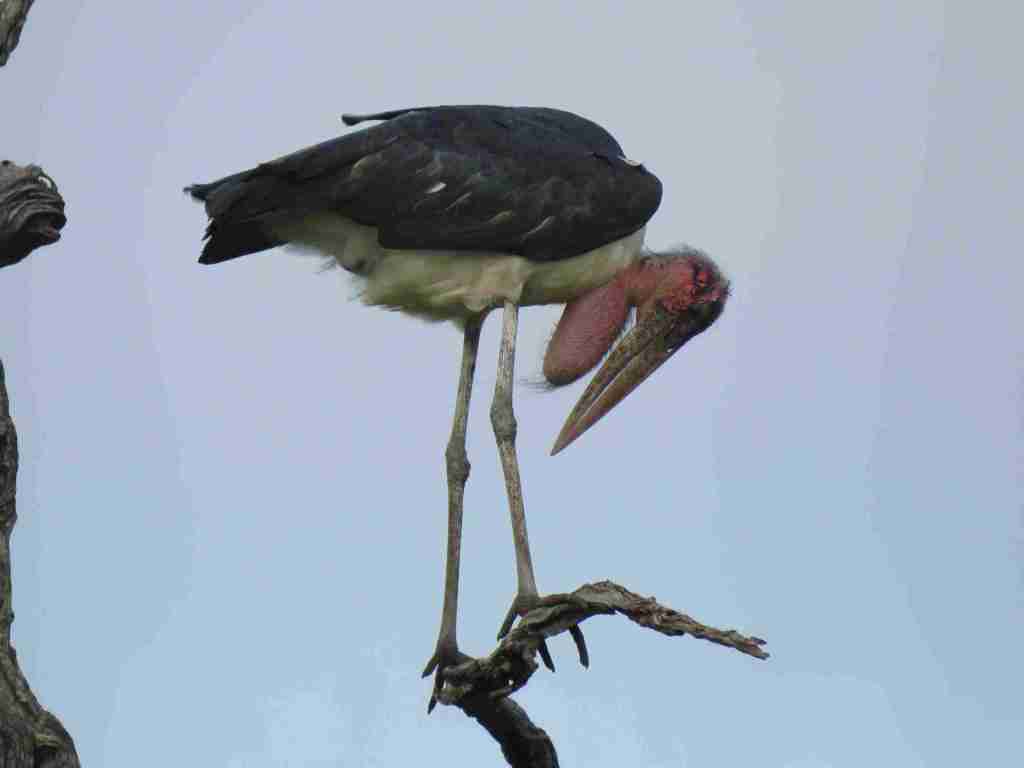
Marabou Storks were at the end of the line when looks were handed out
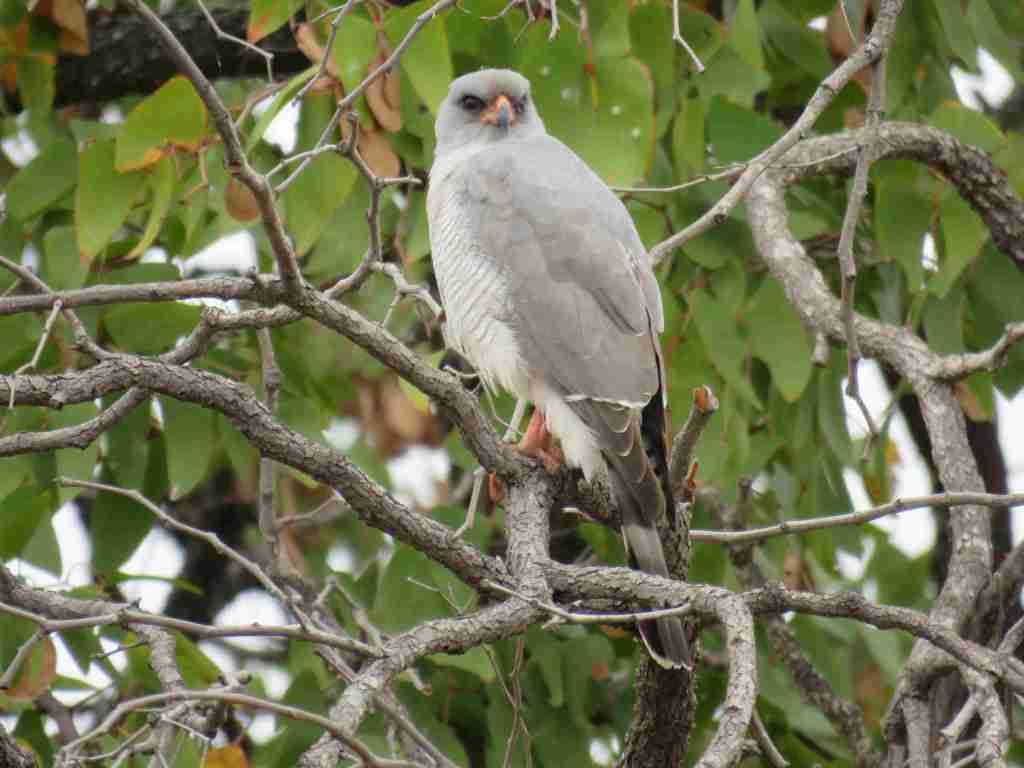
A Pale Chanting Goshawk peers out

Mocking Cliff Chat poses beautifully

Ford Tailed Drongos were everywhere
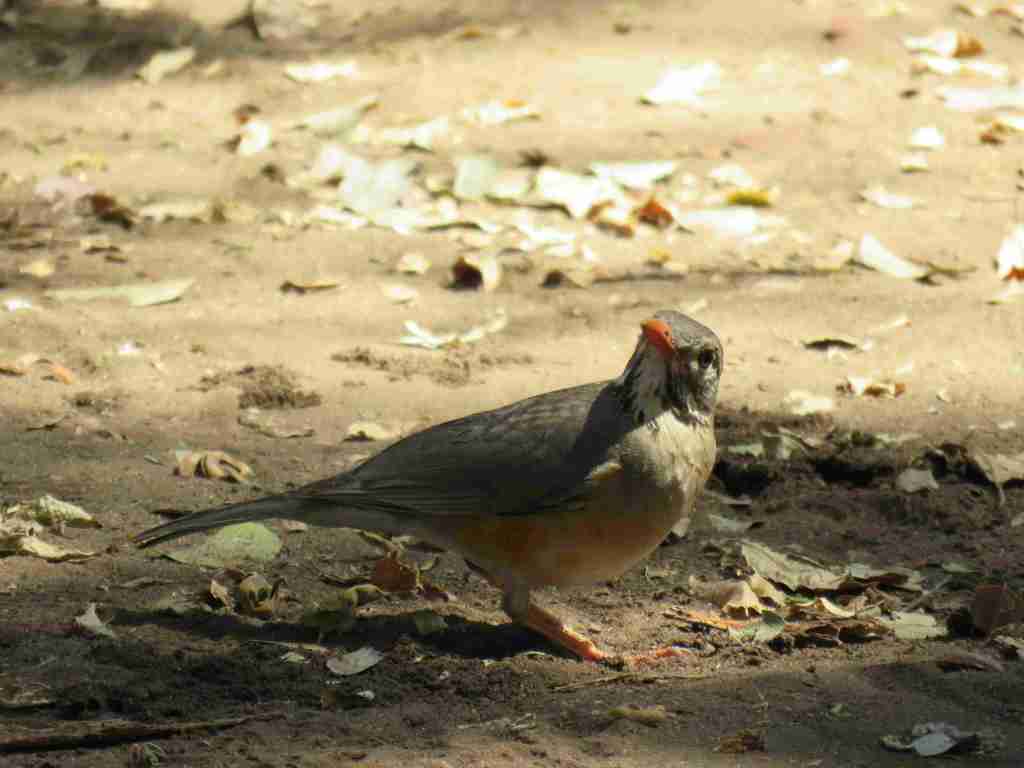
A Kurrichane Thrush looks for supper
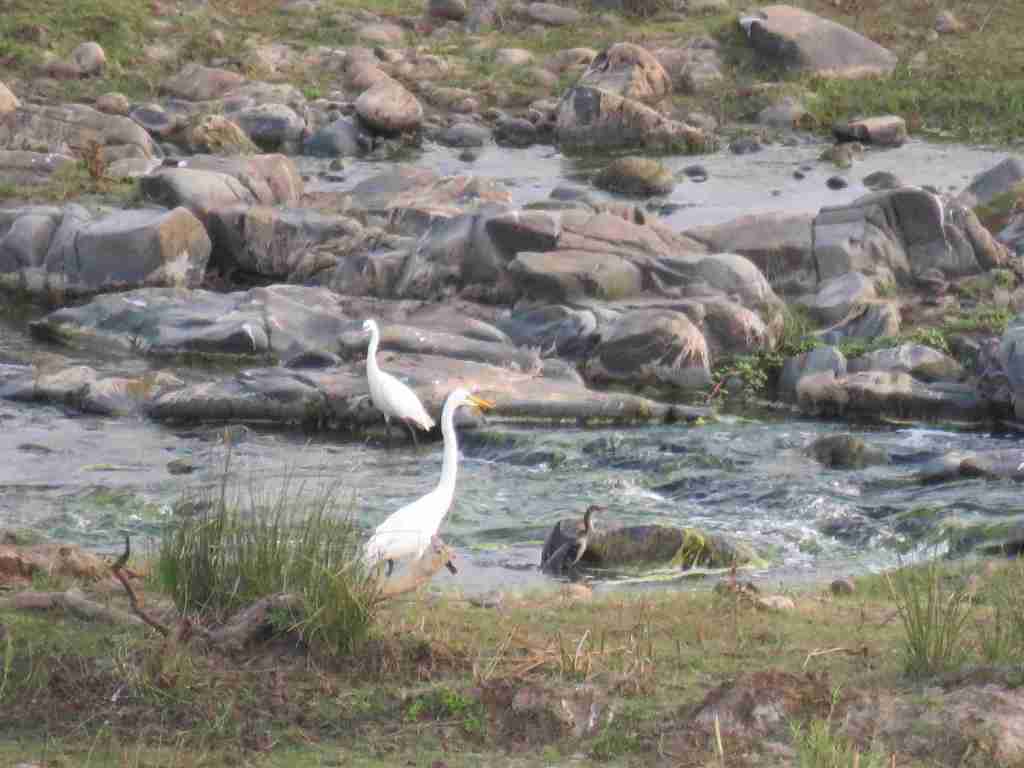
Egrets and a Cormorant look for supper
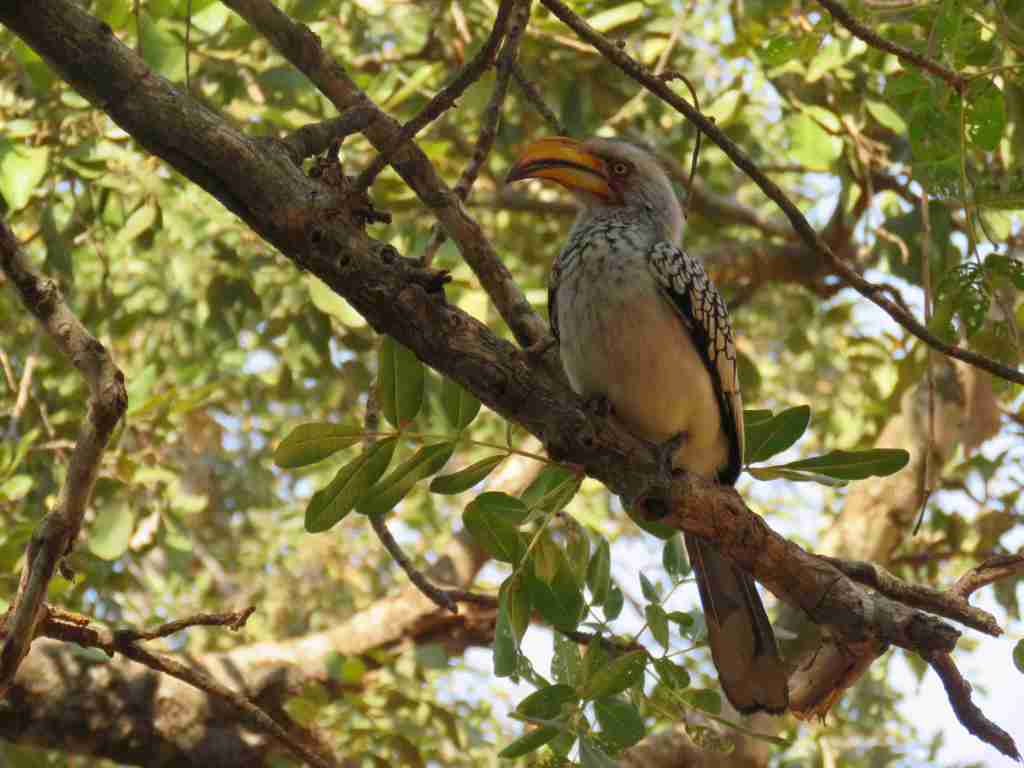
Alec’s favourite Bird – Yellow Billed Hornbill

Burchells Coucal dozes in the sun
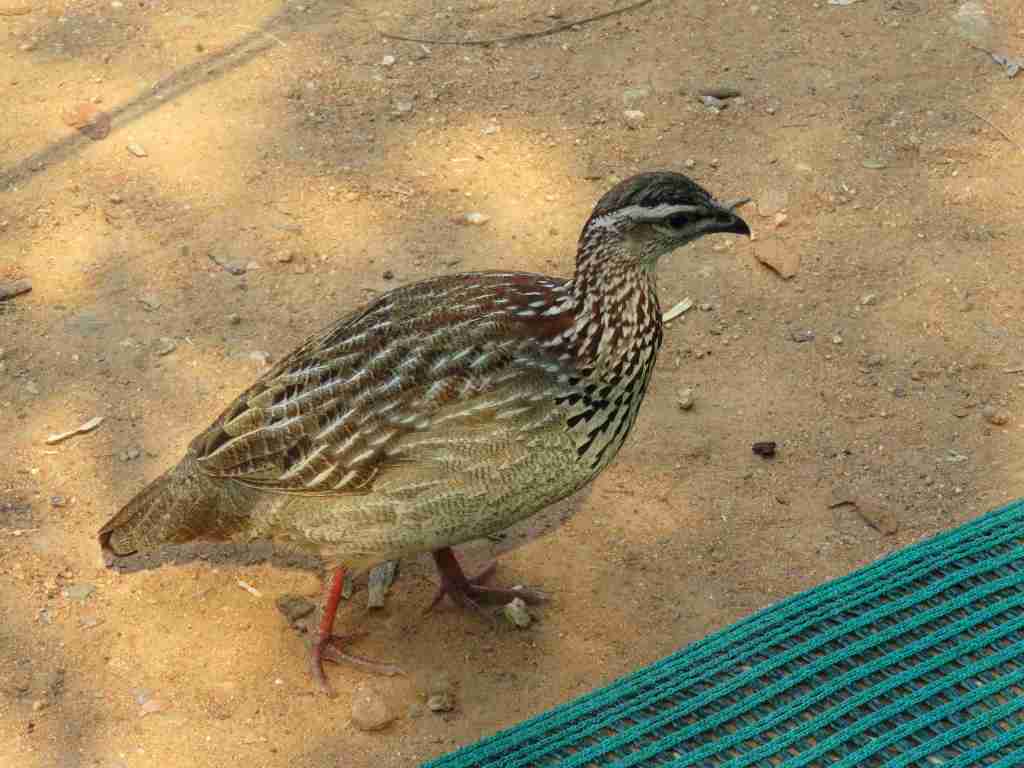
Crested Francolin are accomplished beggars
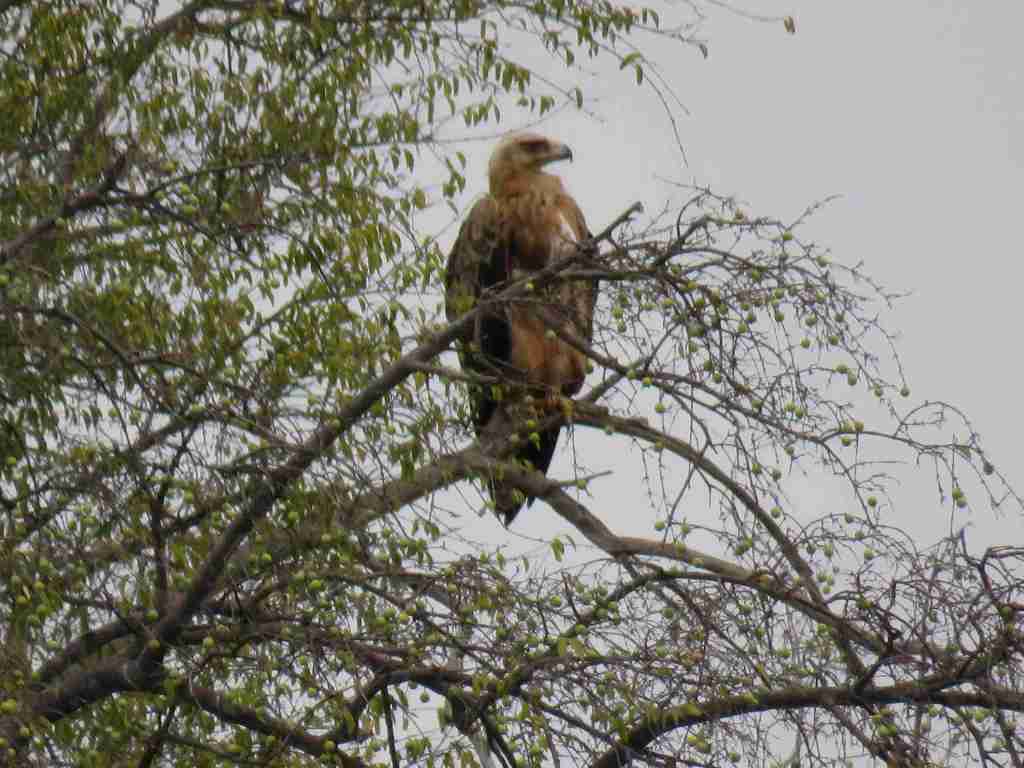
Gorgeous Tawny Eagle

Bennet’s Woodpecker
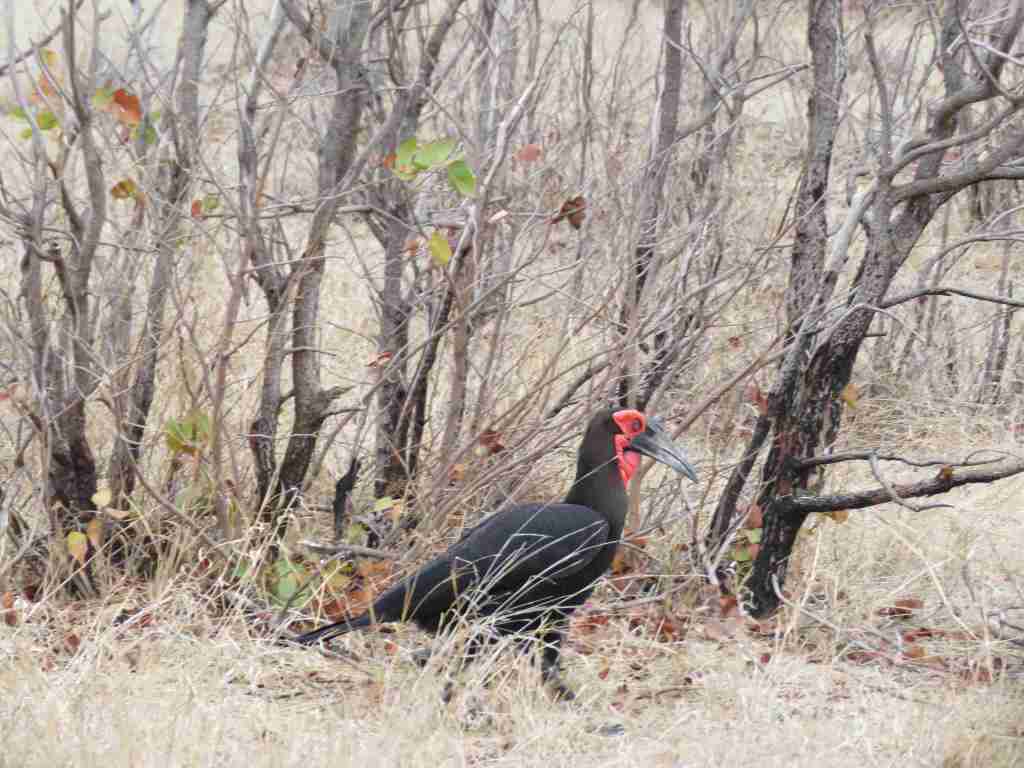
Southern Ground Hornbills

Beautiful mature Bataleur

White fronted Bee Eater waiting for prey

Busy Magpie Shrike

African Jacana forages in the shallows

After a refreshing shower, we turned in early, eager to explore the area the next day. But morning greeted us with thick cloud cover — a camper’s nemesis when relying on solar power. Our panels, usually reliable in partial sun, couldn’t keep up under the heavy skies. With our battery struggling, we made another trip to Mopani to see if we could swap our booking for a powered site at Letaba. The receptionist worked her magic and found us a place one night, which was better than nothing, especially with school holidays filling up the camps.

We packed up and headed back to Letaba, grateful for the reprieve and already making mental notes about upgrading our electrical setup. Lithium batteries? Better panels? A puzzle for another day.

Letaba welcomed us with a lovely site, and we spent the afternoon revisiting some of our favourite spots—the bridge over the river, Engelhart Dam, and the loops off the Phalaborwa Road. Kruger, as always, delivered. One of my favourite sightings was a line of elephant bulls marching out of the bush to drink at a reservoir—majestic and utterly grounding.

On a blazing day these zebra needed a drink

Buffalo also drinking at the same waterhole
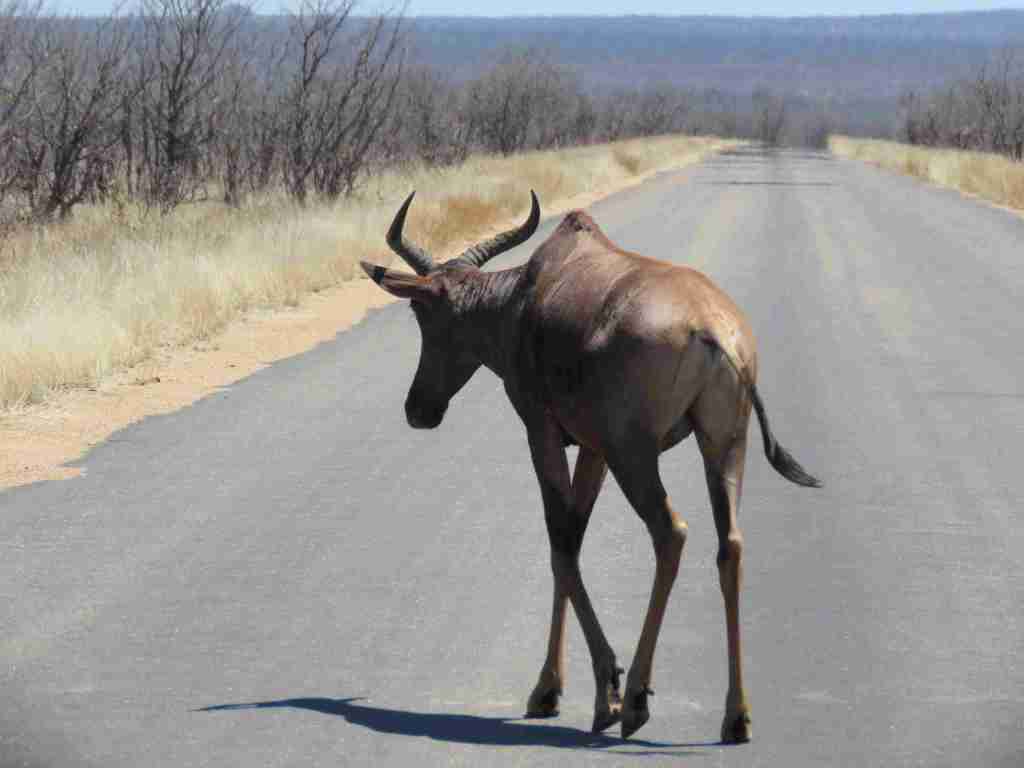
An unusual Kruger sighting – Tsessebe
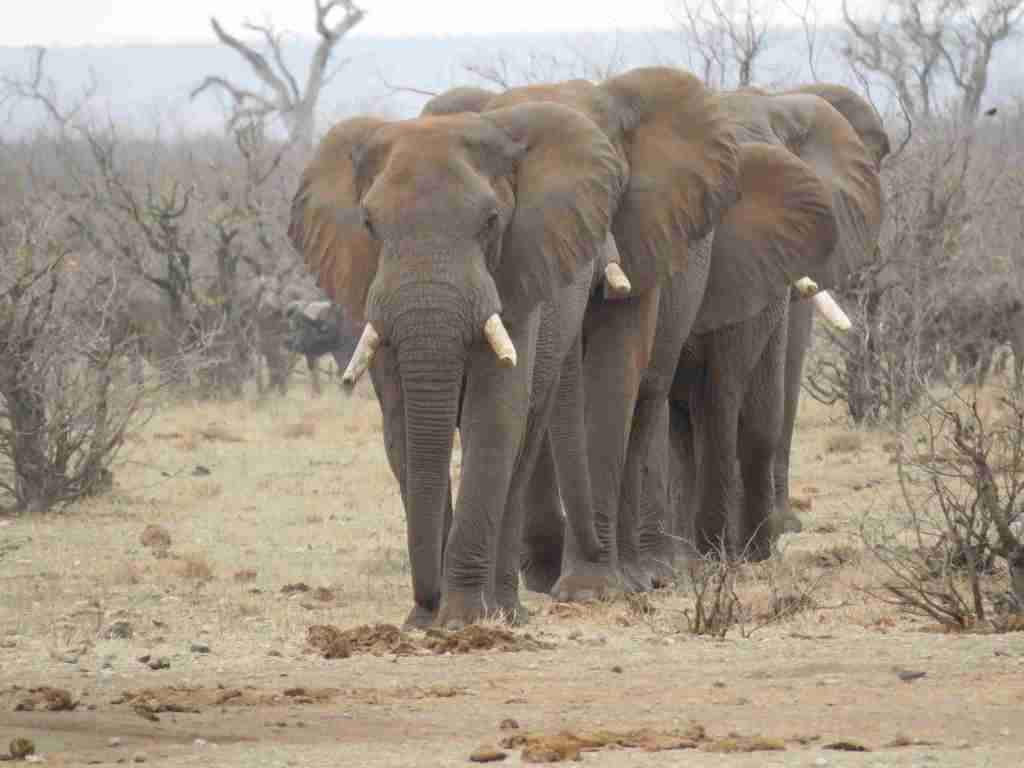
Five Bulls in a row
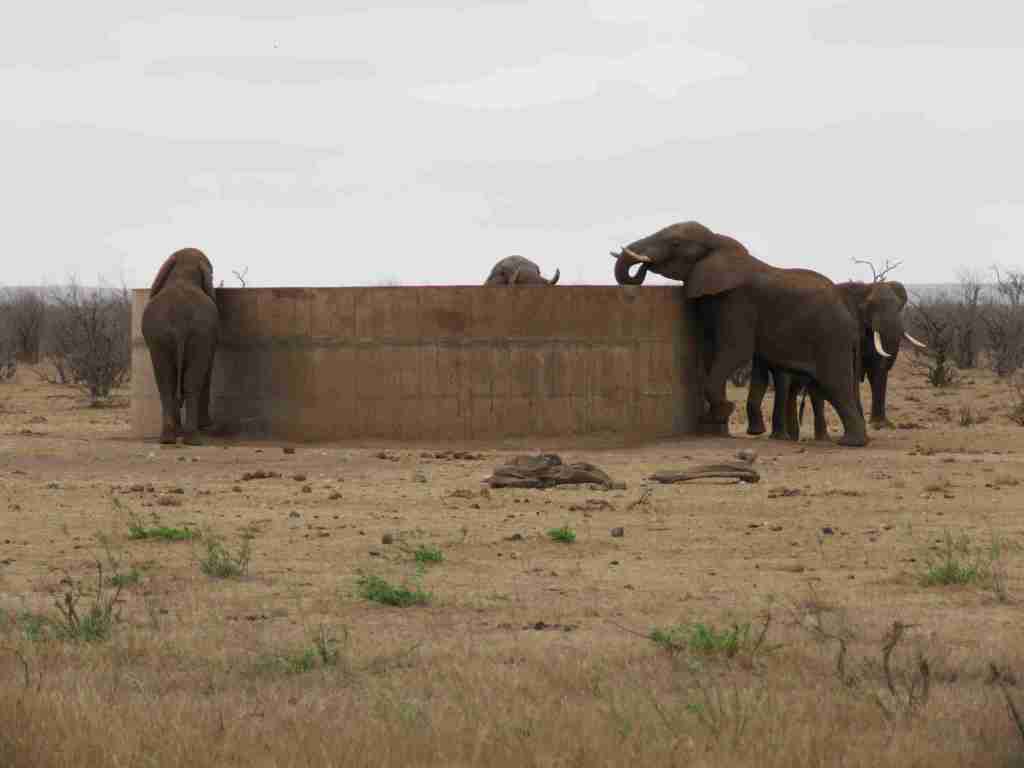
Enjoying the freshest water

Hippos ignore the Yellow-billed Storks

Some of the most fearsome jaws in nature

Giraffe necking – some of those hits must have hurt

Waterbuck bulls are more interested in the ladies than us

Just outside camp on our final drive, we had one of those rare sightings that makes you blink twice and wonder if your eyes are playing tricks. We were meandering along the river loops when a flash of white darted across the road in front of us. We stopped immediately, and there it was—perched to the left, a pure white squirrel. I scrambled for my camera, but of course, it chose that moment to focus on the nearest leaves. By the time I’d adjusted, the squirrel had vanished into the undergrowth.

Whether it was a true albino or leucistic, I couldn’t say. But what struck me most was how starkly its snowy coat stood out against the muted tones of the bush—like a tiny beacon in a world of camouflage. It’s a wonder it’s survived to adulthood, given how visible it must be to every predator, feathered or four-legged. We could only hope this little ghost of the veld continues to evade its predators. 

My out of focus pic of the squirrel

Back at camp, we found ourselves surrounded by twelve Maui motor homes, all part of a French tour group. They’d formed a loose circle, and our little Gecko stood out like a lone ranger. The evening was quiet, punctuated by night sounds and snippets of French conversation drifting through the air.

The next morning marked the start of our 2,000-kilometre journey home. As always, leaving Kruger felt like leaving a piece of ourselves behind.

Sunset on our holiday!


Impressions of Kruger

This visit brought a pleasant surprise: signs of real maintenance. Letaba now has a new electrified diamond mesh fence, and the new shop is a welcome upgrade. The debris from the old, burned-down shop has finally been cleared. Though we were a bit unsettled by the sight of a large animal trap near the campsite—what exactly were they hoping to catch?

Across the camps, things looked more cared for. Gardens were tended, paths swept, and for the first time in ages, we didn’t spot toilet paper strewn along the loops near the Letaba River. On our last visit, it had been a real eyesore.

We had a wonderful time—short, but rich with wildlife, quiet moments, and the kind of peace only the bush can offer. There’s nothing quite like sitting under a sky full of stars, drink in hand, the scent of roasting meat in the air. The calls of Scops Owls and nightjars blend with jackal howls, hyena whoops, and every now and then, the deep, primal roar of a lion.

Kruger is more than a destination—it’s a balm for the soul. And it’s a place we’ll keep returning to, again and again.

Gecko 109 on Safari – Episode 3 – Wildlife and Tranquility in Kruger – By Guest Blogger, Cathy

In my previous blog, I mistakenly referred to our meal stop as the Farmers Market at Alzu. The correct name is the Farmer’s Bistro. I also mentioned we were heading to Mopani, when in fact it was Maroela—clearly, I mixed up my trees! These slip-ups have now been corrected in the earlier posts.

From Kopjies to Riverbeds: A Journey Through Kruger
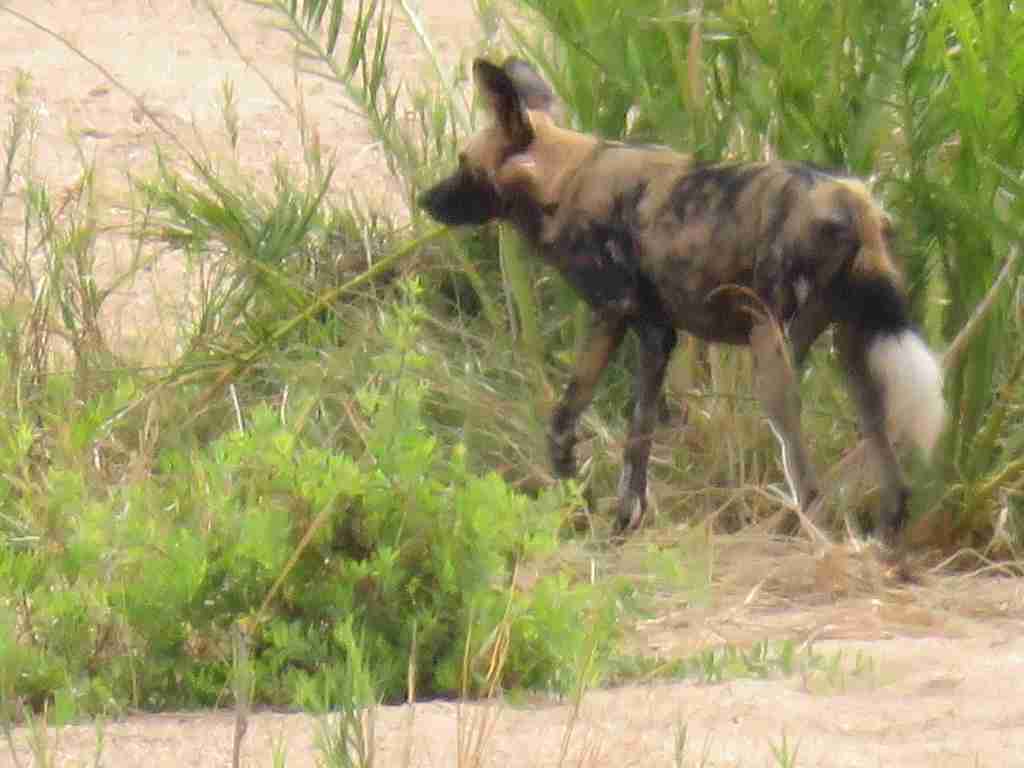
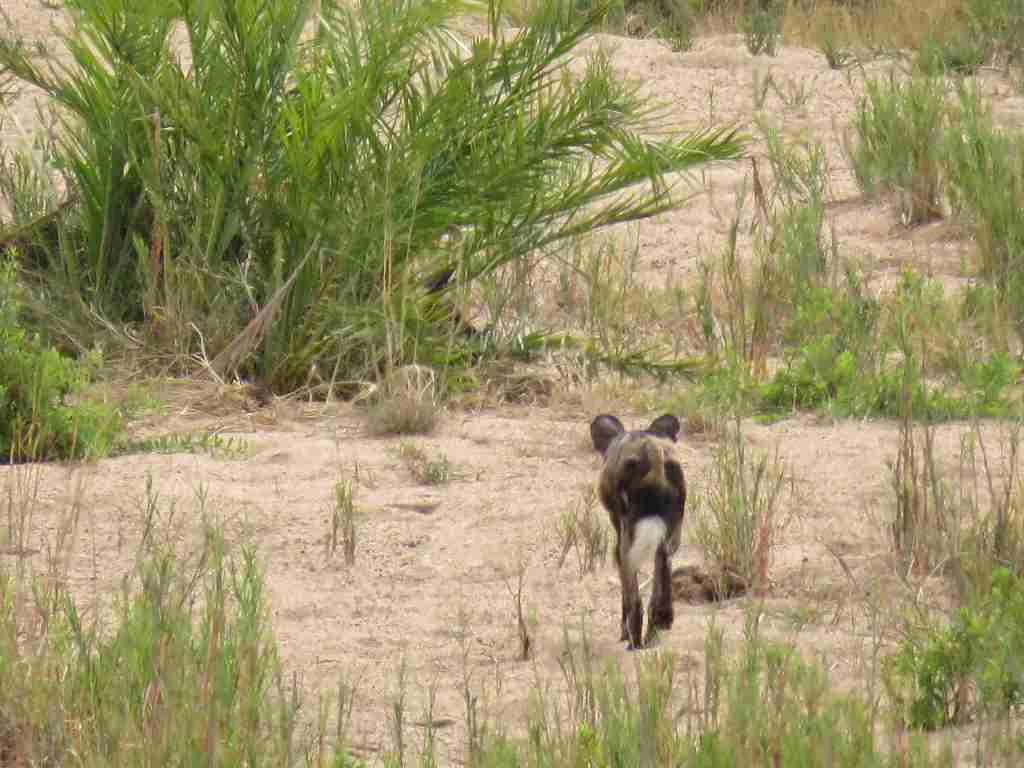
We left Berg-en-Dal early, eager to explore a new corner of the Park—Maroela, a satellite campsite near Orpen. The drive was, once again, a joy. Kruger never disappoints when it comes to wildlife, and this leg of the trip gifted us one of the Park’s most elusive treasures: a pack of wild dogs lounging in a riverbed. These endangered canines are high on every visitor’s wish list, and although we’d hoped to spot the resident pack near Satara, we were lucky enough to encounter them much earlier.

Not long after, we found a young leopard trying to get comfortable in a tree. Choosing the right, smooth branch for a lazy day is very important.

Young leopard doing its best to get comfortable

Our First Glimpse of the Dogs

Wild Dogs in the river bed

Every river has its crocodiles!
Not long after, we came across a pride of lions—albeit far from the road. It always amazes me how some people can spot the faintest flicker of movement or a subtle shape in the distance. One kind soul pointed out a green mound near a cluster of trees, and sure enough, through binoculars, nine lions lay dozing in the sun. I’ll never stop marvelling at the eyesight of seasoned bush-goers!

Lions Lazing in the sunshine

One young male keeps watch

A Pitstop at Satara
By midday, we reached the Orpen turnoff and decided to pop into Satara for lunch and fuel. A delicious chicken salad at the Cattle Baron hit the spot, and with a full tank, we made our way to Maroela.

Along the way, we were lucky to encounter another rarity at Kruger, the Southern Ground Hornbill. In fact, we saw these magnificent birds a few times. Did you know that these birds are the largest hornbill in the world and one of the heaviest flying birds in South Africa?

A Gorgeous Ground Hornbill

Another prime viewing was watching this young Bataleur play in a puddle! This daft young bird hopped around, sipped a little, and thought about bathing. It fluffed its feathers, dipped down, and then hopped away again.  It went through this performance a few times before tiring of the game and moving off. What a pleasure to see a young animal just enjoying itself.

A young Bataleur playing in a puddle

Maroela: Quiet Charm by the River
After the bustling energy of Satara, Maroela was a breath of fresh air. Small, quiet, and reminiscent of Tsendze, it offered a peaceful retreat. The gate system is self-managed, and many sites overlook the river—dry at the time, but still frequented by elephants and giraffe.
The ablutions, though a bit dated, were spotless. And the showers? Miraculously well-behaved! No rogue spray patterns—just a steady stream of water where it was meant to go. We quickly settled into a lovely site and headed out for our first drive.
The veld around Maroela looked tired, a clear sign of the dry season’s end. Still, the area was alive with elephants, giraffe, impala, kudu, and more. We’ve never been the type to chase only the big cats. There’s so much beauty in the quieter creatures, and we find endless joy in watching them go about their day.

Everyone waiting to drink from the last pool of water

So many beautiful giraffes

A roadblock you don’t argue with

Side-eye from a Hippo

Zebra drink at Nsemani Dam

Rain and Reflection
On our last night at Maroela, the heavens opened. Rain at last! I swear the bush sighed in relief. Thankfully, we’d packed away our awning the night before, so there was no soggy canvas to wrestle with in the morning. After a leisurely breakfast, we set off for Letaba—one of our favourite camps.


Letaba: The Place of Sand
We made good time and arrived late morning, finding a semi-shady site near the fence. Most trees here are Mopani, and at this time of year, they’re bare. It’s a blessing for game viewing—you can see much deeper into the bush, but shade is scarce in the camp.
One of Kruger’s prettiest sights is the Letaba River from the bridge. It’s a haven for waterbuck, hippos, and birds. We spotted African Spoonbills, Three-banded Plovers, Goliath and Grey Herons, Saddle-billed Storks, and the resident Fish Eagle pair.

One of the prettiest views – Letaba River from the bridge

A Waterbuck ram dines on water plant

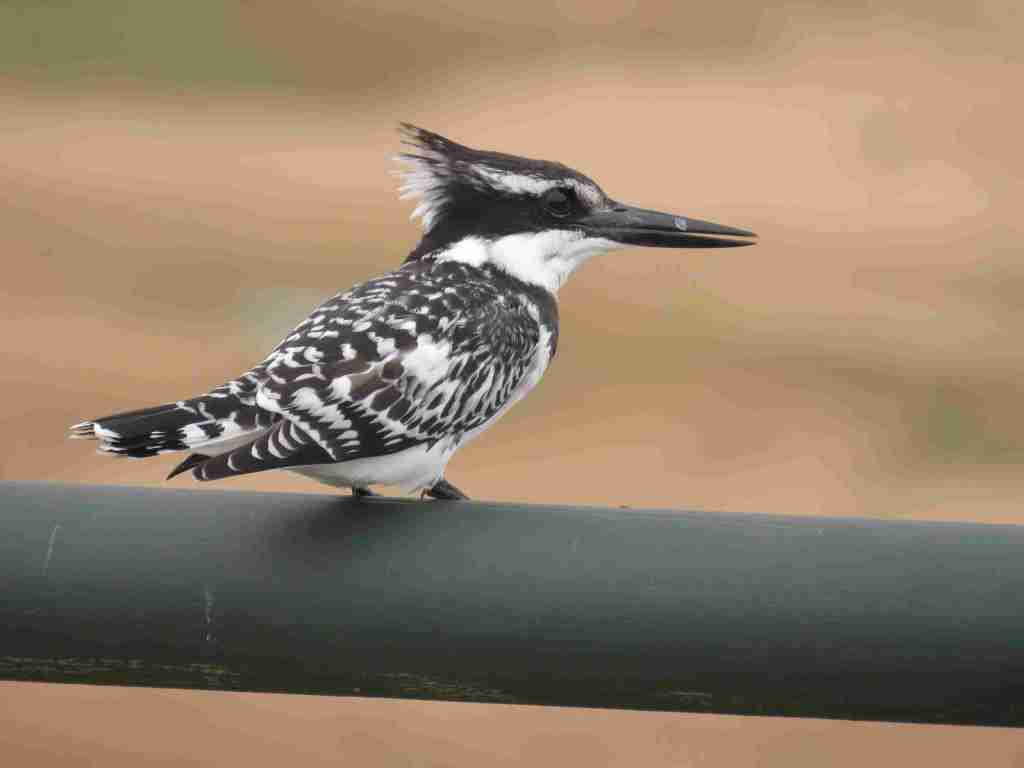
A pied kingfisher waits for a meal to swim by

Drives and Discoveries
Letaba offers a variety of scenic drives, and we explored most of them during our three-day stay. Elephants were everywhere, and giraffe sightings were particularly lovely. Wildebeest, zebra, and kudu kept us entertained throughout.
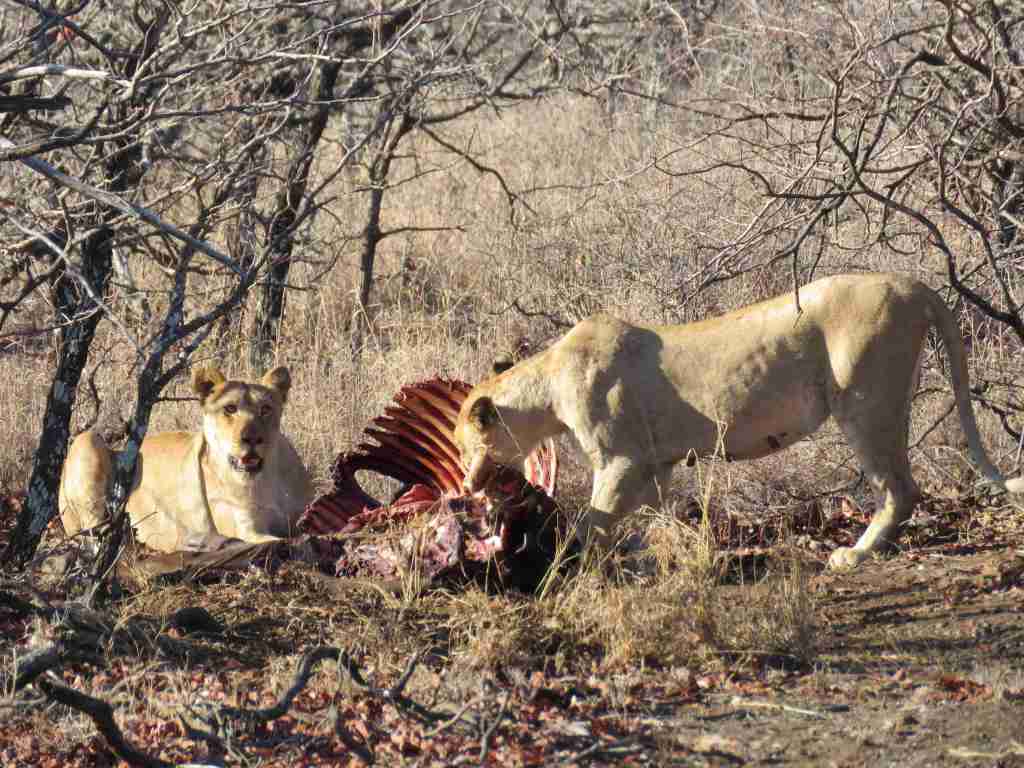
On our final afternoon, we stumbled upon a lion kill—perhaps one of the most dramatic sightings we’ve had. Two lionesses were feasting on a buffalo right beside the road. The sound of bones cracking in the silence was a visceral reminder of their power. It’s no wonder the bushveld lives in awe—and fear—of these magnificent creatures.

Lions feast on a buffalo

We could clearly hear the crunching of bones

Elephant Hall – A Must Visit
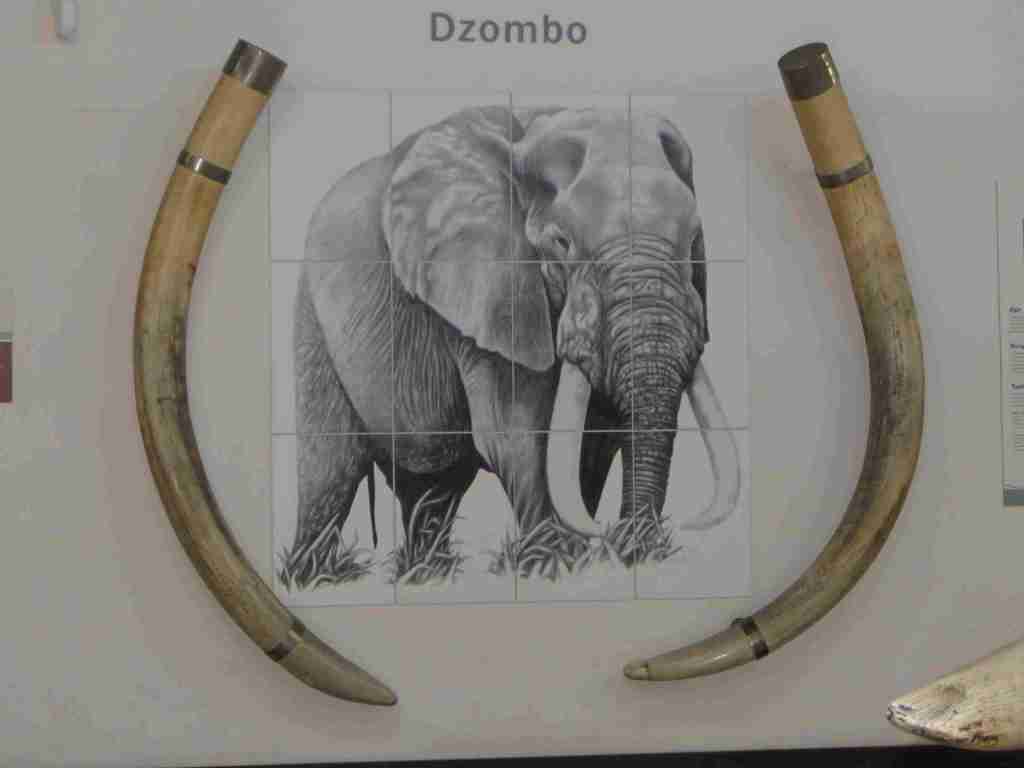
Of course, no visit to Letaba is complete without once again standing in awe of the tusks of the magnificent tuskers that have lived at Kruger. The Elephant Hall museum is a mine of information about the elephants of the Kruger, and there are many fascinating exhibits to look at, all related to elephants and their life cycles.
There is also a small exhibit of different skulls and skins of other animals in the park. This small museum is well worth a visit if you are in the area.

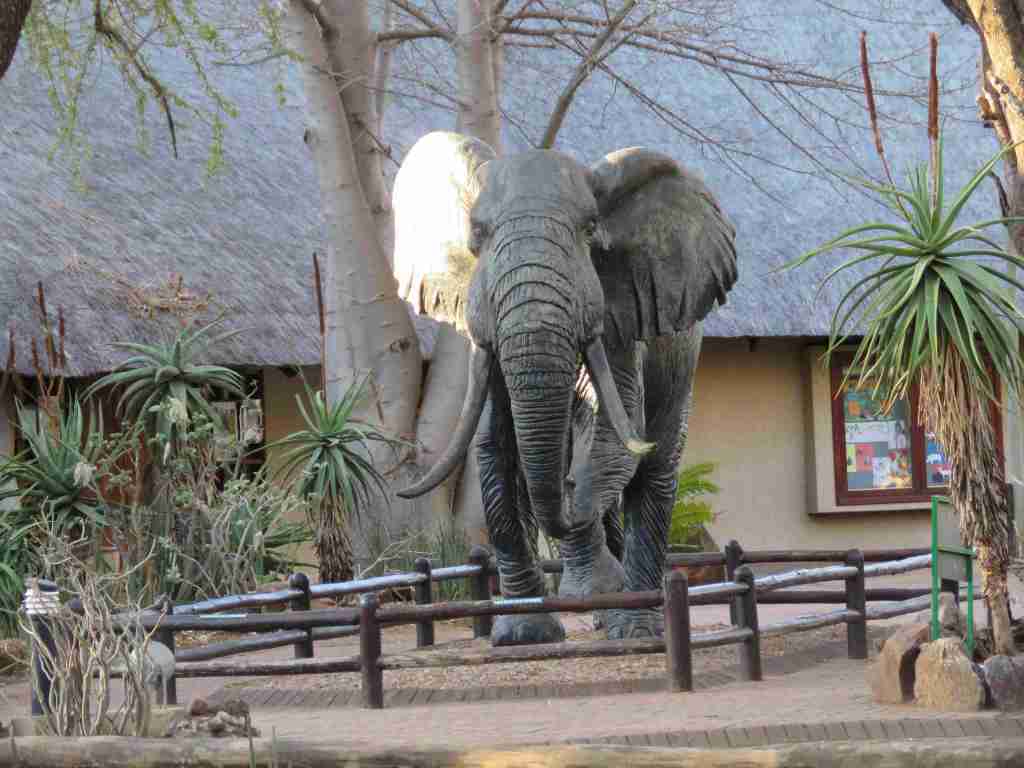
Life-size statue outside the Elephant Hall

Loads of info about elephants

Each tusker has his own display with his tusks

Selection of skulls and skins from other critters

Stars, Braai, and a Glass of Merlot
That evening, we watched the resident hyena pace along the fence, enjoyed a sundowner, and soaked in the peace of camp life. There’s nothing quite like a star-filled sky, the scent of braai in the air, and a glass of merlot in hand.
Again that night, the heavens opened, and we had a terrific thunderstorm. The wind howled and the rain pelted down. Again, the bush got a good watering so I am sure that the green grass is not far away!
A Morning Mishap and a Friendly Fix
The next morning brought a hiccup—our neighbours’ Toyota battery had died overnight. Even a jumpstart couldn’t revive it. Alec drove Waldo to Phalaborwa for a replacement, which delayed our departure for Tsendze. But in true bush spirit, we made new friends, so it was a win-win.
Now, as we head off to Tsendze—where there’s no 220v—the next chapter of this blog will have to wait. But something tells me it’ll be worth the pause.

Preferred Vacation Styles – Share Your World 23 June 2024

Here are my answers to this week’s questions from Di

When you go on vacation, do you like to sample the local cuisine, check out the sights, or laze on the beach?

When travelling I would certainly eat what the locals eat – sixty-one million Italians can’t be wrong. (in Zimbabwe, I even ate a Mopane worm!)

There is also no point going to new places if all you’re going to do is laze on the beach. I can do that at home, so I would definitely explore and experience everything I could about an exotic place.

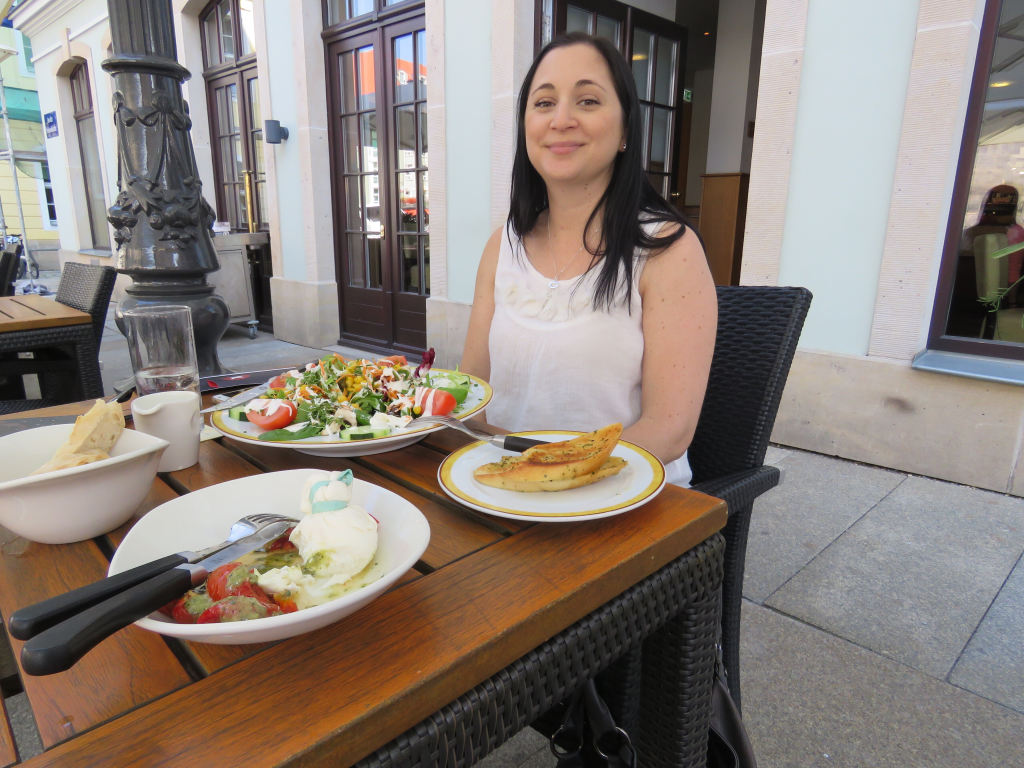
While on a coach tour with my daughter, we chose to eat Italian in Italy – mozzarella cheese, tomatoes and basil pesto for me – An Italian salad for her.

Have you ever been away on a vacation with friends rather than family?

We have often been on vacation with friends, especially when visiting game reserves. Many of these trips have been organised by us but all expenses have been shared and they have all worked out extremely well. Because we love the bush and have some knowledge of birds and wildlife we enjoy being the ‘guides’ for first-time visitors to the parks.

Australian friends at a stop-over in Windhoek on our way to Etosha National Park,

  Would you prefer a cruise or coach tour holiday?

I have experienced both and at my age, I prefer cruising. It is an awesome way to travel as you blend relaxing with exploring and you can choose how much of each to do. It is amazingly convenient not to have to pack and unpack as you move to each new destination. Your floating hotel effortless takes you there while you enjoy having all your accommodation and catering needs included in your fare. Even the entertainment and most activities are free. You can choose to go on excursions at port stops or to do your own thing. It’s win-win all the way.

Help yourself to breakfast!

Self-catering, or full board where all meals are included/provided?

My other type of vacation is visiting game reserves in South Africa. Although I have enjoyed many different types of travel and vacation, trekking into the bush is my ultimate choice and something my hubby and I have been doing every year since the 1990s. We have explored almost all the parks in South Africa, as well as some in Namibia and Botswana. Our adventures have taken many different forms – rondawels, roof-top tenting, and caravanning. Now that we’ve embraced our golden years and parted ways with the caravan, it’s time to return to the charm of self-catering bungalows.

In most of the South African National Parks, you might find excellent restaurants in the rest camps and picnic sites. So if you are not in the mood to braai, you have the option to eat out!

Self-catering in the bush – Watch out for hyenas and please don’t feed them!

Gratitude:
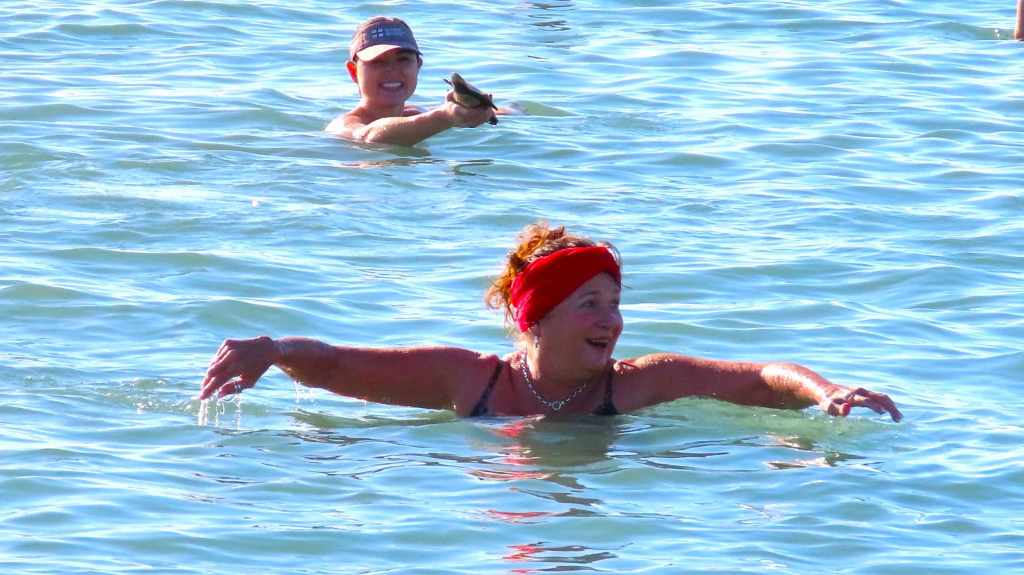
It is mid-winter in South Africa, but I am most grateful that on Saturday the weather was calm and sunny, if a tad chilly in the early morning, as The NSRI’s was holding a Winter Solstice Swim at Struisbaai’s harbour beach. My friend, Michele, braved the icy waters along with a dozen or so others who all declared that it was ‘warm once you’re in’ and all splashed about for half an hour! Well done to all of them. I was wrapped in my boots and jacket as I took the photos!

Today we have rain, but during a break in the weather, I was thankful that the birds were enjoying the winter flora along the Struisbaai coastal road.

The Southern Tip of Africa

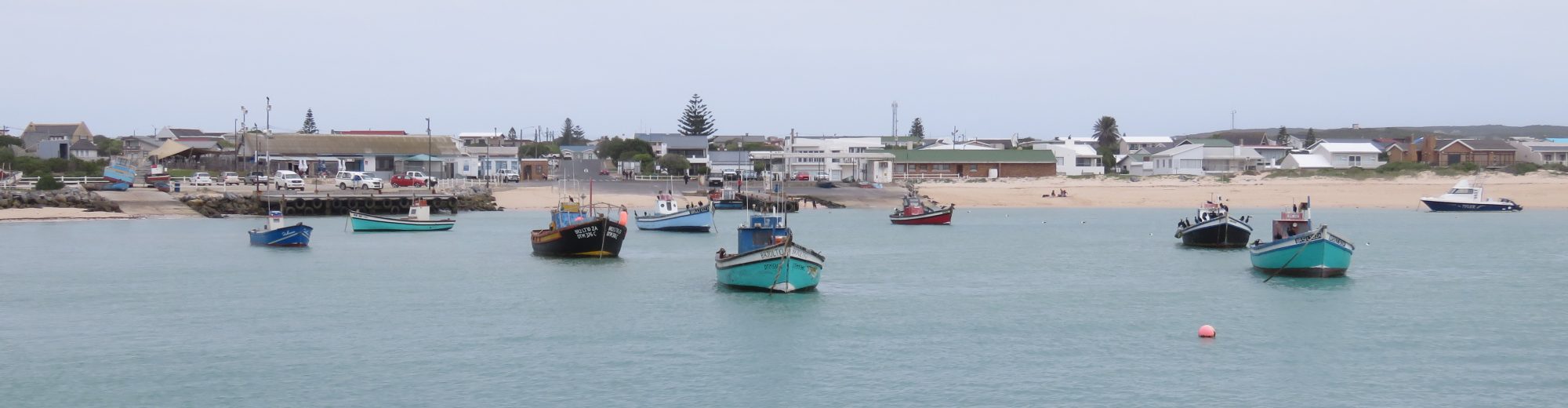
It’s been a while since I’ve shared my thoughts about the place I call home. As winter gradually makes its presence felt in the southern hemisphere, we’re still fortunate to enjoy a few crisp yet sunny days. On Saturday afternoon, while the men set off to sea in hopes of a good catch, we ladies – Wise Wine Warriors—spent a lovely afternoon at Struisbaai Harbour Café. In that moment, surrounded by the beauty of the harbour, I paused to take it all in and truly appreciate where I was. Then, on Sunday evening, as we all gathered for a sunset braai, I was once again struck by the undeniable charm of this little gem in the deep south of my country. In this vast world, fate has placed me at the southernmost tip of Africa—and I must say, I couldn’t be happier.

Some of our group – Wise Wine Warriors

It is often mistakenly believed that the southern tip of Africa is Cape Point, near Cape Town, and quite close to where I grew up. Some also claim that this is where the Indian Ocean meets the Atlantic. It’s good for tourism to go along with this myth! But in fact, the two oceans meet at Cape Agulhas, and it is also the most southerly point of Africa.

The Earl and Me at the Southern Tip of Africa

When I was a child, I was keen to stand on the very tip of Africa. I asked my parents if we could visit. But they did not share my adventurous spirit and thought that it was hardly worth the visit.
“It’s very remote and there nothing there,” my mother declared.  
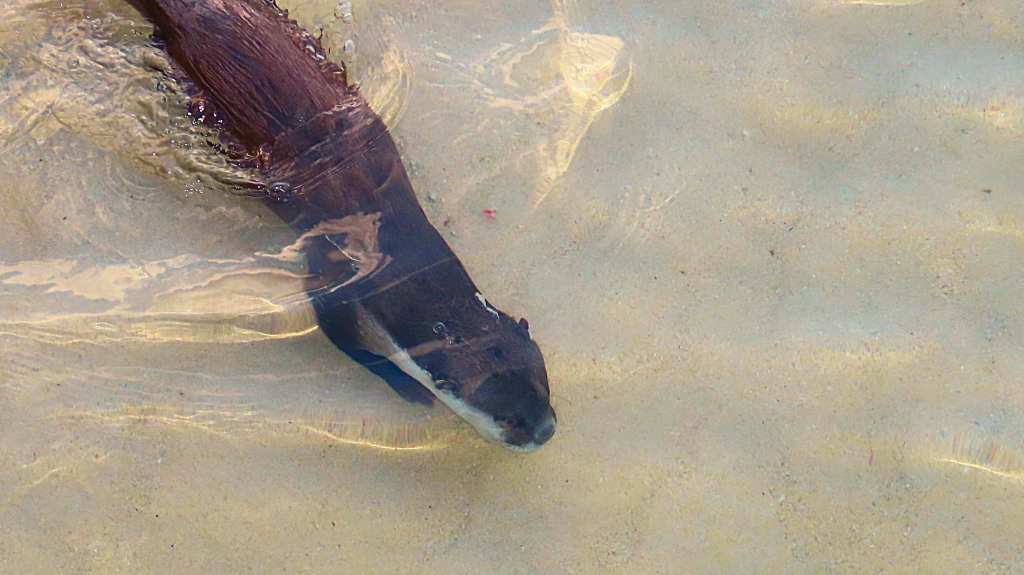
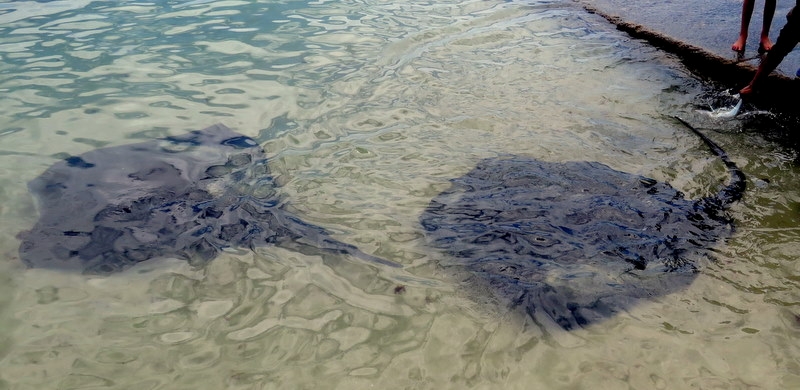
And she was right – my first visit was in 1982, and the area didn’t even have electricity!   Of course, it’s quite different now, and this formerly tiny district is attracting more and more permanent residents. But its natural beauty still abounds.   Sometimes I take a moment and let it all sink in that I am at the southernmost tip of “Darkest Africa.”  Cape Agulhas and Struisbaai boast a remarkable diversity of flora and fauna. The Agulhas National Park hosts over 2,000 native plant species. The fauna in the region is also fascinating. The wetlands provide refuge for birds and amphibians, including the African Black Oystercatcher, Damara Tern, and Southern Right Whales, which migrate through the area. Our harbour welcomes short-tailed stingrays that swim in to enjoy some delicious pickings thrown into the water by the local fishermen cleaning their catch. We even have Cape Clawless otters frolicking in the shallows from time to time. Click on the link to see a video.

The coastline is also notorious for the number of sailing ships wrecked in its stormy seas. The Cape Agulhas Lighthouse was built in 1849 and is now a historic landmark,  still warning seafarers of  the treacherous waters

 On November 16, 1982, the Meisho Marul ran aground near the southernmost point of Africa due to a storm. Fortunately, all 17 crew members managed to swim to safety. The wreck has since become an iconic sight.   Over the years, the wreck has eroded significantly, with only the bow section remaining visible above the waves.

I try to get in a daily walk, and whether it’s just around the village, along the coast road from home to Agulhas or along our very long white beach, I never tire of the beauty around me.  Hardly a day goes by that I do not ‘maak ‘n draai by die hawe’ (pop in at the harbour) and it always takes my breath away.

A while ago, I met two young Frenchmen at our local harbour café.   They asked if I was local and we got chatting,  They expressed how much they loved this part of South Africa.
“But surely it can’t beat the French Riviera,” I said.

“Oh but it is so very much better!” they declared.

I thought they were being polite, but then I really looked and thought, “Well, yes – it’s still so natural and quaint and simple. It’s not glitzy and busy like the top destinations of the world. We are indeed lucky to enjoy this little piece of paradise.”

Don’t get me wrong.  When we’re having the foulest weather, I curse the wind, the rain, the flooding and the cold.   But when the sun comes out – well – all is forgiven and forgotten.  

To end, allow me to share some photographs from the sunset braai we enjoyed with the lovely friends we have made here at the southern tip. Thanks to Sonja for catering the delicious starters and dessert, and to Sharon who insisted we all gather at this stunning site right at the southern tip, overlooking the wreck. Where in the world can you safely picnic outdoors without paying an entrance fee or having guards to ensure your safety? It was exquisite and yes, we did make sure the fire was completely dead before we left.

Share Your World Monday 30 December 2024

This is the last SYW of 2024. Here are my answers. Thanks, Di for some lovely questions.

1.  Would you consider 2024 to have been a good year?
It hasn’t been a bad year and also not a very busy one. As we get older we are slowing down but having said that when I look back I realise how much we have done compared to other people of our age.

2.  What has been the highlight of 2024 for you?
What a great question. Before I looked at this challenge, I had made a list of the highlights of 2024, and there are a few. At the top of the list is our granddaughter’s wedding in April, which included a weekend of fun activities in Cape St. Francis. Then in June, we took an overseas trip – two weeks in England and a 10-day cruise with two of our daughters.

Sundowners at a Cape St Francis beach

Each month had a highlight of its own.
January – visited my sister at Breede River.
February – We attended the Gecko Caravan Rally at Wilderness.
I was photographer and blogger for the annual Marlin Competition in Struisbaai. March – our quietest month – we stayed home and enjoyed our friend.
May – I was the official photographer for the International Bottom Fish Competition.
In July, my husband turned 80.
We went to Cape Town to attend a special presentation of Springbok/Protea Caps to all those who had represented their country internationally in the past. Earl was the only one to receive a Springbok cap and he received a standing ovation.
In August, we had a visit from our friend Yolandi, and our son-in-law Allan made a detour to a business meeting specifically to visit us.
In September we hosted and catered for Nampo guests for a week.
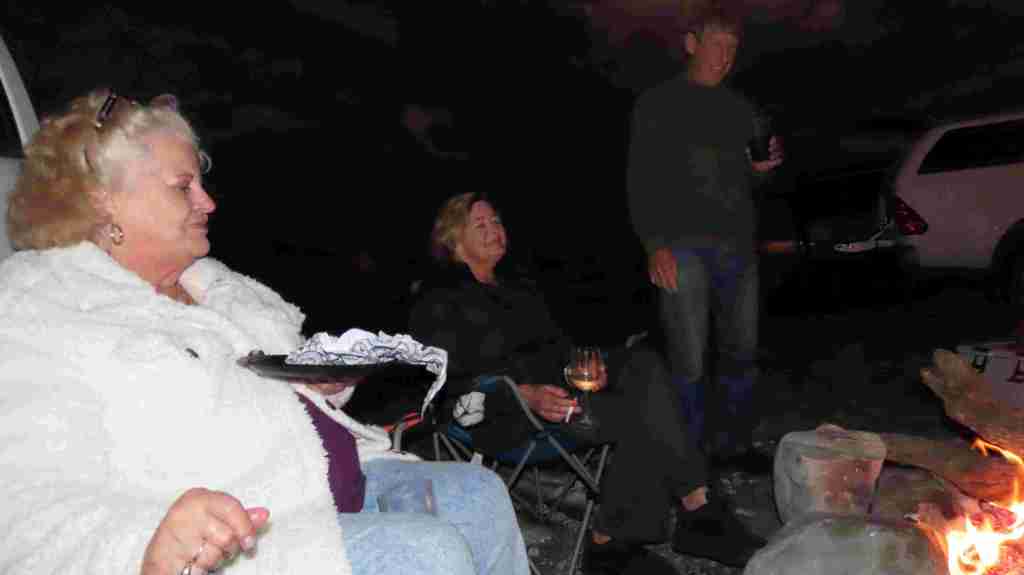
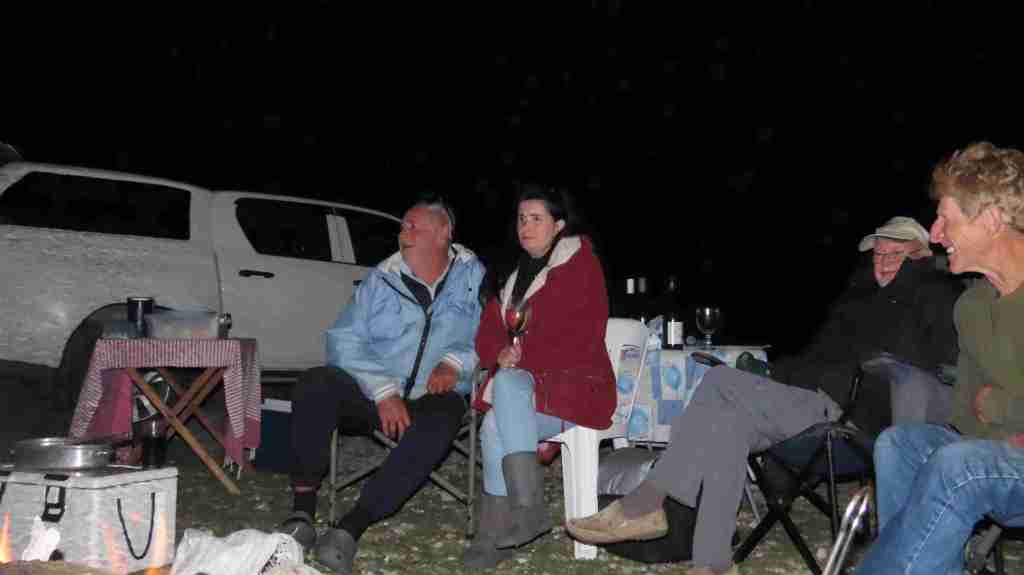
In October we had a wonderful Caravanning trip to Karoo National Park, Camdeboo National Park and Mountain Zebra National Park.
November and December were marred a little by a severe dose of Diverticulitis but that didn’t stop us travelling to Warmwaterberg and then Plettenberg Bay and Cape Town to end a great year.


3. Did you keep any New Year resolutions if you made any in January?
This is what I wrote in my diary on 1 January 2024 – I do not make New’s Resolutions, but every year I pledge to take one day at a time and live each moment to the fullest. Earl and I are getting older – that is a fact – and may we continue to live a good, interesting, adventurous, and fun life.
I suppose the answer to the question is yes, we have lived each moment to the fullest.

4. Are you looking forward to 2025
Yes, I am. I have no idea what the future holds but a new year is always a time to make fresh plans or just go with the flow. The slate is clean at the moment. We have no plans yet but will embrace any opportunities that come our way.

Gratitude

I love the Meme that Di included in this challenge. I am truly grateful for the blessings I have captured this past year.

Gecko Road Trip 2024 – Cathy’s Story

Cathy and Alec joined us as travel companions on our latest road trip, and I’ve invited Cathy to share her perspective in a guest post.

Note: To view the group of photographs, click on the first one to enlarge it. Use the arrows to navigate the slideshow. Press ‘escape’ to return to the blog post. On your phone, swipe to view each photo and tap the ‘x’ to return to the blog post. You may also need to tap the information icon to view the captions.

Bright and early on Monday, October 14th, Alec and I teamed up with Helen and Earl in Bredasdorp to start another two-week journey through some of South Africa’s most beautiful national parks. Monday was mainly a travel day, so we enjoyed a leisurely drive through the stunning Tradouw Pass to Barrydale, where we were welcomed with coffee and breakfast at the Country Pumpkin. We took our time along the R62, admiring the vast Karoo landscapes and dramatic passes like Huisrivier just outside Calitzdorp until we reached our overnight stop at the Kleinplaas Resort in Oudtshoorn.

We were excited to get going the next day and headed out through the magnificent Meiringspoort pass. Driving along the N12, you’ll enter Meiringspoort, about 11km from De Rust. As the Groot River gnawed its path through the enormous Swartberg Mountains, it created this breathtaking gorge, resulting in a remarkable natural gateway that links the Klein and Groot Karoo.

Besides its colossal rock walls and spectacular scenery, Meiringspoort is best known for its 25 drifts. Throughout the 25km drive, the road criss-crosses the river 25 times by means of these drifts, each individually named and with an interesting story behind every name. Various stops along the poort give visitors the opportunity to pull over and take some time to enjoy the magnificent scenic beauty, the sheer rock walls, and their mind-bending formations. Restroom facilities (kept neat & clean) and shaded picnic spots are dotted along the way. 

Since we left early, we arrived at Karoo National Park near Beaufort West with plenty of time to settle into our two adjacent sites.

The campsite at Karoo National Park is very well laid out. The well-demarcated stands are arranged in a circle around the ablutions and kitchen, and most have a little shade. The ablutions are well maintained, spotlessly clean, and very user-friendly. The amenities are also well developed, with a small shop that carries all the necessities as well as curios and a restaurant that serves excellent value-for-money meals. 

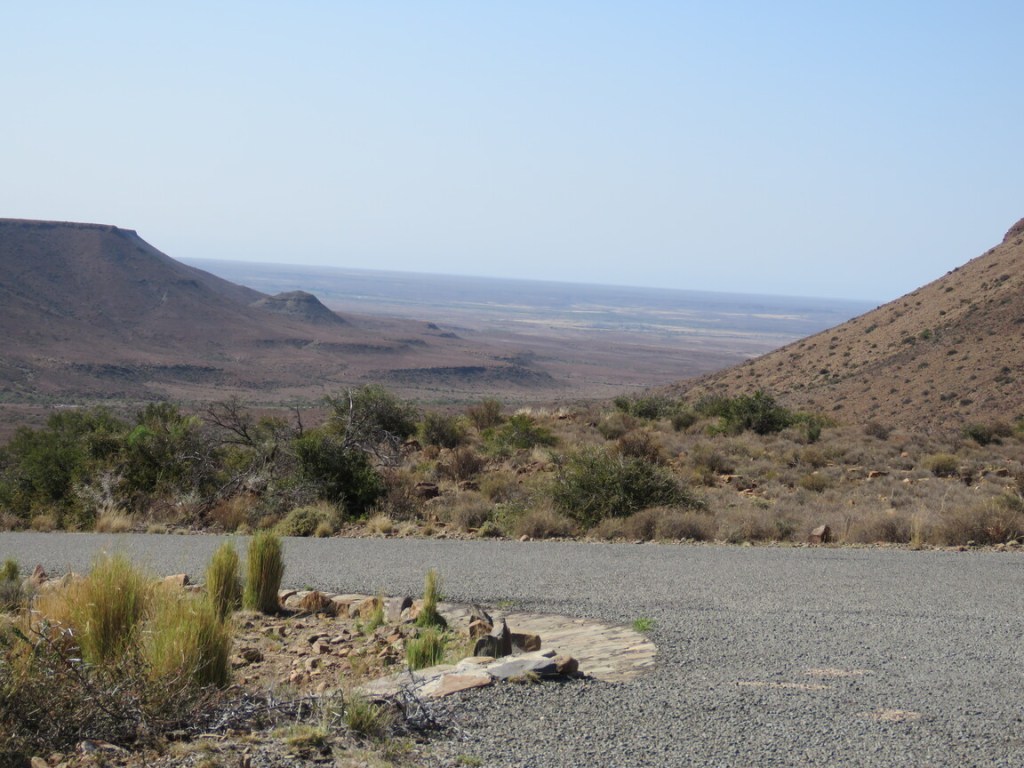
The next three days were spent exploring the park. This is not a park for critter-crazy folk. While there are many types of antelope, Mountain Zebras, and lions, the true value of this park is the awesome scenery. With a blue sky that stretches for miles, incredible rock-covered crags, and rocky, stubby bush-covered plains, this park enchants the eye on all sides. It is a place to relax, unwind, and allow the serenity of nature to calm your soul and uplift your spirit.  

Leaving the Karoo National Park, we drove up the N1 to a little past Three Sisters before turning onto the R63 and heading towards Graaff Reinet. The road surface was excellent, but as soon as we hit the Eastern Cape border, it deteriorated and became very bumpy, with patches on top of patches. The Western Cape certainly has some of the best-maintained roads in South Africa!

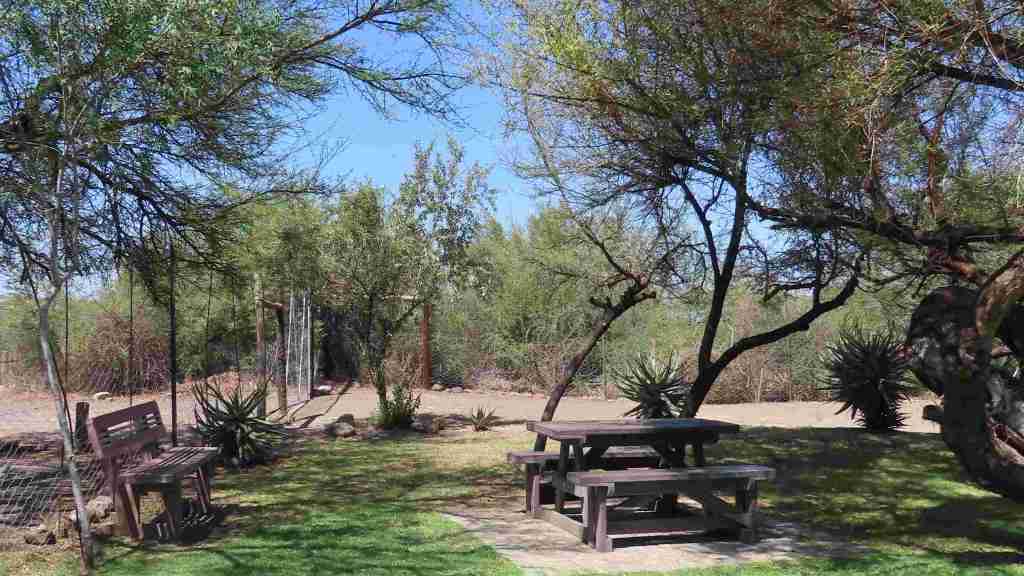
We were blown into Camdeboo National Park by a howling gale. It is a long time since we have stayed in this park and the campsite was a welcome sight. This campsite is reminiscent of Tsendze at Kruger, with each campsite carved out of the bush and relatively private. The ablutions showed their age a little, but they were spotlessly clean and user-friendly. With its proximity to Graaff Reinet, this camp has no shop or restaurant, but the gate closes at 10:00 pm, so you can eat in Graaff Reinet.

That first evening, with the wind howling, we could not risk a braai fire as the grass was dried and the risk of a bush fire was too high, so we resorted to Plan B and telephoned Domino’s Pizza. Indeed, they would deliver to the reception at Camdeboo, so we feasted on pizza while tucked away in our caravans for the evening. This is the only thing I don’t like about the Gecko – there is nowhere to sit inside when there is bad weather. Alec has fitted a small removable table that we can use for meals or to play cards (I trounced my hubby at Rummy!), but the space is minimal, and moving around is almost impossible.

The following day, we set out on a game drive around the camp, but there was nothing much to see apart from some birds. Admittedly, the weather could have been better with intermittent drizzle. A crossing over the Sundays River leads from one game section to another. Still, neither Alec nor Earl wanted to try the crossing, despite reception saying it was drivable, as the water level was rather deep. 

That afternoon, we drove to the alternative entrance on the R63 and enjoyed a drive around the game area, seeing a few animals. The weather was still drizzly and cold, so we went into town for an early supper. Helen and Earl had previously enjoyed eating at Pioneers, so we refuelled, and they took us to the restaurant. It has since changed its name to Frontiers but serves the same excellent food, and we thoroughly enjoyed our lamb shanks.

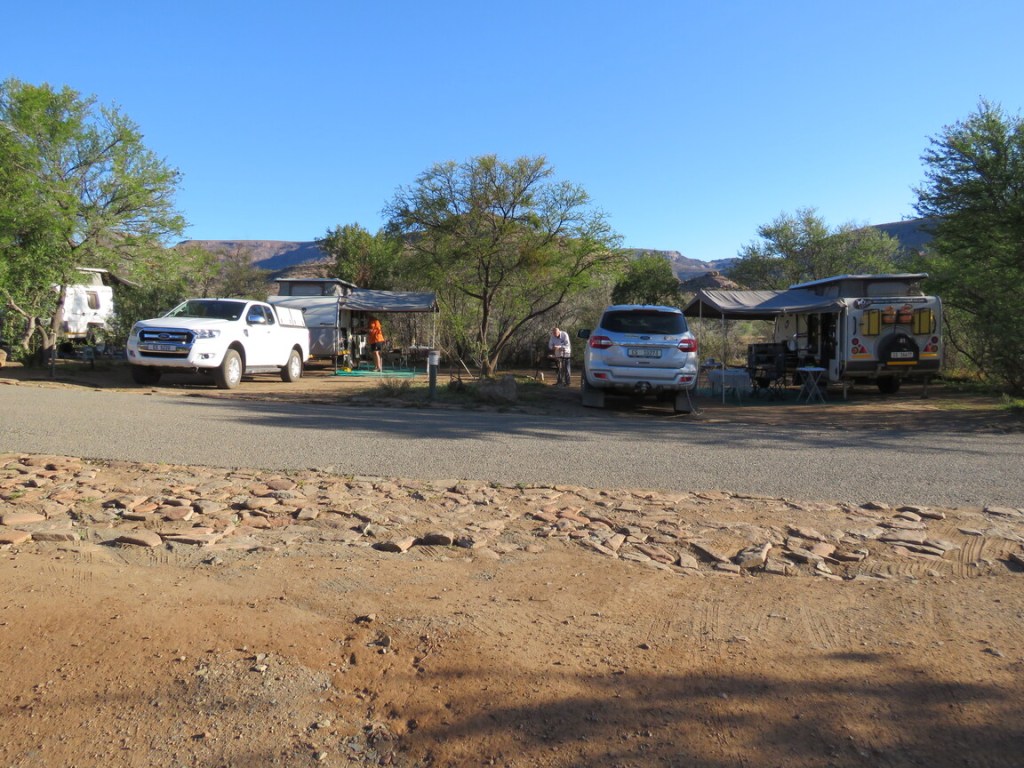
The following day, we set off for the short drive to Mountain Zebra. This is one of our favourite parks, and arriving at the campground, we found two sites along the fence that we could enjoy. This campground is also well laid out, with the stands clearly demarcated, though the stands along the fence could be more level! The little Sherpa Tiny caravan next to us was precariously balanced on rocks to try and level it out! 

This is the first time we have visited this park since the ablutions have been upgraded, and we were keen to see what all the fuss was about. I was amazed at the lovely tiles and mirrors that I saw when I went in to wash my hands. Sadly, this was where the amazement stopped, and the irritation started. These ablutions are more about flash than bang. 

Why would you choose tiles that are slippery when wet for a public restroom? The floor is an accident waiting for its victims. 

Then there are the showers, which are minuscule and very strangely placed. Two are across a corner with hooks hidden in nooks, and the others are so tiny that the cubicle width is a few millimetres wider than the cubicle door. The windows are placed high up and recessed so they are impossible to reach, resulting in condensation on the tiles and dampening everything. Then you have a positively dreadful three-panel sliding door to close. The gap left by opening the doors is tiny, and I am sure many people struggle to get through that gap and into the shower. Then, when you go, you must step back into the wet shower to open the cubicle door. Then, you must navigate slippery tiles with wet shoes. The whole thing is laughable. I suggest that Sanparks ask an organisation like Kampmal to assist when redesigning ablutions so campers design for campers!

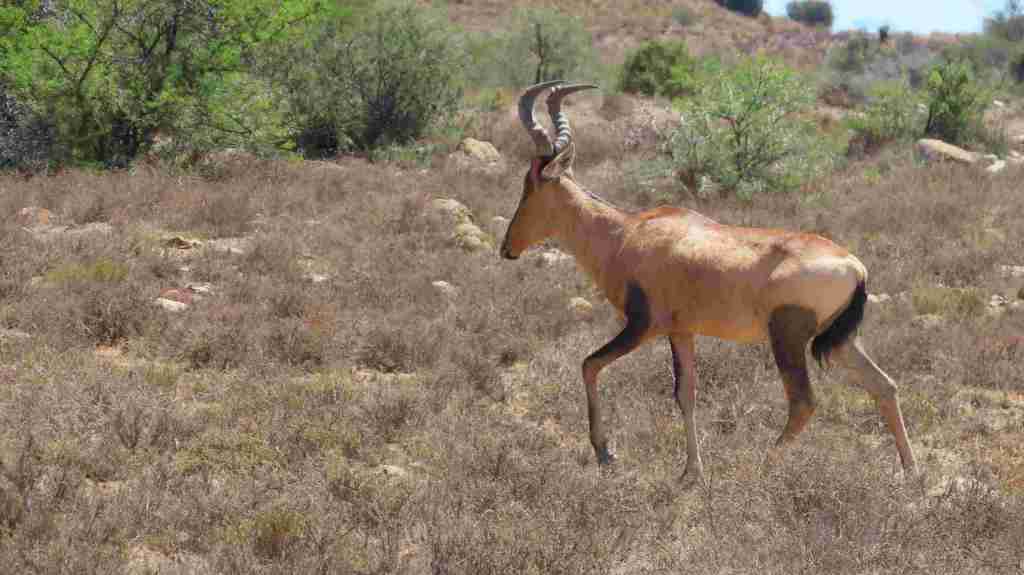
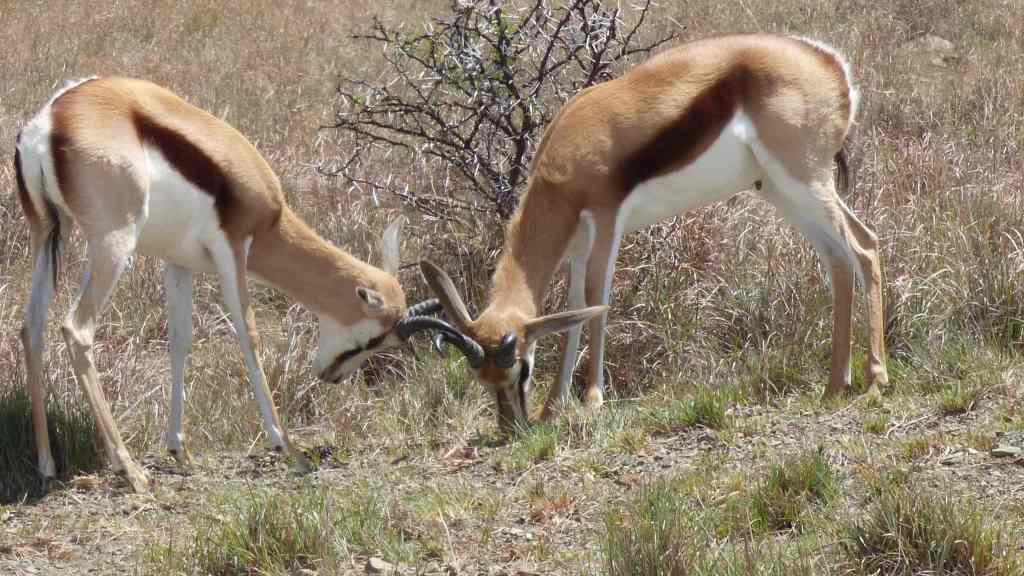
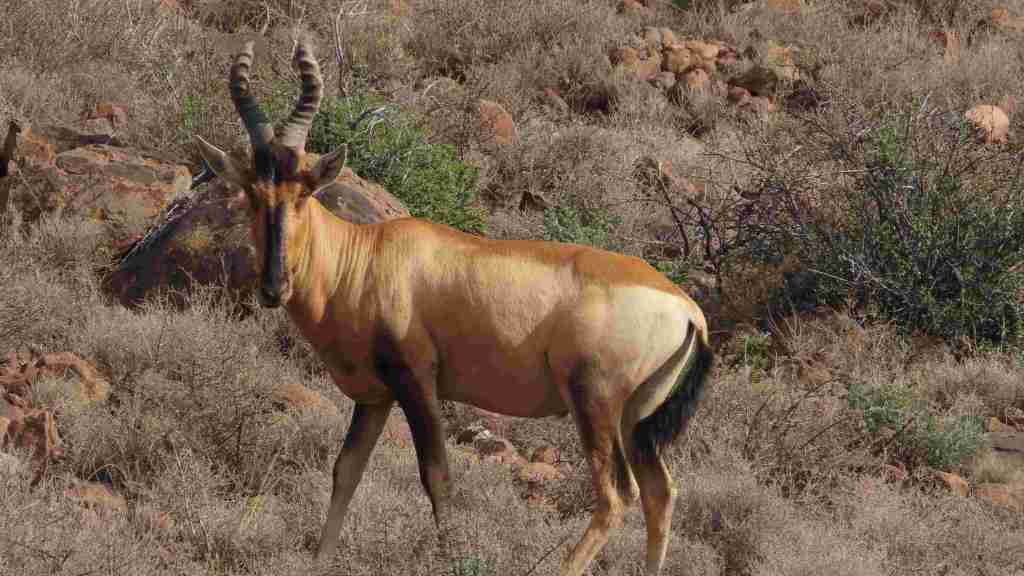
Mountain Zebra is similar to the Karoo in that it is a park designed for scenery rather than animals, though many species exist to enjoy. The park is named after the Mountain Zebra, so there are many of those, along with large herds of Black Wildebeest, Springbok, Red Hartebeest, and Blesbok. There are also cheetahs, lions, and hyenas as predators, though judging by the numbers and large herds of antelope, there could be a lot more! It is very disappointing to arrive at the gate and see all the names on the register state that they are there for culling! It’s not exactly what you want to see at a National Park.

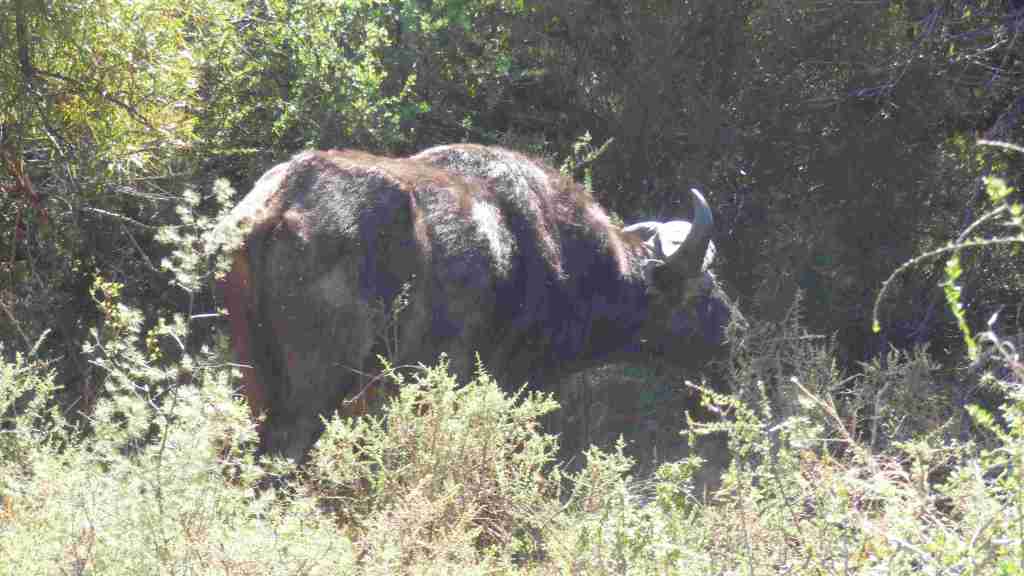
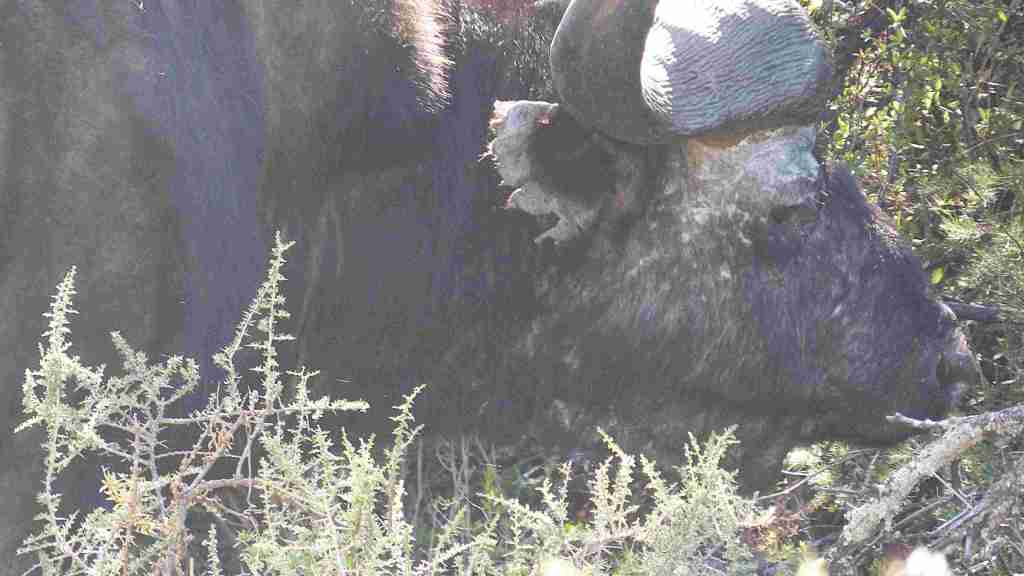
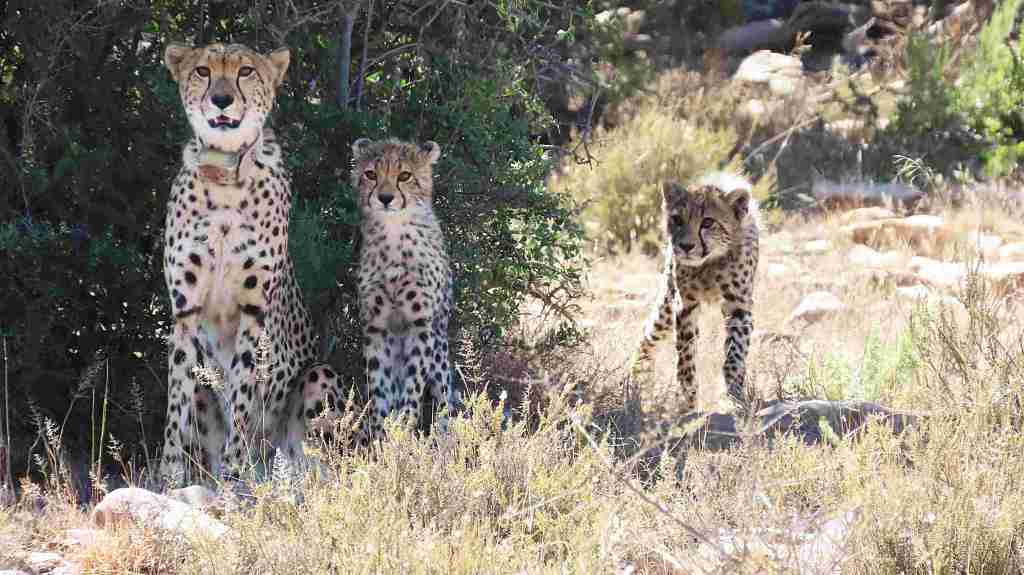
We had three fantastic days at Mountain Zebra, where we again revelled in the vast skies, beautiful vistas, and some tremendous sightings, the cream of which was the cheetah female with her cubs. On our last evening, we drove up one of the hills looking for the black rhino, and halfway up, we came across a lone buffalo bull standing in the middle of the road. There was a long drop-off on one side and a mountain on the other, so we needed somewhere for us or it to go. We pulled over to the side of the road, turned off the engine, and hoped he would simply walk past on the right. Rather than walk past, he walked right up to the bonnet of the Ford. We both sat silently while he stared, and we stared, and the birds were the only sound! I know how unpredictable dagga boys can be, so I had my heart in my mouth and taped the entire thing, so I had something to show the insurance company if need be! Another car came from the opposite direction, so he clambered over the rocks and got far enough off the road to allow both cars to pass. 

All in all, it was a lovely, restful trip. Having enjoyed a large bowl of chicken soup for our souls, it was time to pack up once again and start our trek home. All too quickly, our two weeks away ended, and the reality of day-to-day living is again back! 

Gecko Road Trip 2024 Mountain Zebra National Park

Note: To view the group of photographs, click on the first one to enlarge it. Use the arrows to navigate the slideshow. Press ‘escape’ to return to the blog post. On your phone, swipe to view each photo and tap the ‘x’ to return to the blog post. You may also need to tap the information icon to view the captions.

22 October 2024 to 25 October 2024

The final game reserve we visited was Mountain Zebra National Park near Cradock in the Eastern Cape. Upon signing in at the entrance gate, we were initially disappointed to hear that culling would occur during our visit. Later, we discovered that it was conducted at night, which did not affect our stay in any way.

Fortunately, the weather began to clear up, allowing us to set up camp just before the onset of rain. Since it wasn’t warm enough to cook outside and we are all getting too old to rough it, we opted for the convenience of eating at the lovely camp restaurant. Each day the weather got better until the last two were quite hot.

We’ve visited Mountain Zebra many times and have experienced most of their 4×4 trails. However, this time we opted not to take our car on these routes and instead adhered to the standard gravel and tarred roads.
The scenery in the park is stunning,

We were thrilled to discover an abundance of wildlife. At times, we encountered vast herds composed of various species mingling together. As avid birdwatchers, we paused for each bird, compiling a list of approximately 50 different species, though we captured fewer photographs.

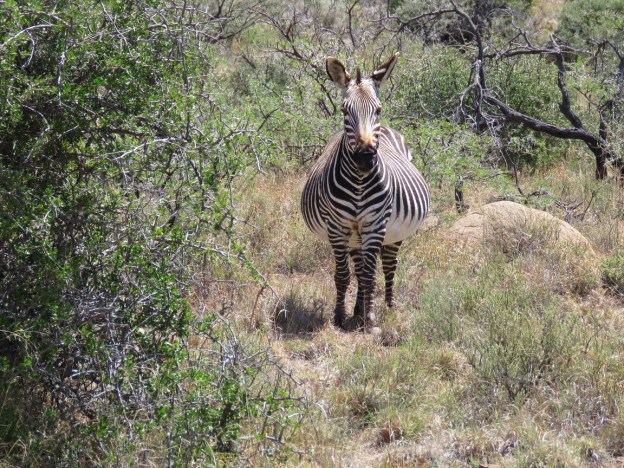
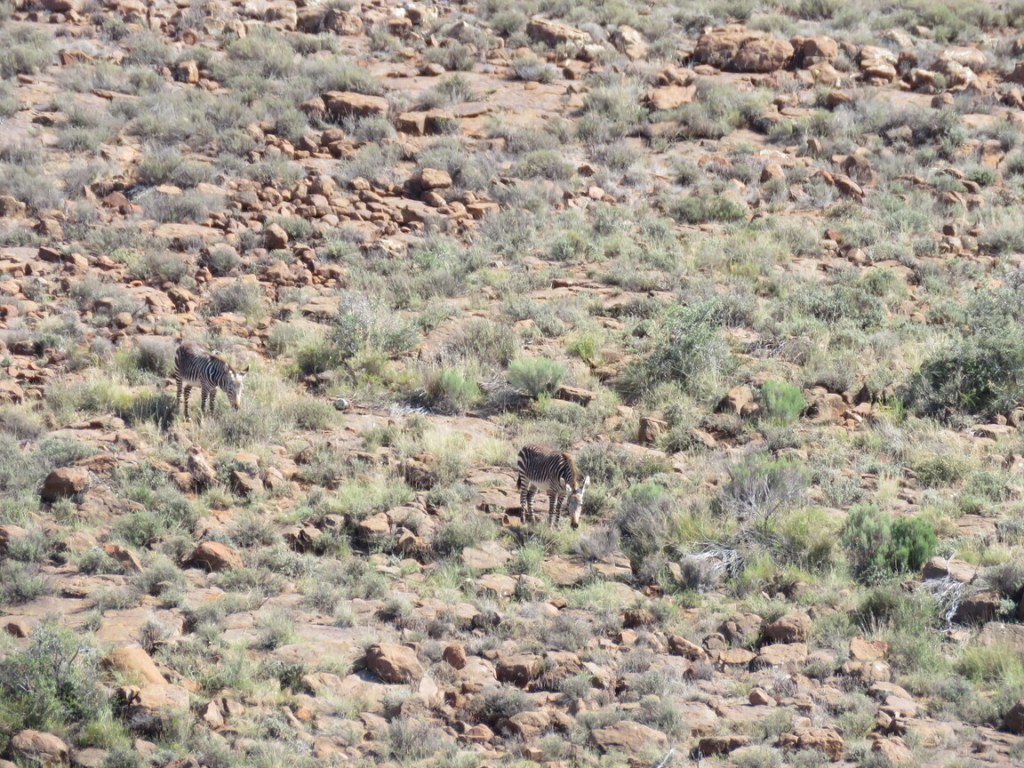
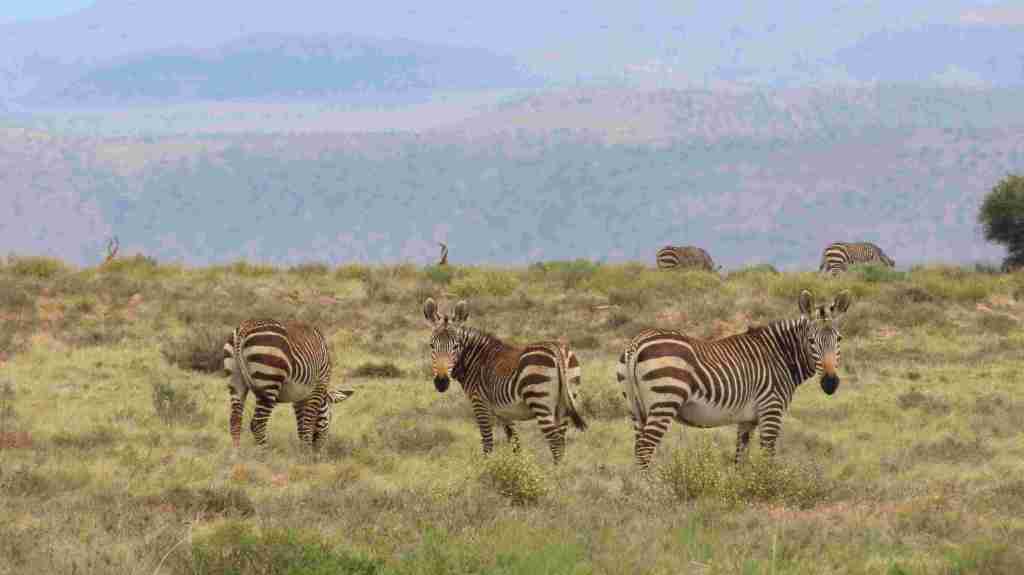
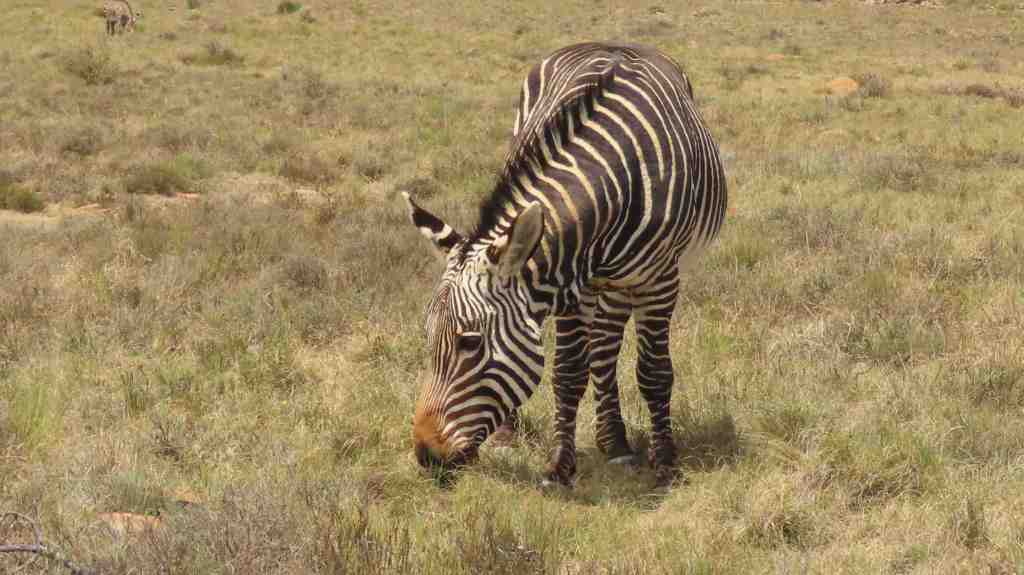
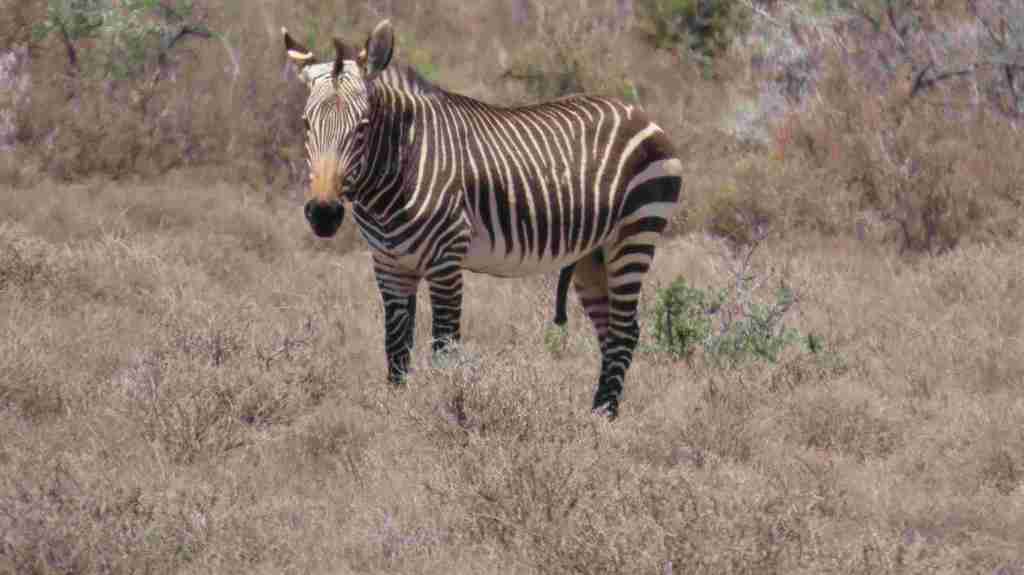
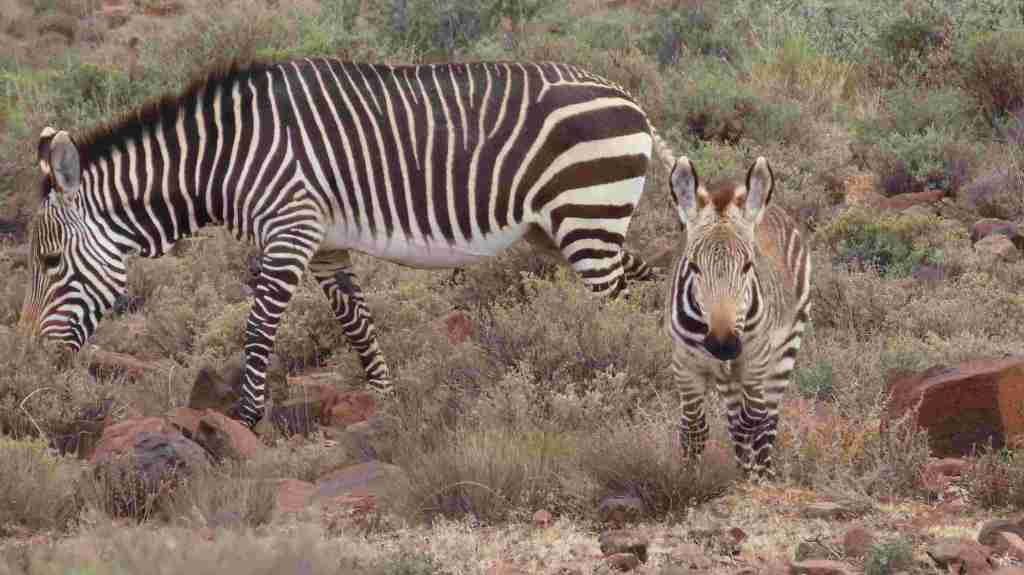
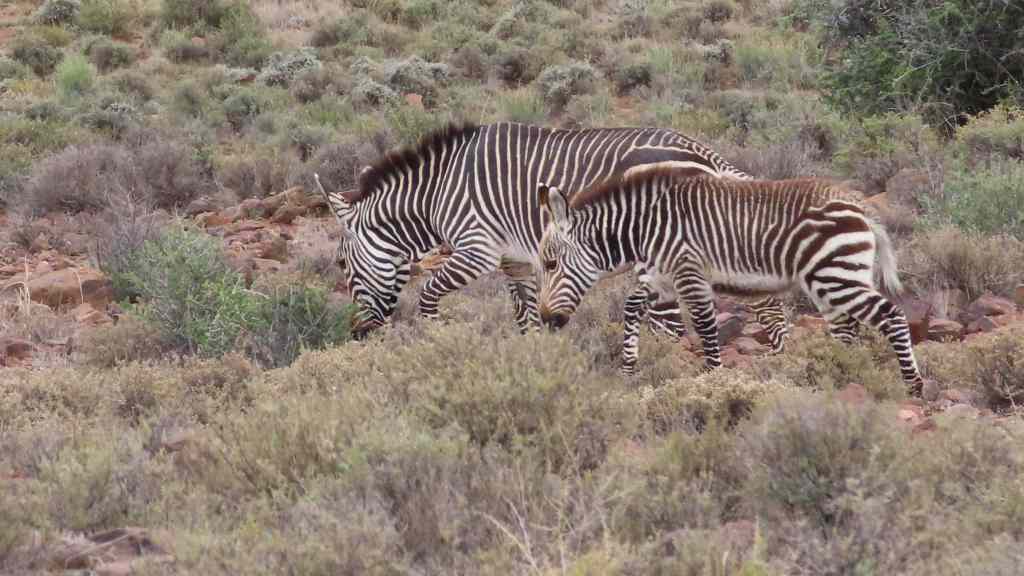
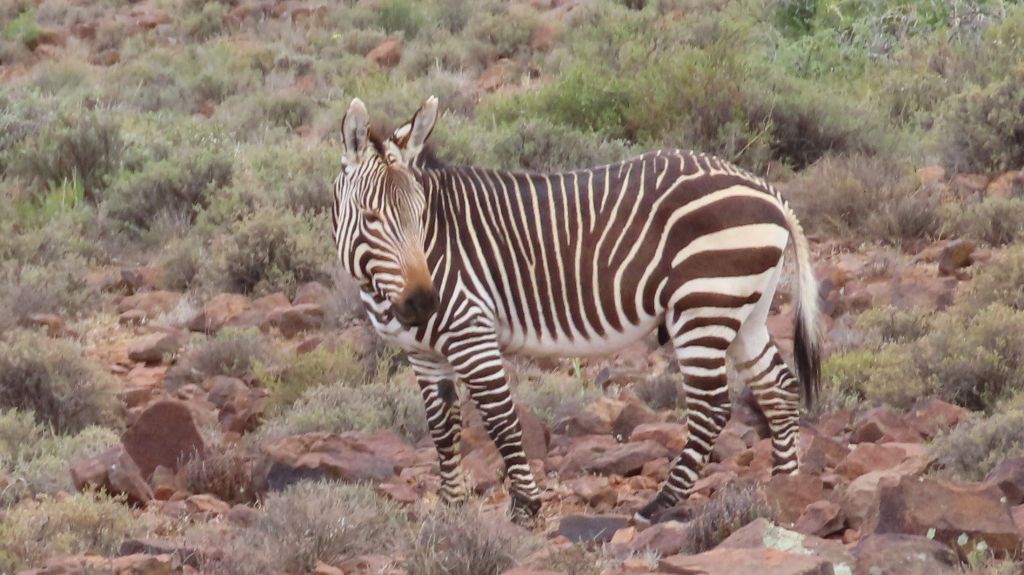
Naturally, the first animal we encountered in the park was a Mountain Zebra, and these creatures kept us amused throughout our visit. At times we observed them alone, at other times in large herds, and occasionally alongside other animals.
South Africa has three different species of zebra namely Plains Zebra, Mountain Zebra, and Grevy’s Zebra. (Grevy’s not seen in South Africa – only East Africa – Thanks Anne for the correction.)
The Plains Zebra is the most common and is characterized by broad stripes that can run horizontally or vertically, often accompanied by shadow stripes.
The Grevy’s Zebra is significantly larger than the other species, with narrow pinstripes and a sturdier build.
The Mountain Zebra is smaller, distinguished by a dewlap and stripes that are narrower than the Plains’, and more distinct, particularly on the rump.
Each species has adapted to its environment, with the Mountain Zebra as its name suggests, favouring mountainous regions.
In the 1930s, the Mountain Zebra was considered a threatened species, which led to the establishment of the park for their protection. This initiative has proven to be successful, as there are now large herds of them thriving in the park.

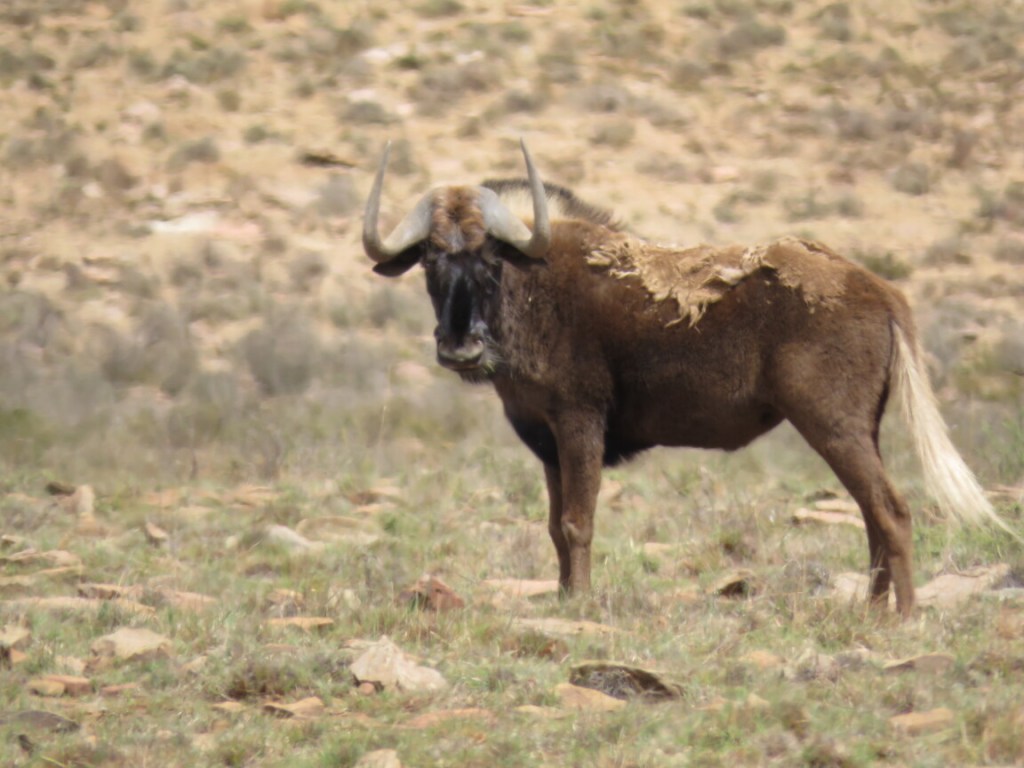
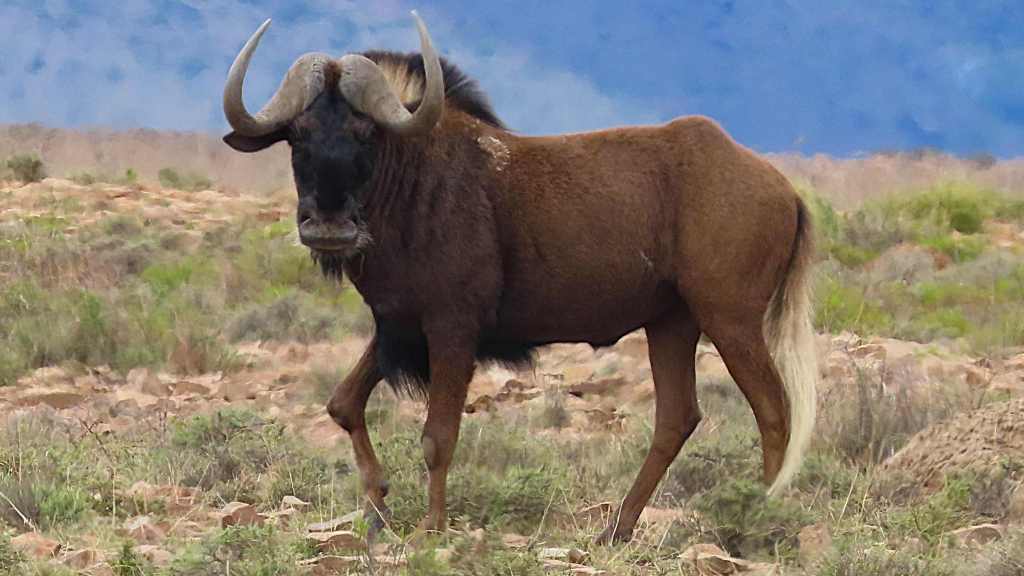
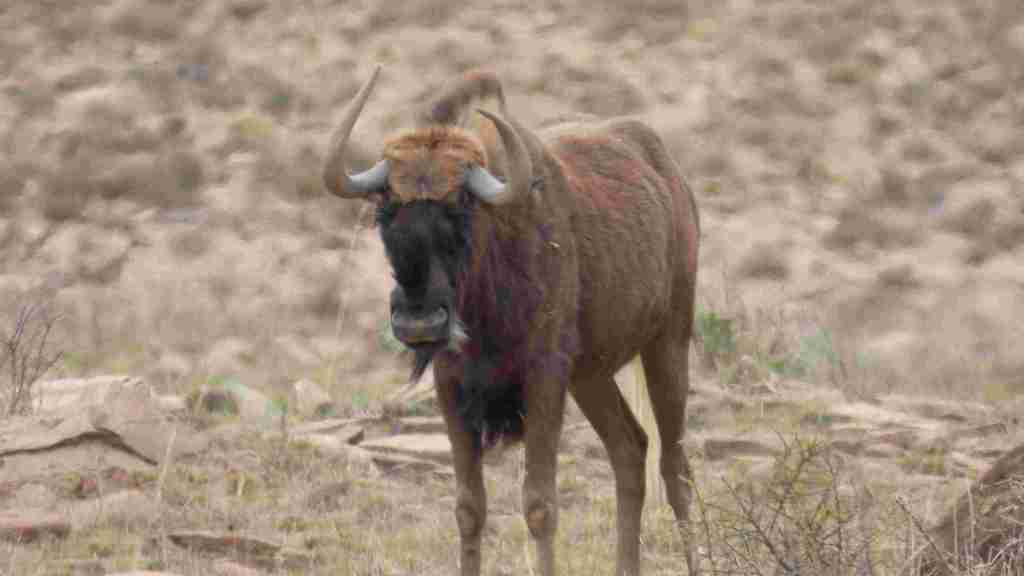
Another species that is thriving well in this park is the Black Wildebeest/White-tailed Gnu.
Blue Wildebeest/Brindled Gnu/White-bearded Gnu prefer the savannah. They are larger and have horns that curve sideways out from the head.
Black Wildebeest/White-tailed Gnu are smaller, have horns facing forward, and have white tails.

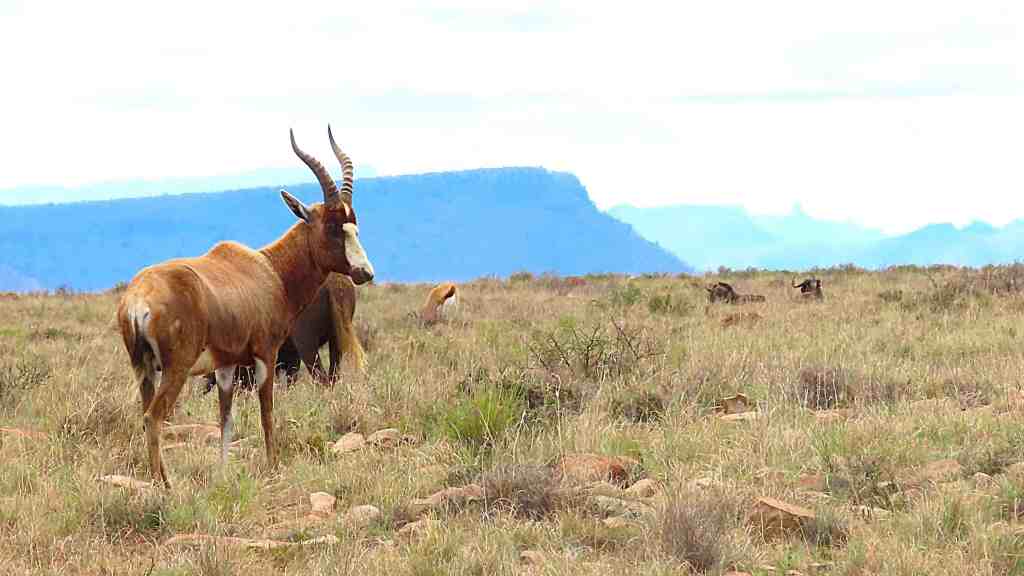
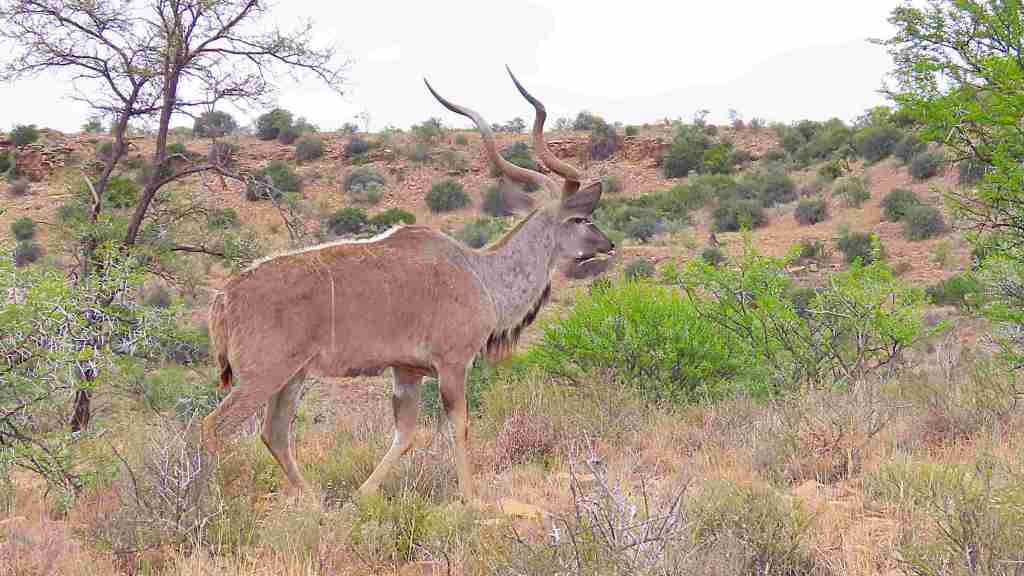
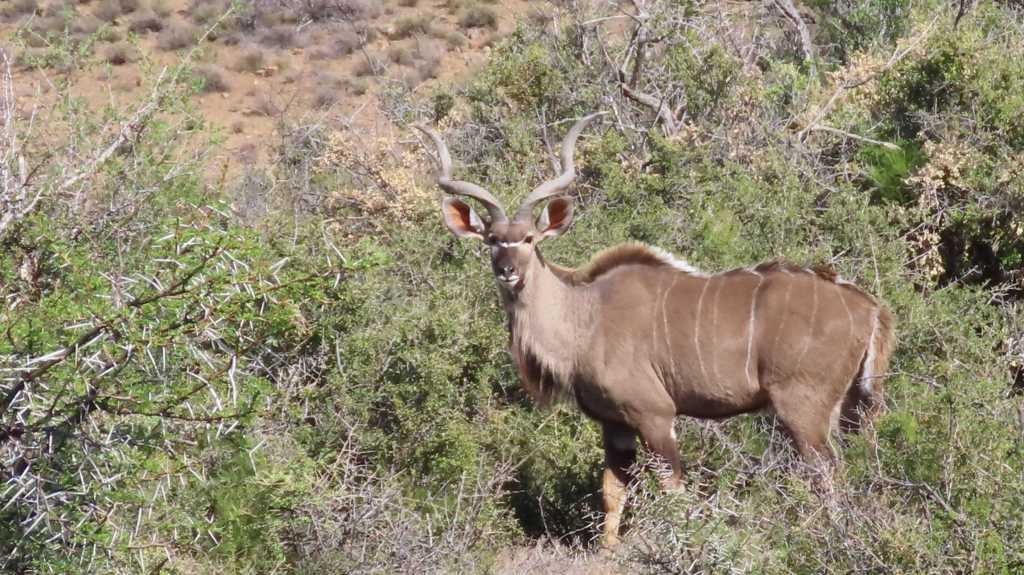
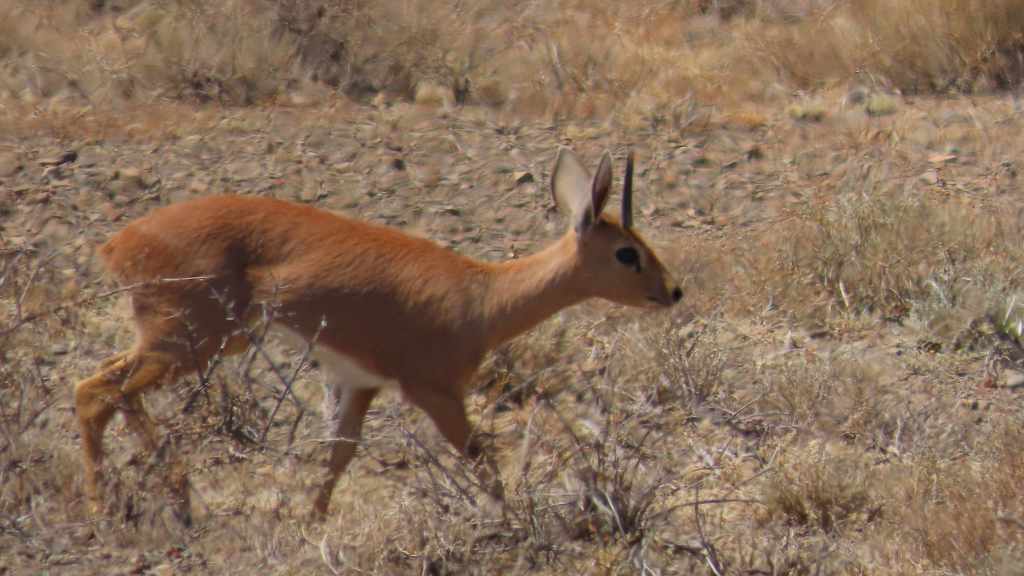
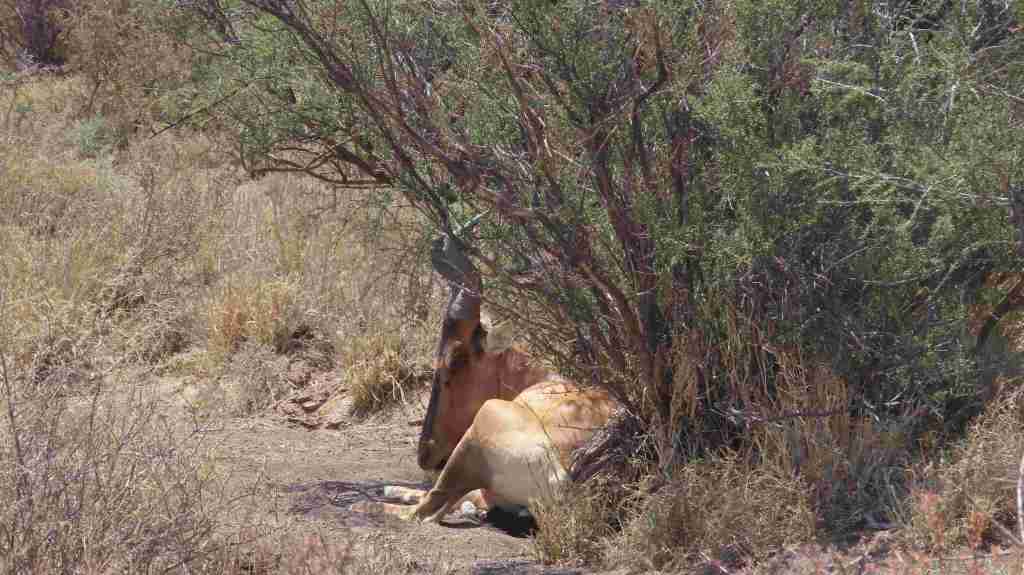
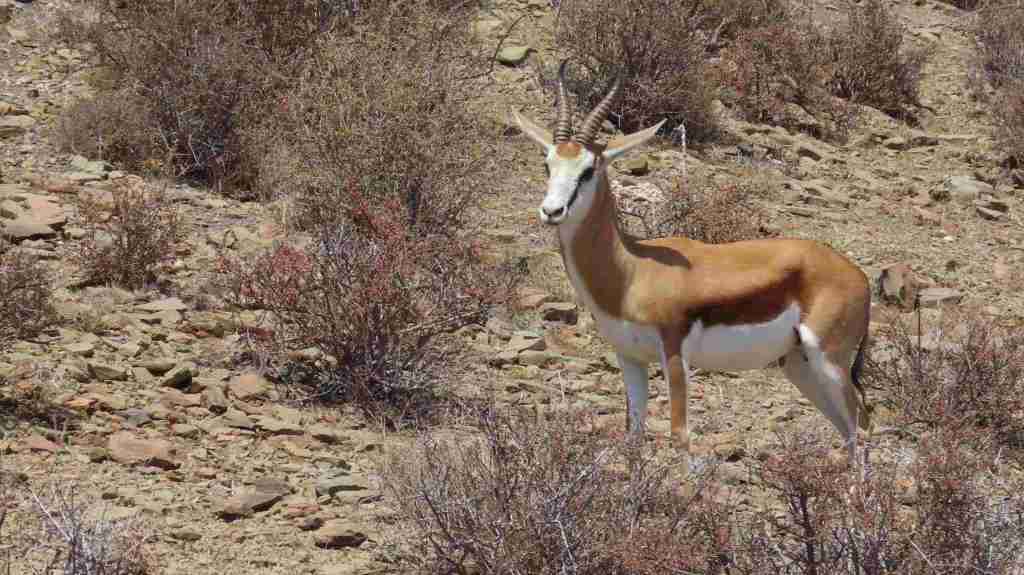
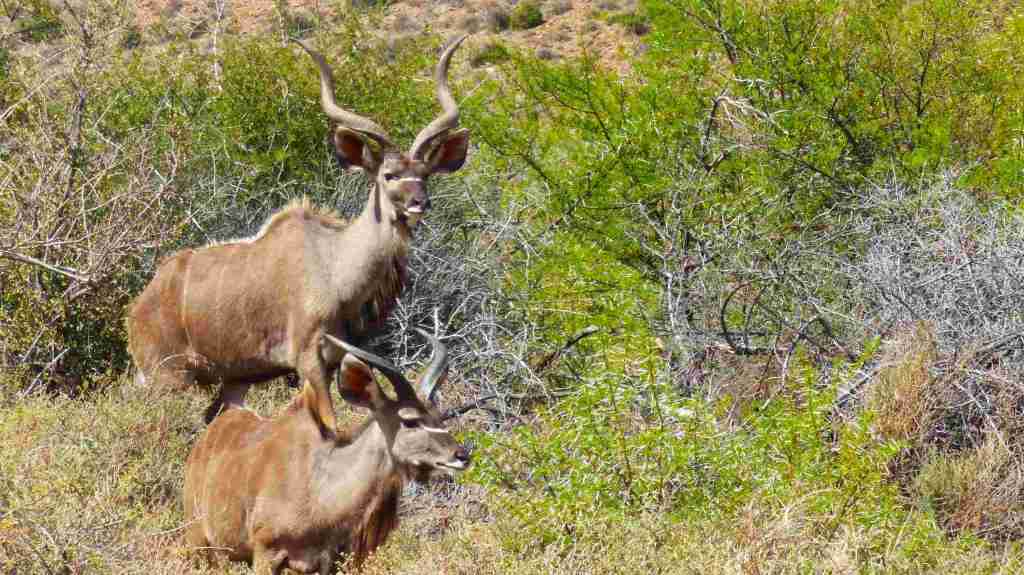
Antelope species common in the park are Blesbok, Red Hartebeest, Gemsbok, Eland, Kudu, Springbok and a variety of others that we did not spot.

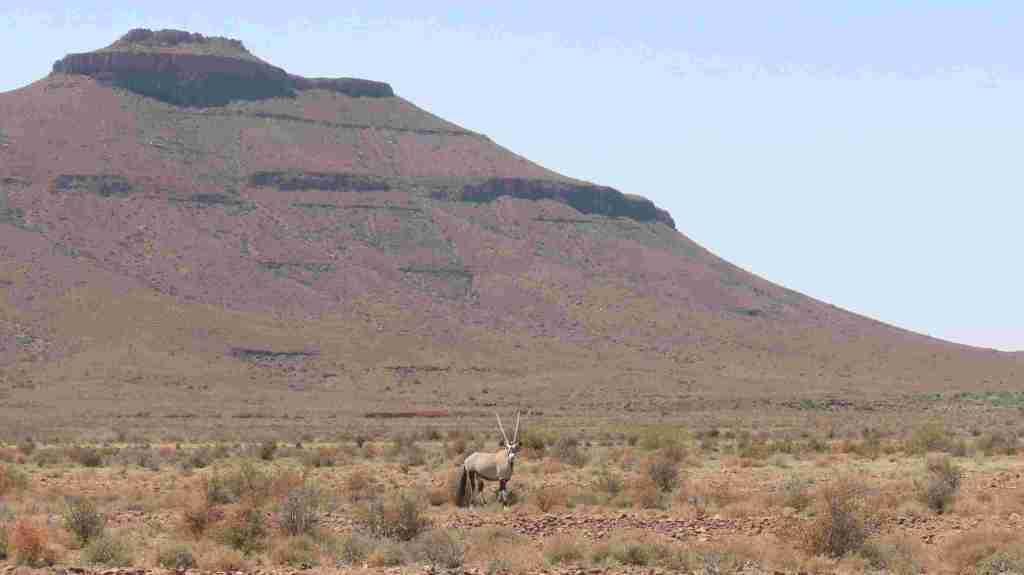
What are you staring at? Haven’t you seen a Gemsbok before? I’m also known as an Oryx

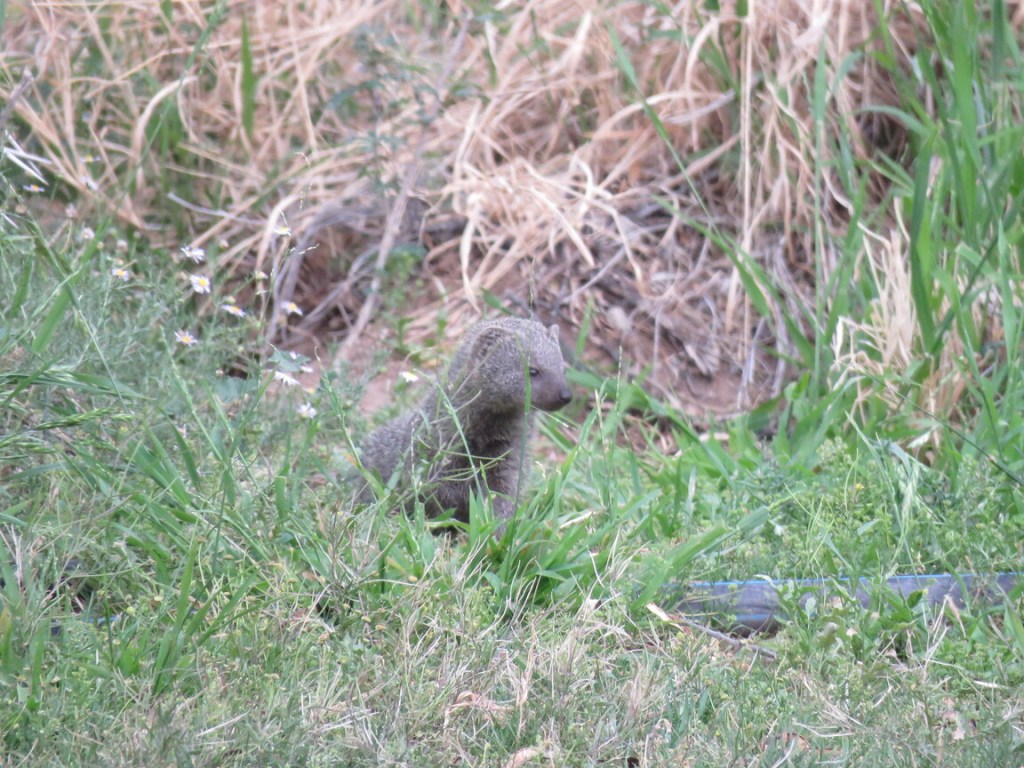
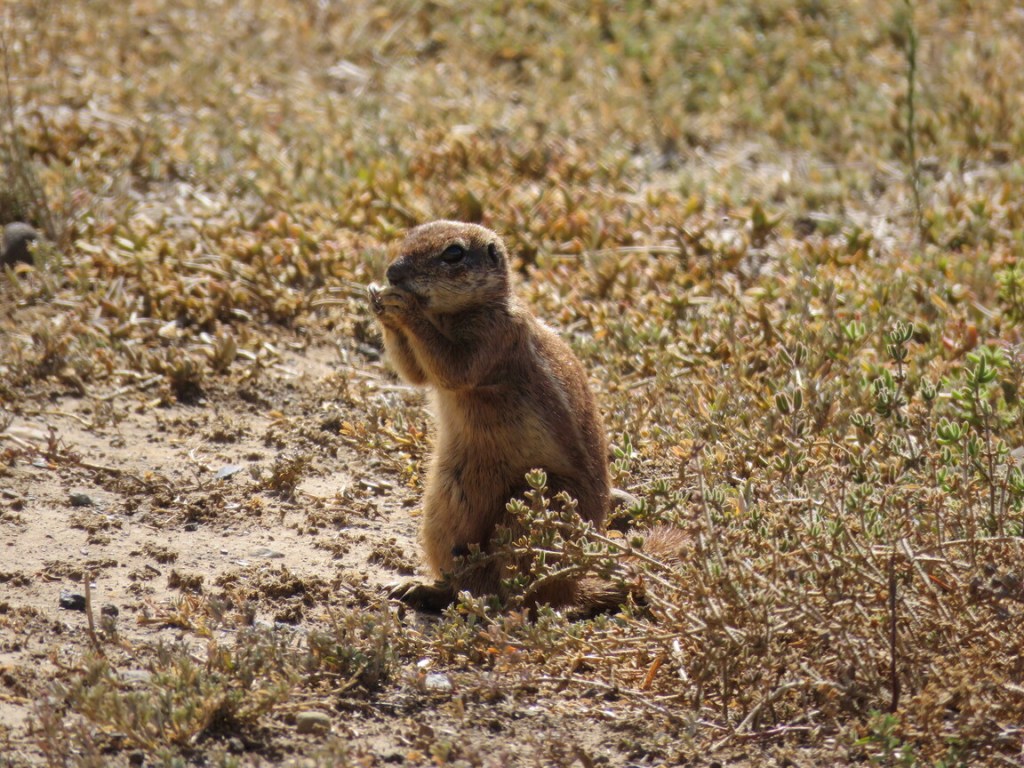
Other creatures that gave us entertainment were jackals, ground squirrels, and buffalo.

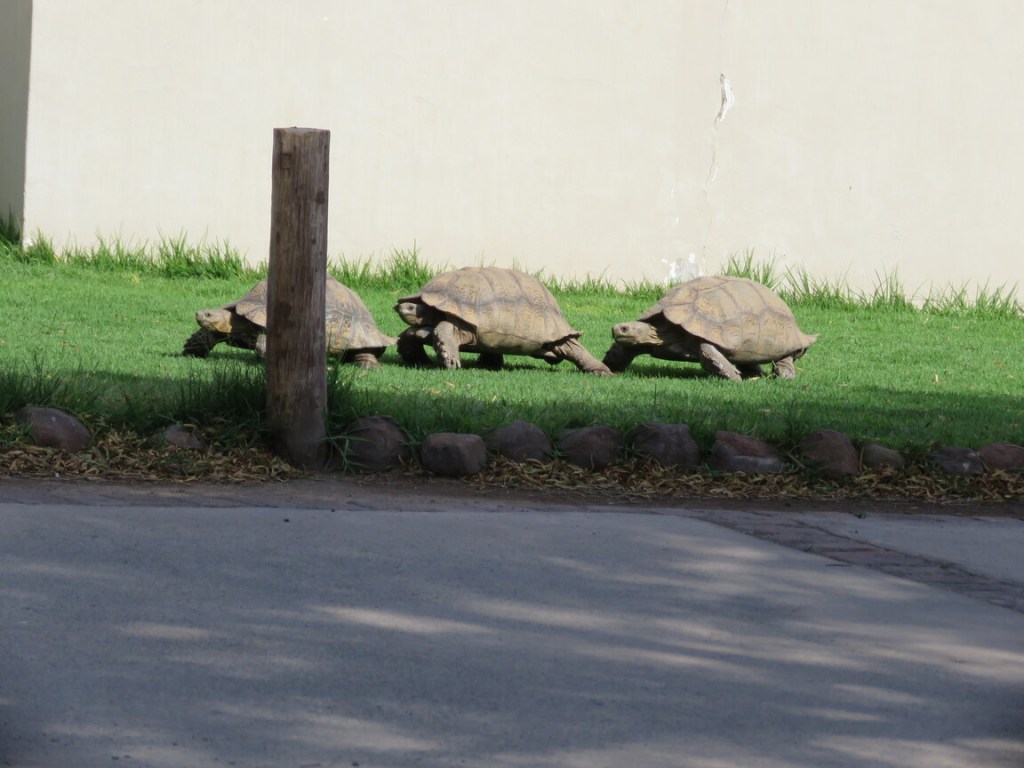
In camp we were also delighted to have some smaller visitors.

On our second day in the park, our travelling companions, Alec and Cathy saw a mother cheetah and two cubs. I was thrilled for them but also a little jealous that we had missed this awesome sighting. The next day we set off to find them on the Ubejane Loop but were disappointed. They were nowhere to be seen.
It was our last full day in the park and the weather was stunning. “Let’s see if we can find those cheetahs today, ” I suggested to The Earl. “They’re probably long gone but let’s be positive.”
We made our way to the Ubejane turnoff. It was after nine o’clock and I felt that we should have left camp earlier. But we couldn’t have timed it better. A single white Toyota Land Cruiser was standing still a short way from the turnoff. The Earl drew up beside him and I nearly jumped out of the car when he said they were looking at a cheetah! But do you think we could locate her? We scanned the hillside and then turned to the guy for clearer instructions. How insane! We had looked too high and too far not believing she could be right there, under a bush, sitting up and literally waving at us!


“Where are the cubs?” The Earl was worried. After a few minutes, one appeared and came to sit with Mom. Soon a second came along and we breathed a sigh of relief that they were both safe.

And then another one appeared.

The first two cubs stuck close to Mom but the third was clearly the problem child of the family, always lagging behind, looking for his own adventures.

It was breakfast time and Mom needed to hunt. She instructed her cubs to stay put and set off to find food. For over an hour we watched her hunt but although she made two attempts her prey got away. I was glad for the poor bokkie but sorry that the family had to go hungry for a little longer.

On the prowl
Silently stalking
Trying to stay hidden
The two obedient kittens came when called
But the naughty one lagged behind as usual
Sorry kids – he got away!

Cheetahs were successfully reintroduced to the Mountain Zebra National Park in 2007 and have thrived in the mountainous terrain. Having never spotted them on previous visits, I considered booking a guided game drive. However, I’m glad I refrained, as this self-discovered sighting became the highlight of our trip.

I have asked Cathy to write a ‘guest blog’ and her story will appear here soon.

Gecko Road Trip October 2024 Day 3,4 and 5 Karoo National Park

Note: When viewing the groups of photographs click on first one to enlarge. Use arrows to see slide show. Press escape to return to the blog post.  If you are on your phone you just need to swipe to see each photo and click on the x to return to the blog post. You might also need to click on the info icon to see the captions.

Wednesday 16 October 2024 to Friday, 18 October 2024

We spent three lovely days exploring the Karoo National Pak. On Wednesday, the weather started off cool but warmed up beautifully as the day progressed. Thursday, was very hot and we did not spend much time out. Today, Friday, started off quite cool but by the afternoon it was hot again.
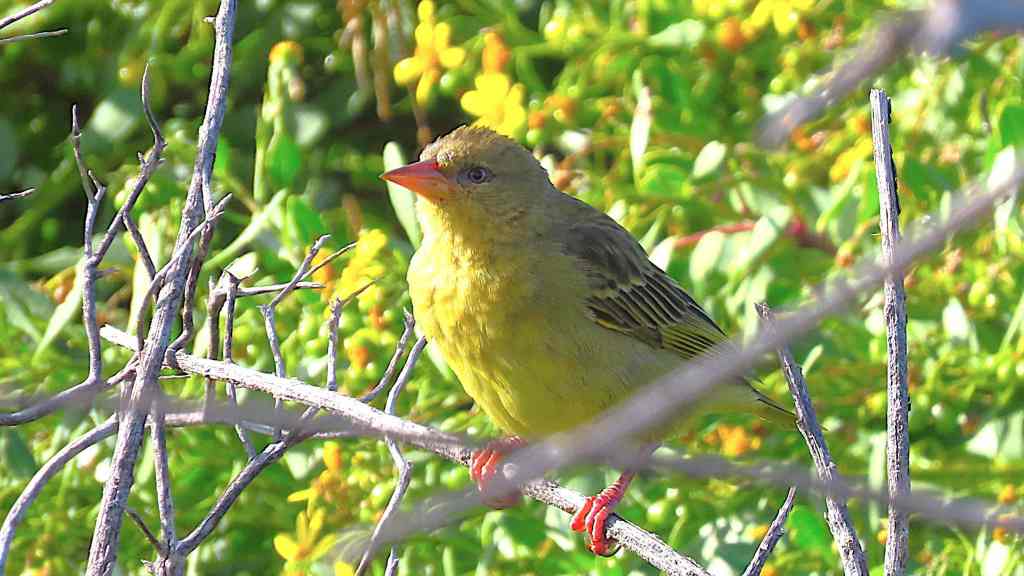
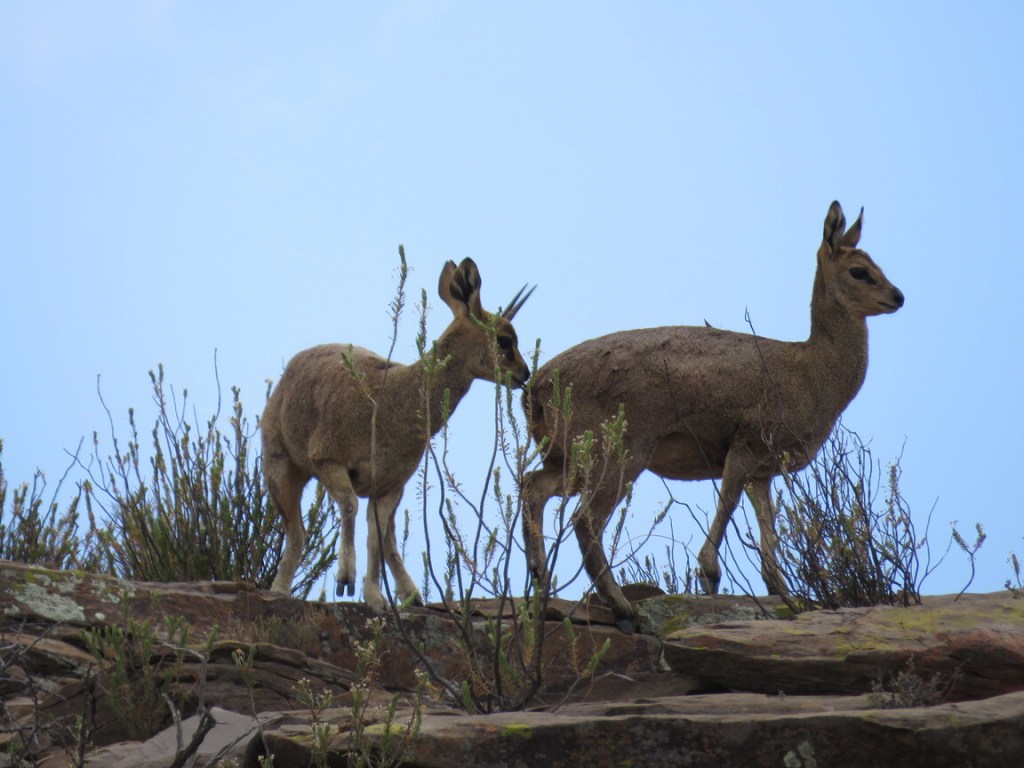
On Tuesday we took the Klipspringer and Potlekkertjie Loop.  We didn’t spot any klipspringers but we did encounter Grey Rhebok on the Potlekkertjie loop.
We stopped at the Doornhoek Picnic site for breakfast and a loo break.

Once again we were intrigued by the wonderland of ancient rock formations dating back to the Permian Period. Millions of years ago dinosaurs roamed these plains.

Below is a list of the creatures we encountered: the first group consists of mammals, and the second group comprises birds.

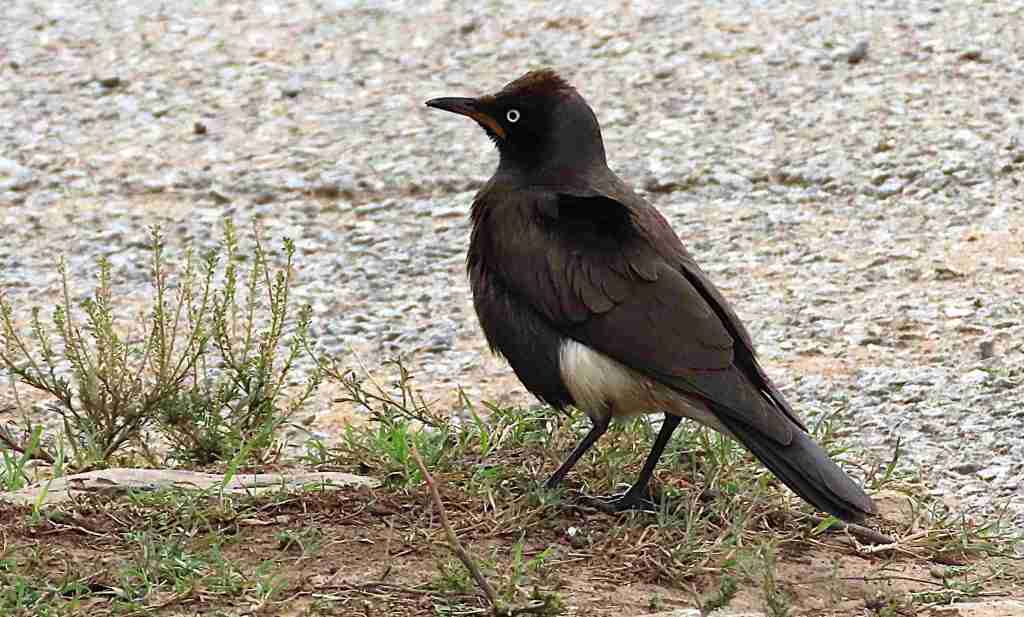
We heard and saw a number of birds but of course, most of them did not stop to pose for their portraits. Thanks to those who indulged the Paparazzi. The Verreaux’s eagles were the highlight of the day. I spotted them when I stopped to look at pale-winged starlings. We got out at the viewpoint but could not see them from there so went back to just before that and got some reasonable shots.

Over the next two days, we saw much of the same, and I will let the photos below tell the story.

On Thursday, we popped in at Bulkraal Picnic Site near the gate and were impressed with the facilities. On Wednesday and Friday, we had our breakfast at Doornhoek Picnic Site, which is on the Potlettertjie Loop.

There is always some bird activity at picnic sites and Bulkraal did not disappoint.

Baboons are always so amusing and this morning as we were coming around the bend of we encountered a troop using the wall as a lookout. They were not impressed with us and one clung to the grooves in the wall hoping we would not spot him.

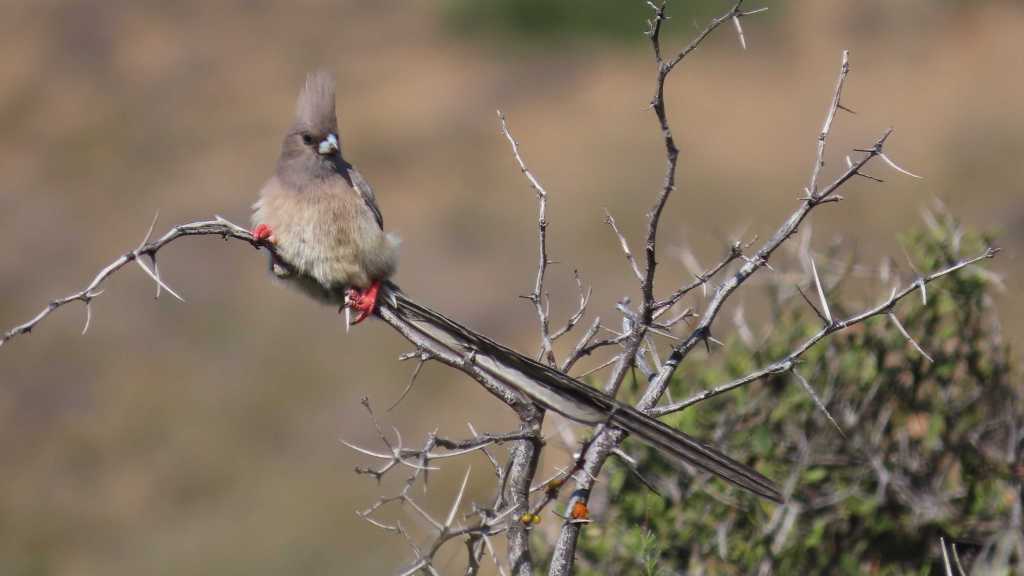
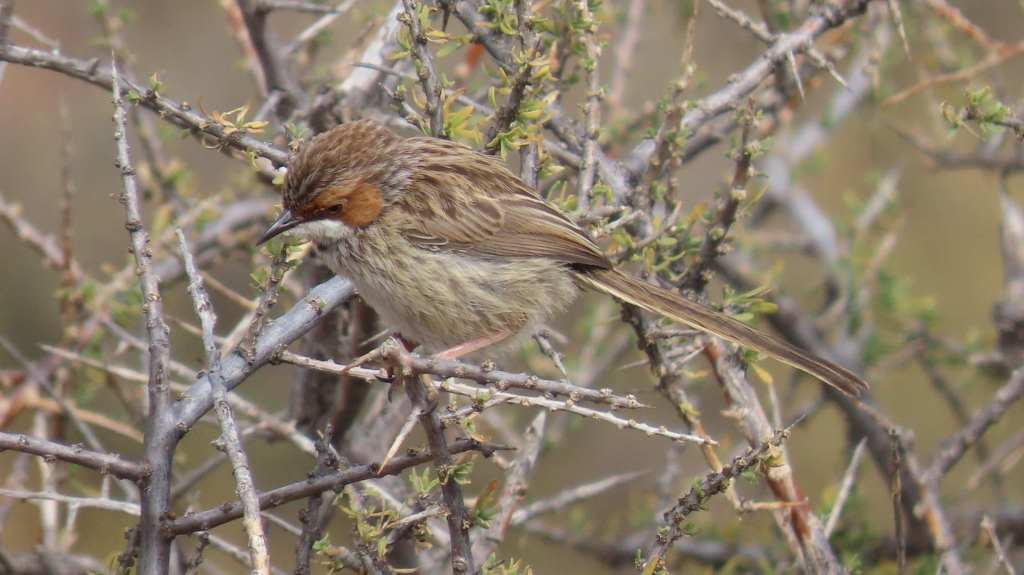
The birds were particularly active today but not all would pose for the Paparazzi. We had a stunning sighting of two secretary birds. One was in a tree and another flew in to say hi to him and then they scurried away at great speed making photography extremely difficult. The photos are simply too bad to be published! Below are the more obliging of the feathered friends.

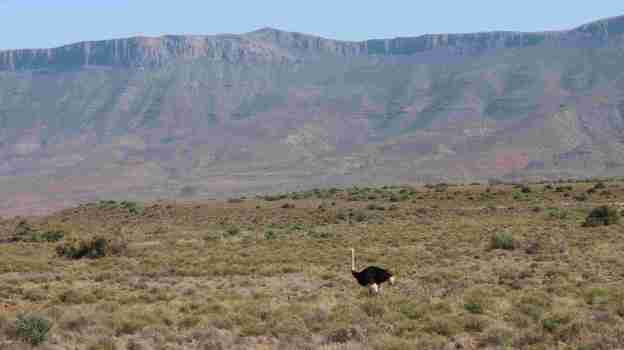
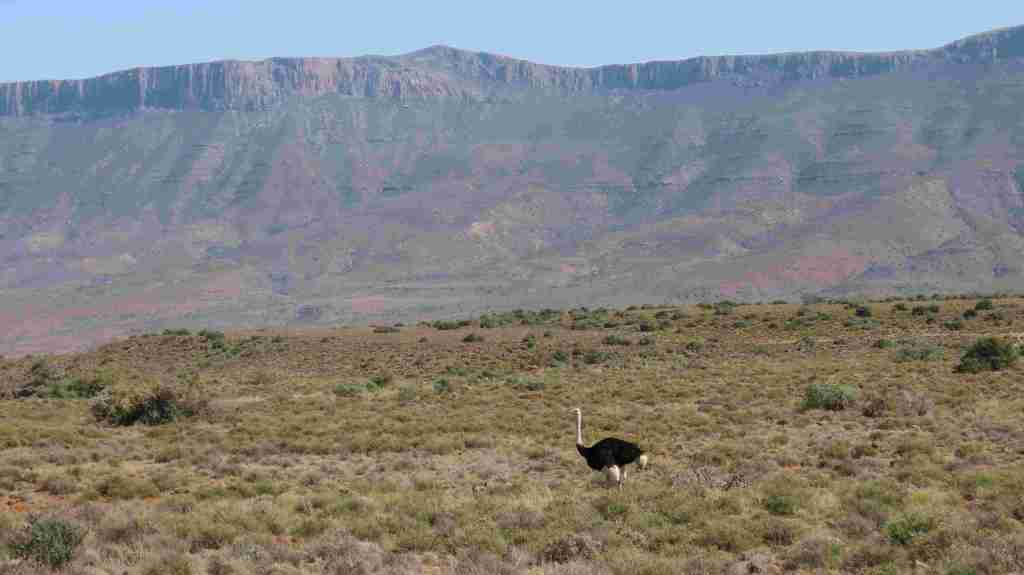
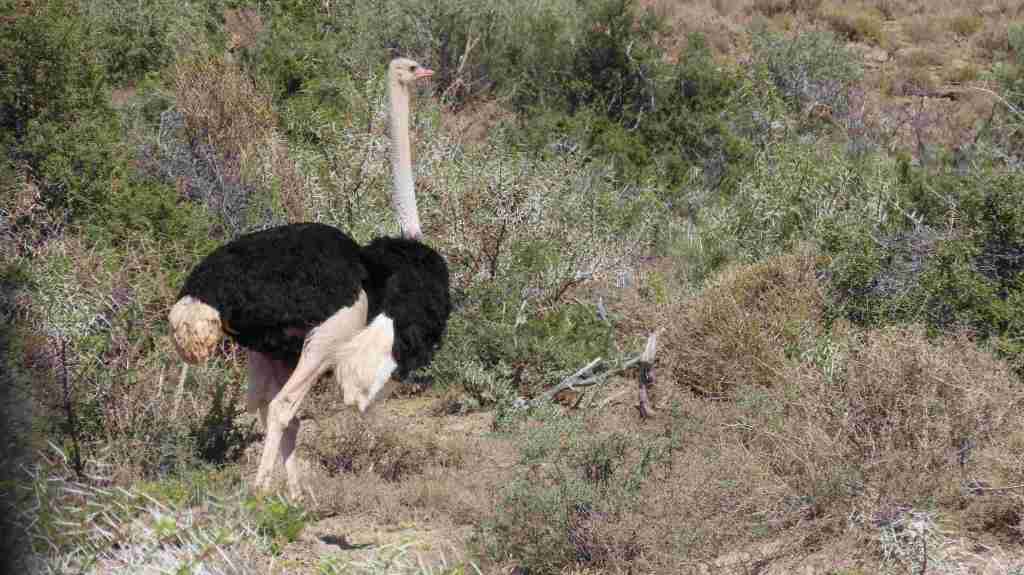
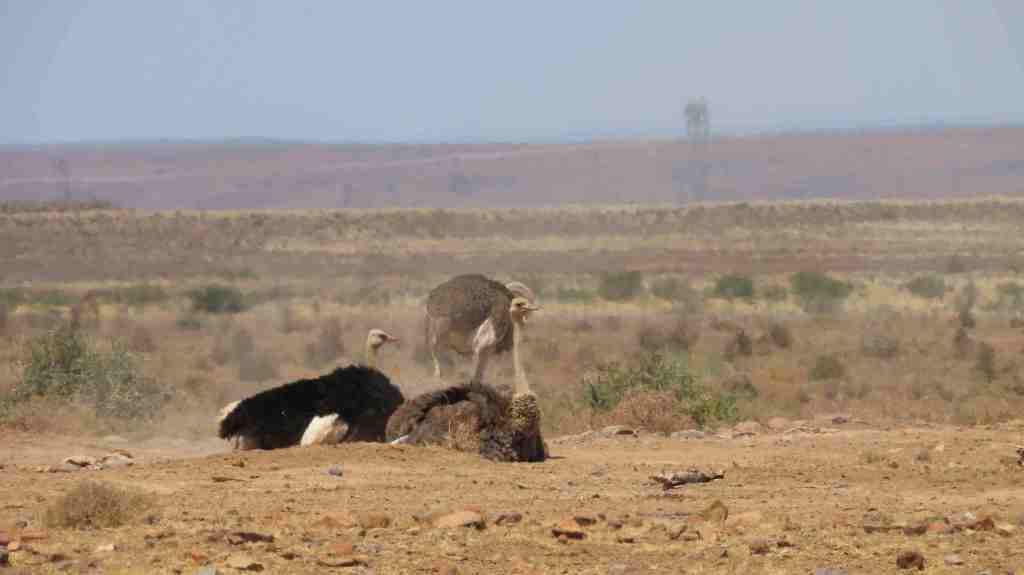
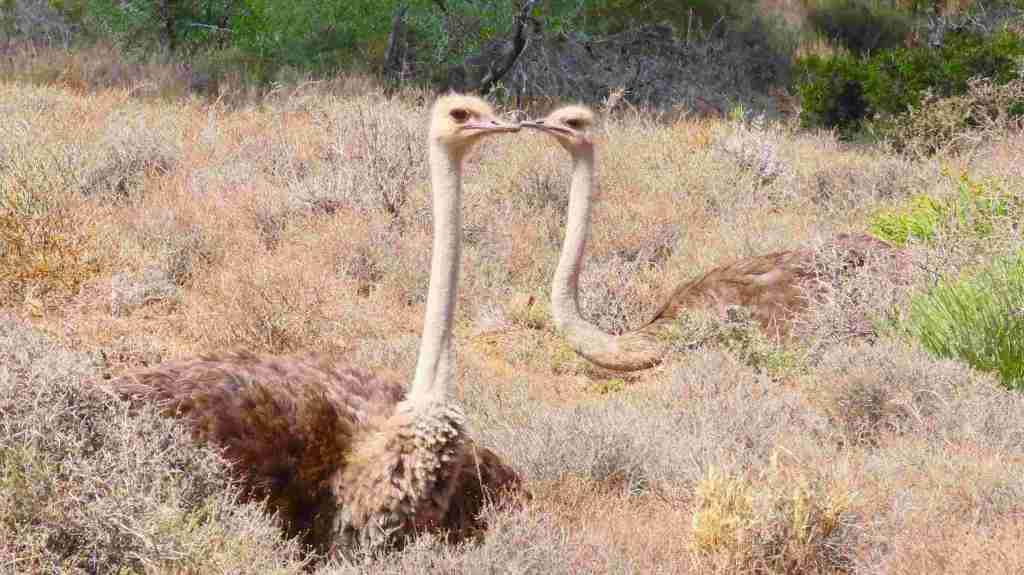
These female ostriches camouflage so well. We wonder if they’re sitting on eggs?

The mammals also gave us some lovely Kodak Moments.

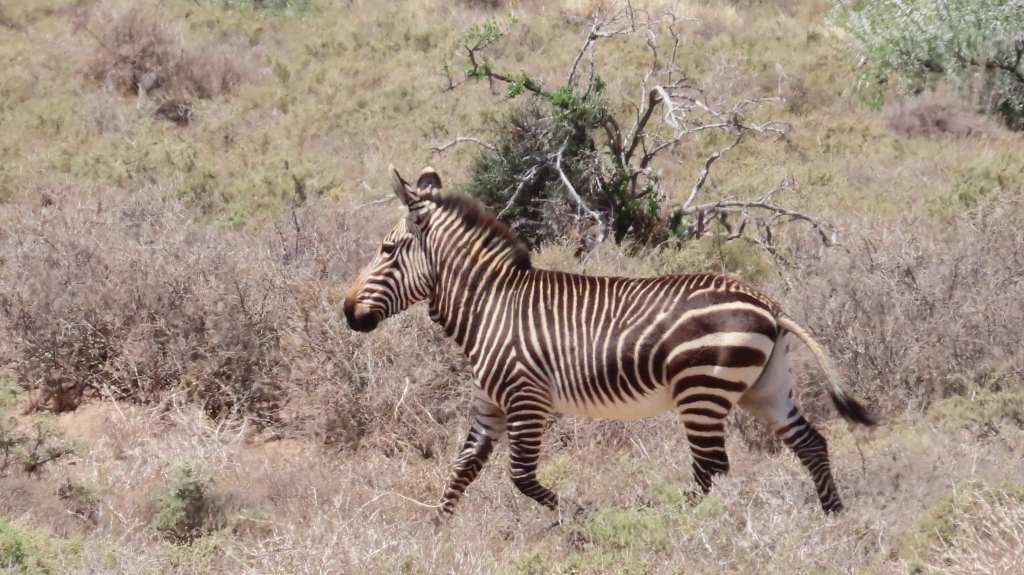
Mountain zebras are particularly photogenic

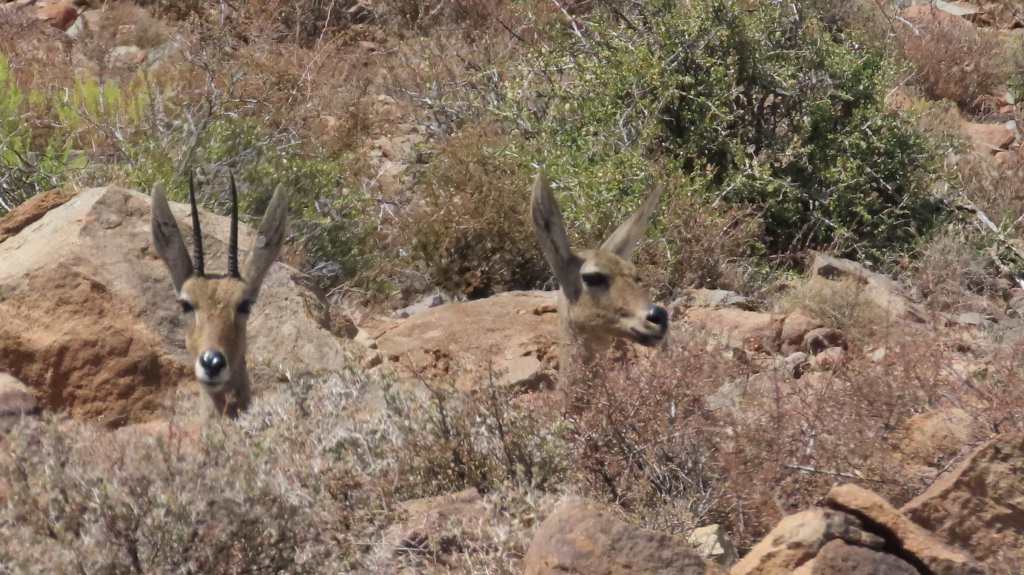
A Grey Rhebok surprised us on the road and leaped off into the bush but we still managed to get some shots of him.

This afternoon, we packed as much as we could for our departure tomorrow. In the evening, we dined at the camp’s restaurant. Earl, Cathy, and Alec savored the oxtail potjie, while I indulged in the venison potjie—sorry, Bambi!

And it looks like this will be my last post on WordPress as I have run out of free space. I will have to think about what I am going to do – give up blogging or set up a paid space.