Tag Archives: education

SYW 26 May 2025 Navigating Educational Challenges: Insights from South Africa

Here are my answers to this week’s questions from pensensitivity101

It’s the second May Bank Holiday here in the UK and the kids are on half term break. In your country, do schools have a ‘Half Term’ break?
I’m not familiar with the concept of a half-term break. In South Africa, the school year is divided into four terms, each lasting approximately 9 to 12 weeks.

After the first summer term, students get a break of 10 days to two weeks, depending on whether it aligns with the Easter weekend. The second term (Autumn) concludes with a three-week winter holiday, spanning the last week of June and the first two weeks of July. The third term (Winter) is followed by a 10-day spring break.

The final term (Spring/Summer) runs from late September to mid-December, after which schools close for a six-week summer holiday. The academic year officially begins in mid-January.

Education methods have changed a lot since I left school in 1972.
Would you like to be learning in a classroom of today?

Teaching methods in this country have evolved significantly, though some changes can be frustrating for traditional educators. The quality of government schools varies widely—some maintain strong standards, while others, particularly township schools, face severe challenges. Access to quality education often depends on geographical location, with disparities rooted in insufficient government support, undervaluing of teachers, and high student-to-teacher ratios.

Imagine the difficulties of teaching in an under-resourced township school, where classrooms hold 50 to 60 students and children share desks designed for two. I have witnessed schools where students squeezed in four to a single desk—an unfortunate reality in many areas.

I would have loved to teach in a school like the one my grandchildren attended, where I also once taught. It was truly child-centered, providing a safe and nurturing environment where every student felt valued and heard. Seeing my grandchildren thrive in such a setting brought me immense joy.

Did you leave school as soon as you could, or did you go on to study for a degree or other higher education?
Looking back, I didn’t fully grasp how fortunate I was. I attended a prestigious Teacher Training College for three years, followed by an additional year at a university where I specialised in the education of children with speech and hearing impairments.

When you entered the working world, did your job require ‘qualifications’ or did you learn on the job?
My training was exceptional, equipping me with a clear understanding of workplace expectations from the start. Naturally, I continued to learn and grow, and the support of incredible colleagues played a key role in refining my teaching skills.

I was fortunate to work at an excellent institution that embraced modern educational practices and regularly conducted workshops to enhance staff proficiency.

As my experience deepened, I had the privilege of mentoring younger colleagues later in my career, helping to guide and support their professional development.

I started a job at a mirror factory today – I have no experience but I can see myself learning on the job! ( AI Generated}

Gratitude

My hubby and I have both worked hard at careers that we loved. We supported each other and together overcame glitches along the way. Now in our retirement, we are grateful to embrace our golden years with relative comfort and good health, even though it’s with less financial security than we would have liked. But, hey, enough is a good as a feast!


Share Your World Monday 3 February2025

Here are my answers to this week’s SYW Challenge from Di
What can you remember about your last day at school/college?
I don’t recall my last day of school, but I vividly remember the final day of college. After three years of community living, were about to scatter across the country and the world, embarking on new careers, getting married, and starting families. On our last night, we pulled an all-nighter, and no one was allowed to sleep! By morning, we were all in high spirits, excited that it was over and eager to head home. Our college had a beautiful chapel where we attended a service every morning before classes. On this final day, there was a farewell service, and it was incredibly emotional. The last hymn was “God Be With You Till We Meet Again” (Jeremiah Eames Ranking). In our sleep-deprived and emotional state, it moved us all to tears. After the chapel service, we wept in each other’s arms before climbing into parents cars or rushing to the train station. Because it was my last term, my dad had bought me an air-ticket home – a rare treat in those days. Someone’s dad gave me a lift from college to the airport and it was all I could do to control my sniffles as we drove the 120 km. He must have breathed a sigh of relief when he dropped my off still red-eyed and teary.

Our Chapel

I had gained a lot of weight during my three years at college but lost it all during the last term. To complete my new look I’d had my hair cut short and wore a cute new mini-dress on the plane home. It had been six months since I’d last seen my family. When I deplaned and walked toward my father who was there to meet me, he did not recognize me until I said, “Hi Dad” His look of amazement set me off in tears again. He thought that I was upset that he hadn’t recognized his own daughter! This got me giggling hysterically. I think it was the lack of sleep, emotional parting from my college friends and surprising my family with my new look that was just too much for me! However, I got over it!

Before and After – AI generated picture

Were you close enough to walk to school or did you need transport?
I walked for most of my school career. My last two years were at a school that required me to go by train but I walked from the station to home.

Did you have a favorite teacher
I did not like my first teacher but I was only with her for a few months. We then moved to another province and my new teacher was amazing. She remained my favourite forever. I completed my primary school career in that school and she taught me other subjects like Art and Needlework in the higher grades.
I was perfectly happy with all my other teachers even the one I punched in the stomach when he got me in a headlock. He never touched me again! In those days we did not complain to our parents about unkind teachers but my mother taught me to fight back if anybody tried to hurt me even if he/she was an adult.

Would you like to go back to school?
No – not that I didn’t like it but it’s a part of life that is over.
When I retired from teaching I missed it and would have gone back to do relief/supply teaching had I remained in my hometown near schools that I’d previously taught at. But now that I’m used to my freedom I have absolutely no desire to put my foot back into the classroom!

My Classroom back in the day!

Gratitude:

I love today’s Gratitude Quote

Yes – that is true. I have many happy memories of years gone by and I am still happy with the way life is treating me now.

JusJoJan Mood – 22 January 2024

Today’s prompt for JusJoJan is mood and it comes from Dar.

A mood is a temporary state of mind or feeling and many factors can affect the mood we are in at any given moment. If one has a healthy Emotional Intelligence, one can recognise and manage one’s moods and also know how to deal with the moods of others.

I taught at a school where we were encouraged to look out for children who had difficulties with their emotions and moods, to consider the causes when dealing with them, and to help them manage their reactions to their moods too. 

Every morning as the children filed into the classroom each greeted the teacher with a show of fingers. Four fingers meant – “I am feeling great.” Three fingers meant – “I am okay.” Two fingers meant – ”I am not so great’ and 1 finger meant – “I am going to cry.”

This system helped the teacher to understand why a child would be distracted or acting up. There was no pressure on the child to say why they were feeling a certain way but they could choose to discuss things with the teacher, ask for a care circle, or ask to see the school counselor. 

We had care circles where the children could share anything with the class – just their news or anything that was bothering them and then their classmates could offer comfort or solutions. Things like – my hamster died, my dad’s gone on a business trip and I miss him. Granny is in hospital. I had a fight with my sister. The sharing really helped and made for a bonded class. A child could ask for a care circle at any time and usually after break, we would have one to settle disputes that occurred during play! Anyone who wanted to speak held a teddy bear and nobody was allowed to interrupt until the teddy was passed to her. The children loved care circle time and many issues were thrashed out during this time and the children usually ended up finding solutions with very little input from the teacher.  

You might think that all this would take time but it was time well-spent. The children knew that they were understood and cared for not only by the teacher but by their peers as well and this reduced bullying to a great degree. 

I found that most of the children would enter the classroom with four fingers and the ever-cheerful ones even went as high as 10! Then there were the melancholics who were always a two and would express something very minor as the cause. I would say something sympathetic and then ask if there was something else at that moment that could make them a three. After a little thinking, the answer would be something like – I’m a three because I‘m at school, or after school I have a playdate with my best friend, or it’s swimming during phy ed today. Often another child would take the sad one in hand and cheer her up.

Mental health at all ages is very important. We should never dismiss moodiness as just a bad personality trait. As we grow older we should also not ignore mood swings. There are many causes including, dementia, menopause, ill health, and poor diet. When one is retired and no longer in a regular routine of work, exercise, and diet, one can let things slip and drink too much, eat too many treats, and even take in too much coffee! All these will affect mood! If we keep busy, eat correctly, and do a little exercise and still have mood swings, we should seek help straight away.

JusJoJan 24 – Writing – Sunday 14 January 2024

The JusJoJan prompt for today comes from Joanne Thank you Diane for this word as it is one very close to my heart,

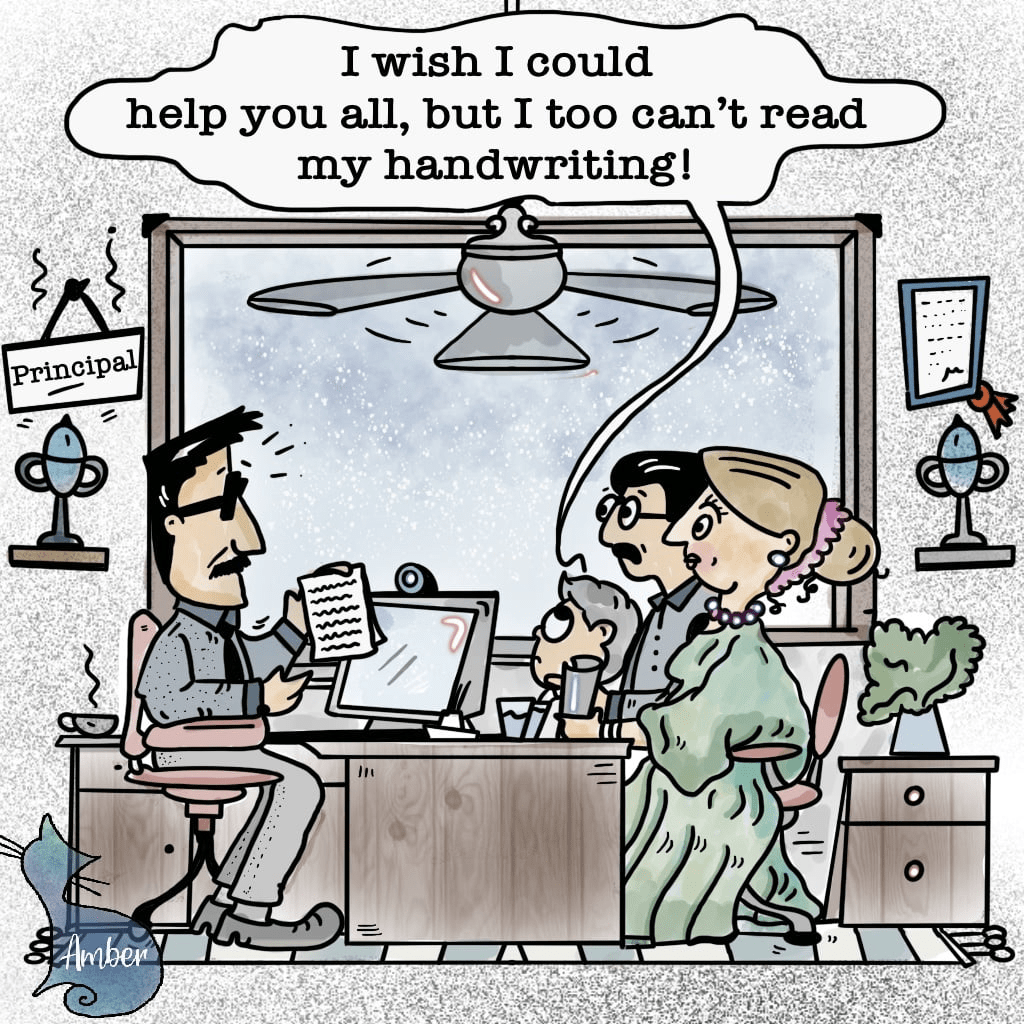
When I was growing up and in primary school, handwriting was considered a very important skill and our teachers insisted upon correct pencil grip, correct letter formation, and above all neatness. This was in the days before children with difficulties were sent for occupational therapy, remedial tuition, and psychological counselling. While I was learning my letters, I now realise, I needed all three! 

First, we learned to print in the ball and stick fashion. In Standard One/Grade Three we started on cursive. By then I had mastered the difficult skill of printing and was really keen to get to cursive which I found a tad easier to learn. According to my very strict but excellent teacher, my handwriting was very neat. But it was also very slow! I spent so much time concentrating on neatness that speed fell by the wayside. Once I reached the higher grades speed became important so guess what -neatness fell by the wayside simply so that I could keep up! 

From then on my teachers despaired of ever getting me to write neatly and accurately. I could spell but I made ‘careless’ mistakes – and still do!  I had to make a choice, write neatly and win the teacher’s praise for pristine penmanship or get the work done in the required time and avoid being scolded for tardiness. Time won! These days children with learning issues are given extra time to complete – I had no such privilege. How I envied those children who managed to complete tasks with awesome handwriting and no errors.

I liked writing – not handwriting but writing and I still do. When it came to writing compositions I just needed so much more time so usually did not write quite as much as I would have liked to.

When I was teaching in the seventies and eighties, handwriting was still an important subject in the curriculum. Now that I was the teacher I was a little more sympathetic toward those who struggled with this skill. My training had prepared me how to help those with fine motor coordination problems and I never penalised a child for untidy work. Some of my colleagues were still strict about neatness but having had problems myself as a child I was more interested in what the child wrote rather than how he wrote it. 

However, I was strict about pencil grip and correct letter formation. In other words, I encouraged my learners to start the letter correctly, to start next to the margin, and to try to keep between the lines. The reason for this is that the physical act of writing is good for the brain. 

Learning to physically write is still important because writing uses more complex motor and cognitive skills than is required to use a keyboard. Knowing how to write also helps with reading fluency as writing activates the visual perception of letters. There are many other benefits to having good handwriting but I won’t bore my readers with those now.

I learned to type when I was in Standard 7/Grade 9 and it changed my life! It is the best thing I ever learned at school, besides reading, because although I did not need to type during my early career it was a skill I could use on a computer which from the nineties on became a huge part of both school admin and creating teaching aids. I welcomed the digital age with open arms as it made everything a thousand times better for me. Doing admin for school records was a nightmare – no mistakes were allowed at all – one mistake and you had to begin again! It took me five times longer than my more accurate colleagues. I was one of the first on my staff to welcome a computerised system while many of the older teachers were resistant to the changes!

Yes – I love technology and it is a great tool for those who struggle to physically write. Screens are being used as a learning tool in school. I used them myself and found them a tremendous aid as they capture the attention of children and enable you to do so much more in the classroom. But handwriting is still important and we must still teach children to read and write. 

The pencil will one day become obsolete as did stone tablets and quill pens. But it’s not time to throw the baby out with the bath water yet!