Note: To view the group of photographs, click on the first one to enlarge it. Use the arrows to navigate the slideshow. Press ‘escape’ to return to the blog post. On your phone, swipe to view each photo and tap the ‘x’ to return to the blog post. You may also need to tap the information icon to view the captions.
Friday 27 February 2026 It was a beautiful day out at sea, and there were high hopes for the mighty marlin to be conquered, but these monsters of the ocean had other ideas. Lesser aquatic giants, playfully called maco-marlin because of their habit of impersonating their supriors, caused a bit of excitement when Team Simrad called in a hook-up just fifteen minutes before lines-up. The thrill was unfortunately short-lived, and word soon came through that they had been fooled!
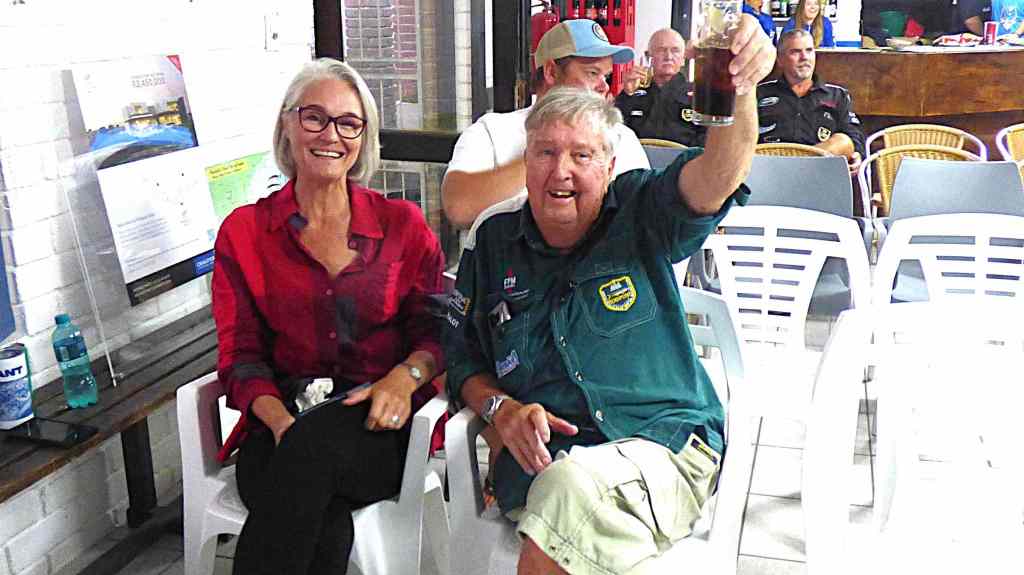
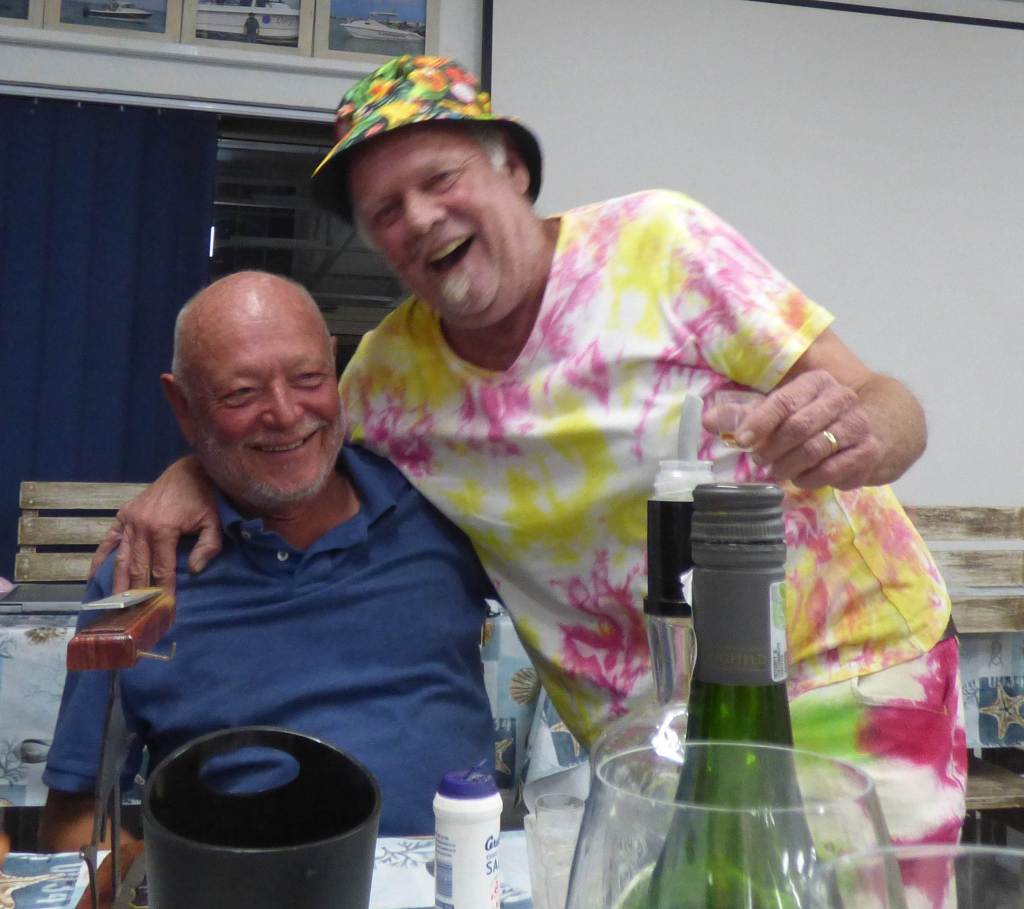
AI GeneratedRikka Crighton, sitting next to Oom Diekie, the man up the road from the harbour, whose trusty scales served the anglers who caught extra fish throughout the week.
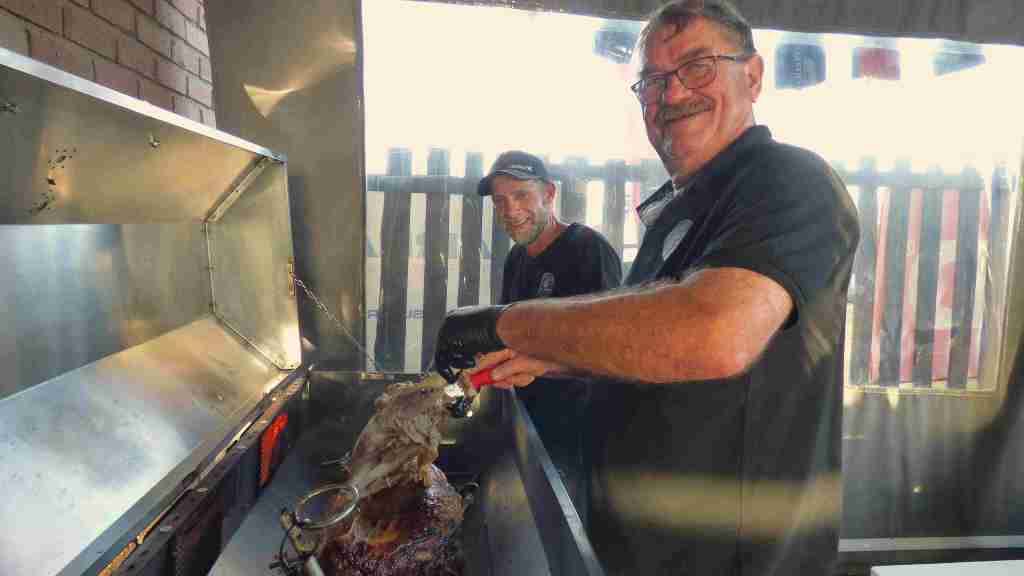
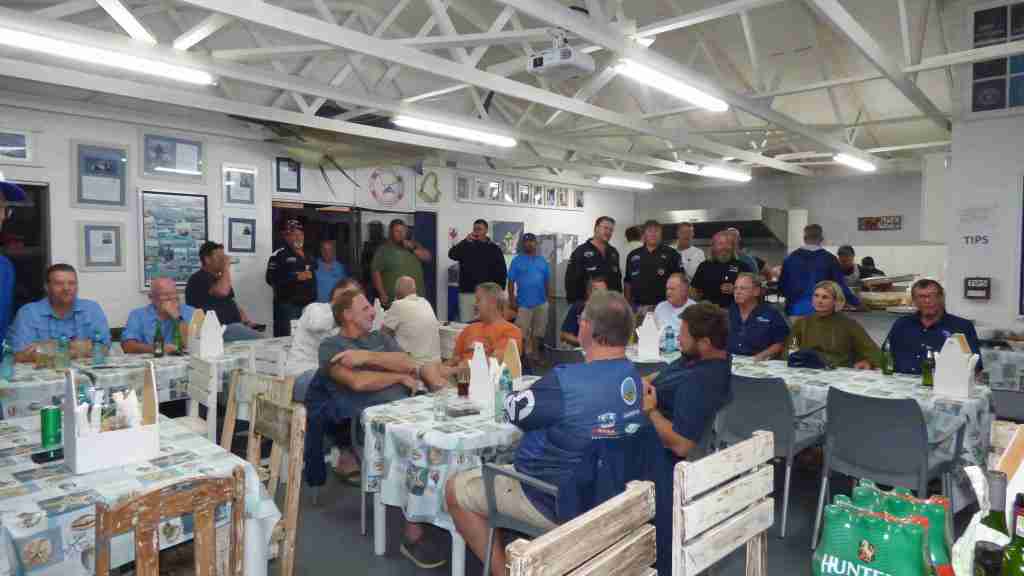
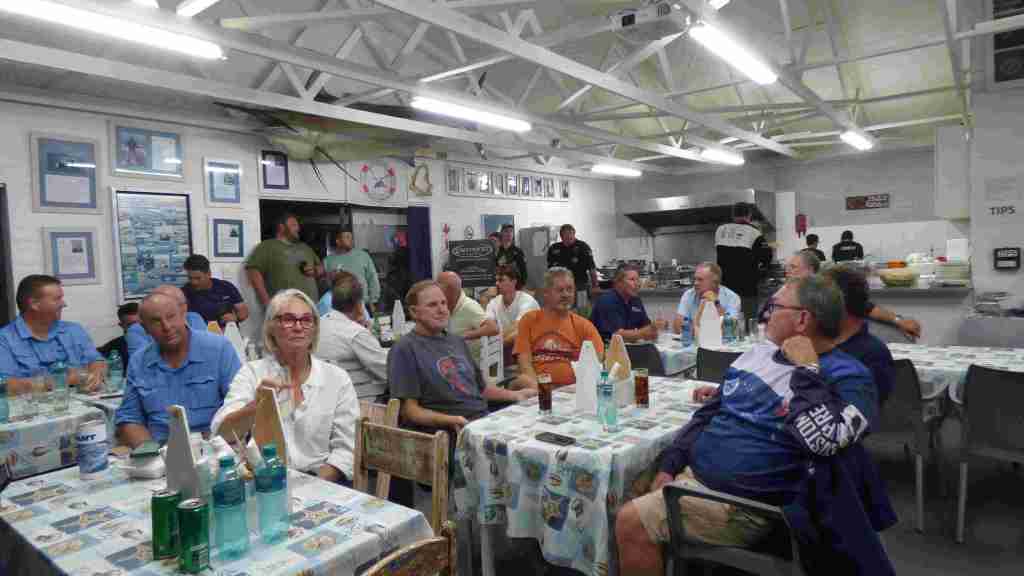
This evening’s final function was, as usual, a superb occasion. Marinda and her staff provided an amazing Lamb Spit for dinner, and the well-organised programme went off without a hitch. Thanks to Marinda, Dahlene and Grant.
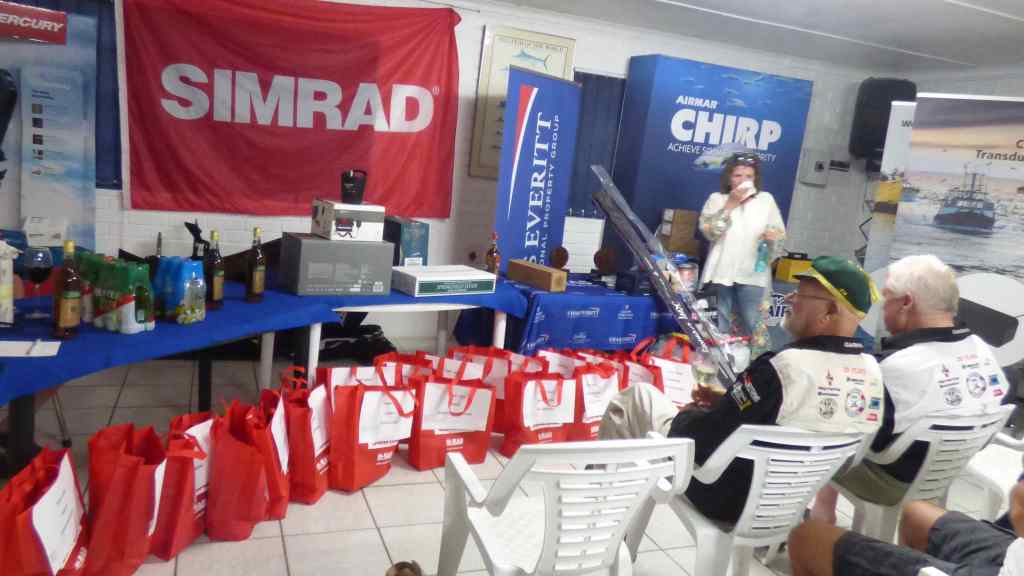
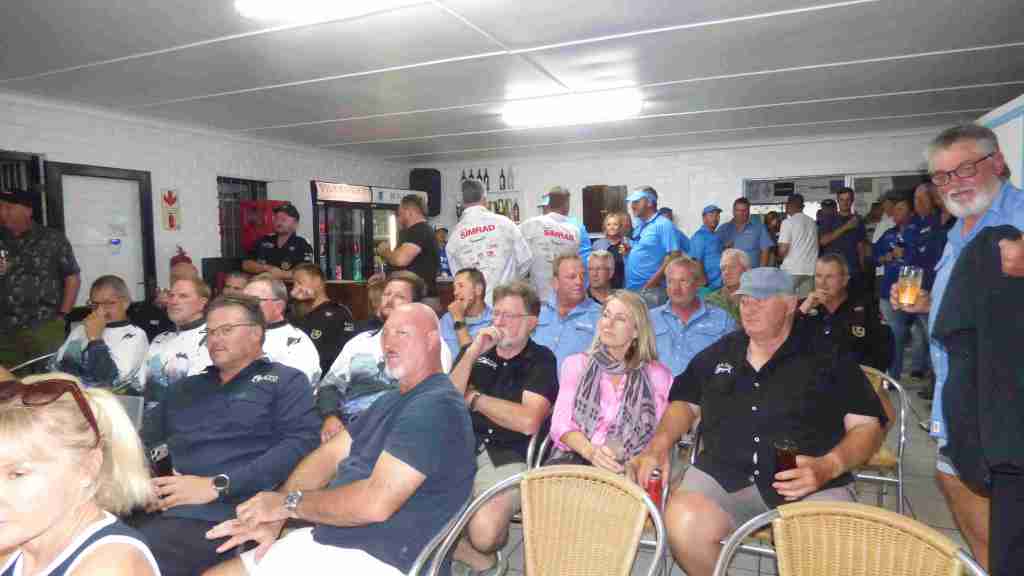
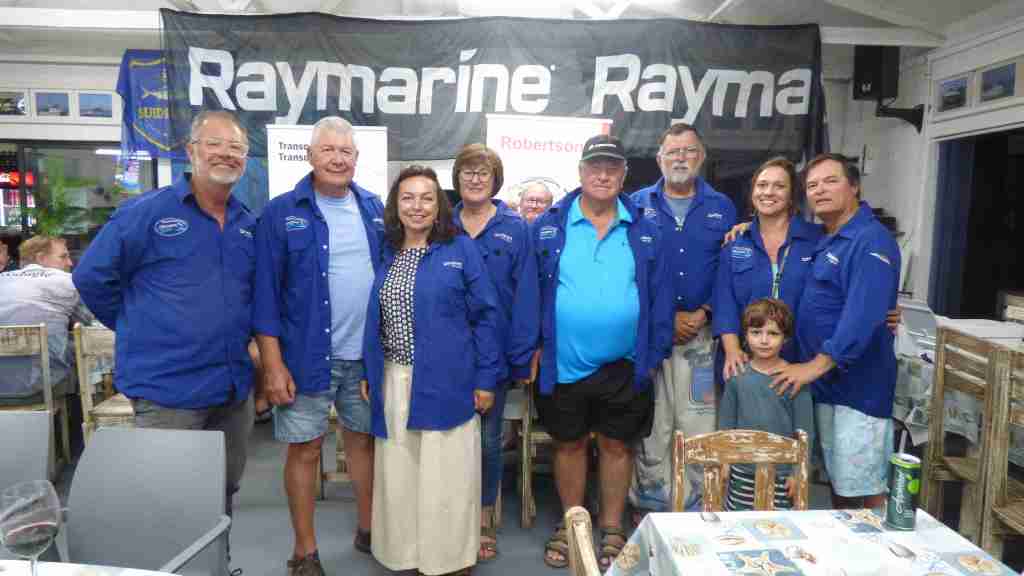
Thanks, guys, for the amazing spit roastAll Set Up for Prize-Giving FunctionWaiting to see who gets the prizes!
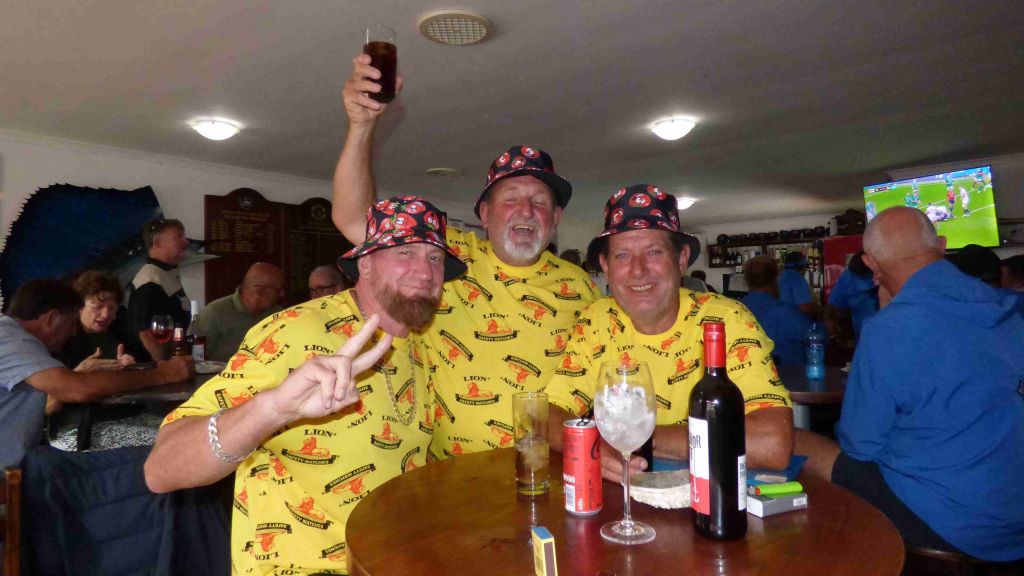
The theme for the week was “I can’t believe you’re wearing that to TOMT” which left the choice of clothing wide open to the imagination. Team Gambler pulled out all the stops with their Gangster and Moll outfits at the opening function and were the landslide winners for the best-dressed team.
Ron Penninkhof – Skipper of The Gambler, receiving their prize
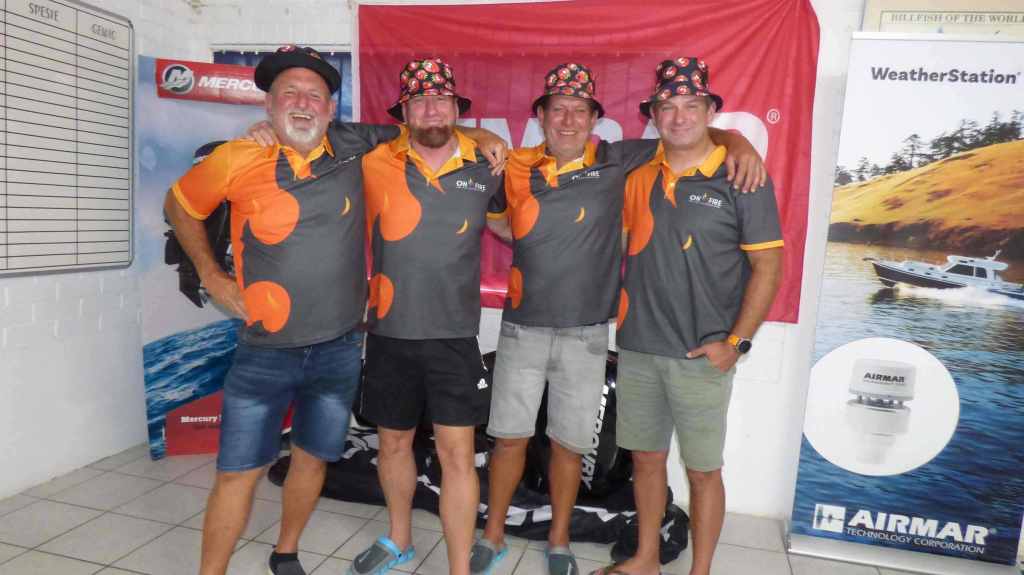
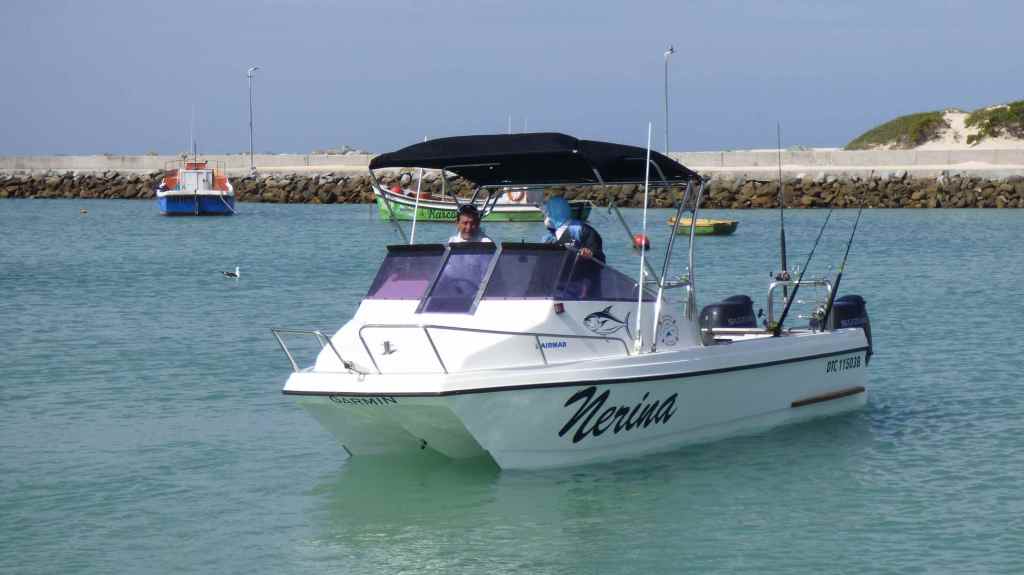
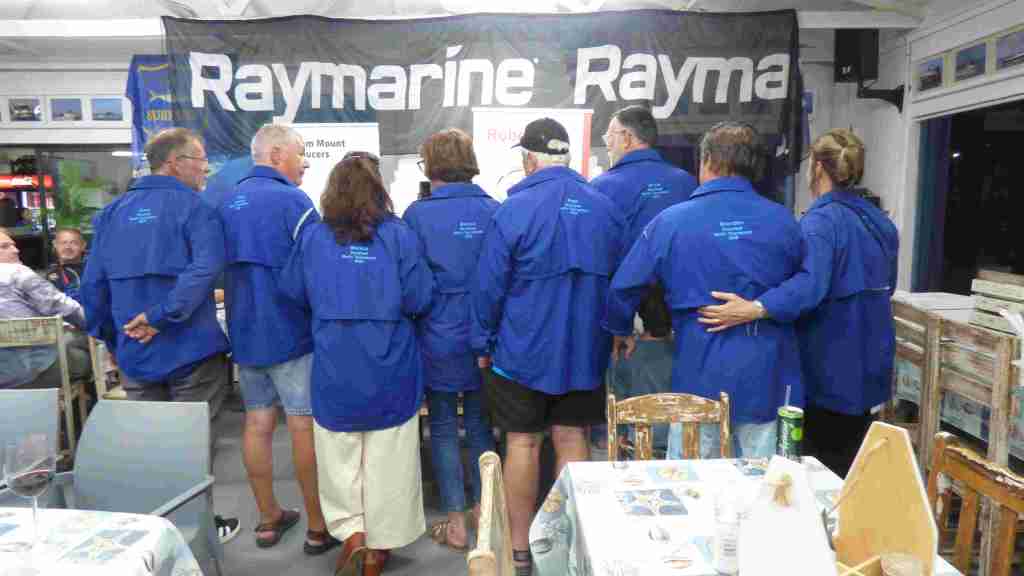
I would also like to make special mention of another team that dressed most appropriately for TOMT by turning up in different matching team shirts each night. Nerina – your guys are awesome!
What do you call four men in a match box? (Vier okies -Vuurhoudjies)Day 2Day 3Day 4Day 5Day 6
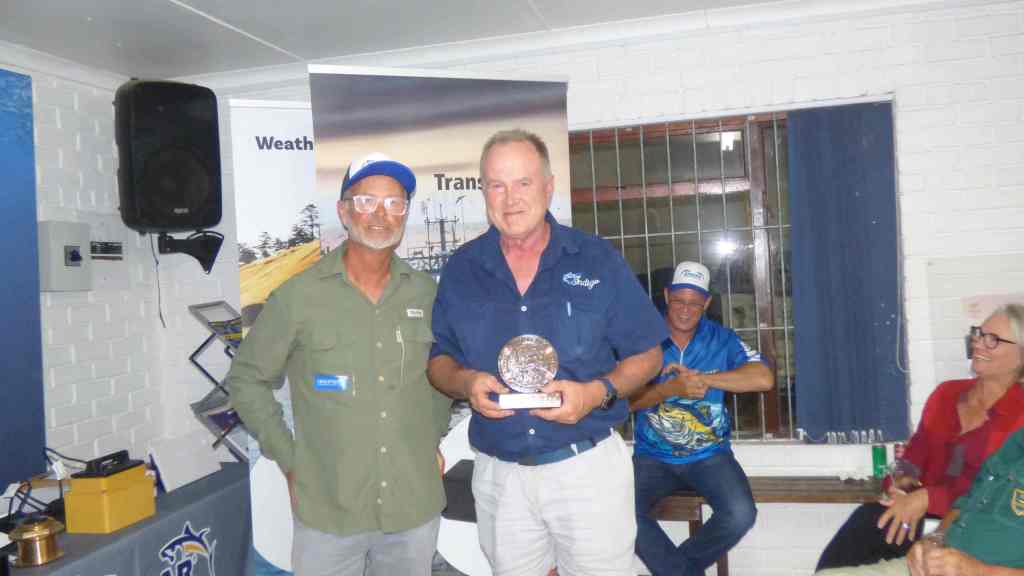
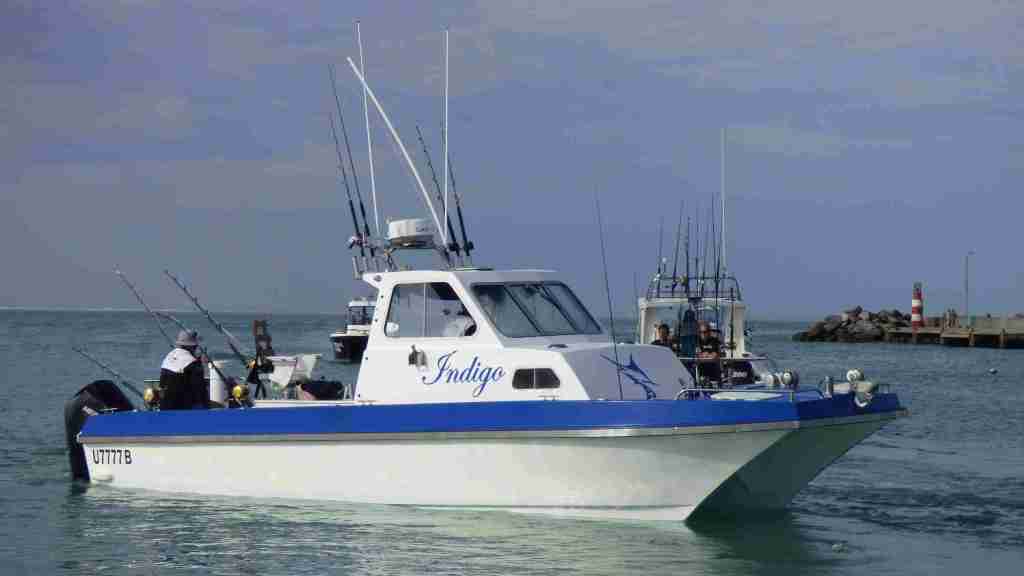
A special award was presented to Gawie Bruwer, a founding member of The Two Oceans Marlin Tournament. As has been mentioned before, Gawie has participated in every tournament since its inception in 2007. His boat, Indigo, won First Prize in 2009 and has been a runner-up a few times, too.
Grant van der Westhuyzen (Tournament Manager) and Gawie Bruwer
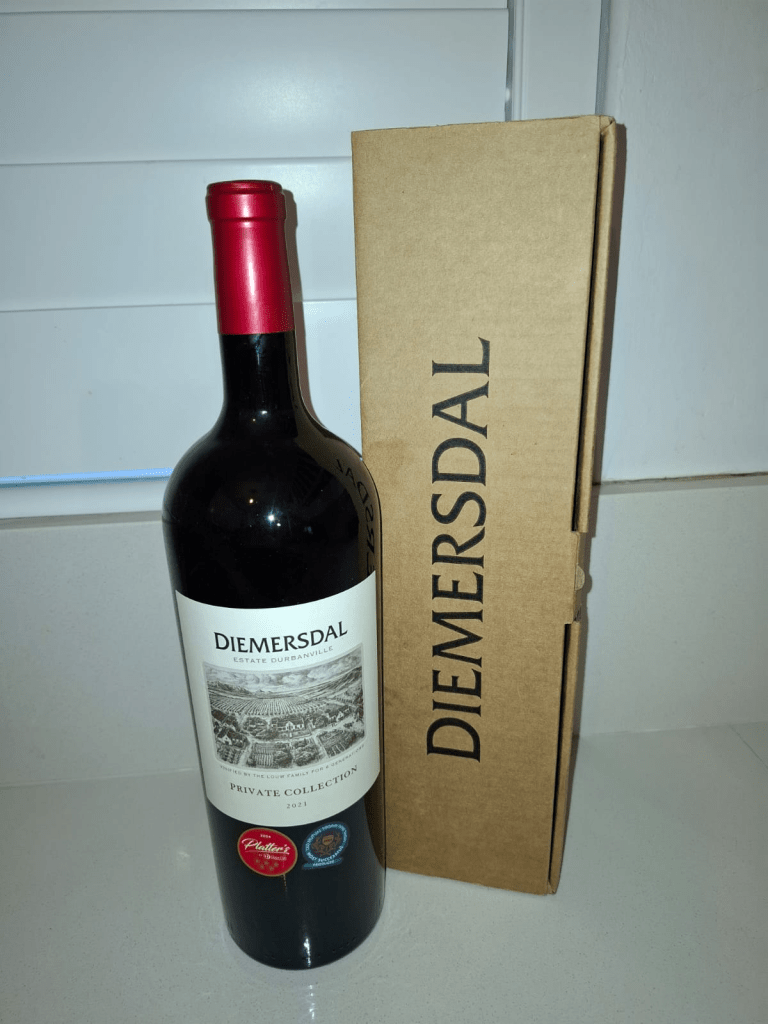
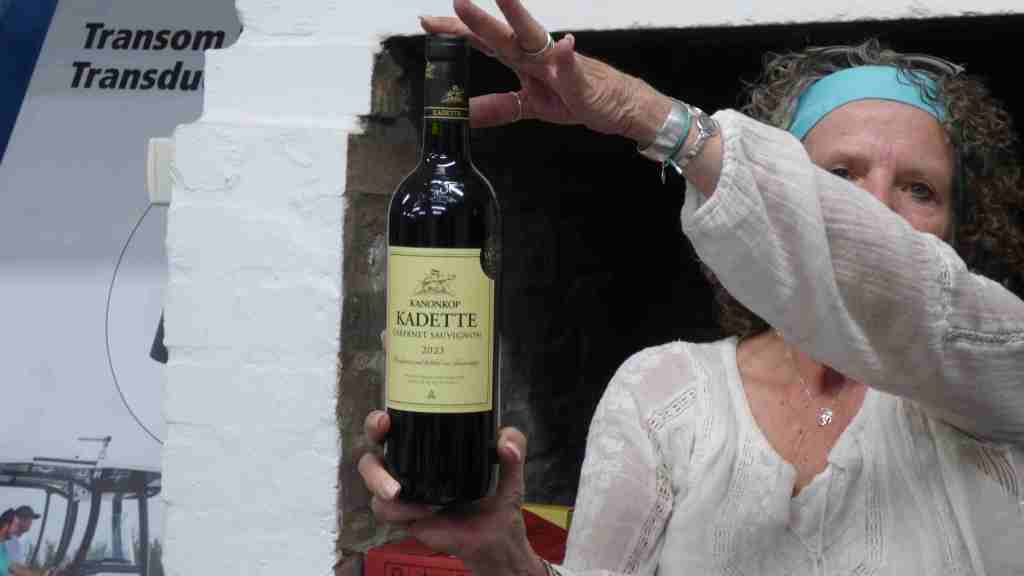
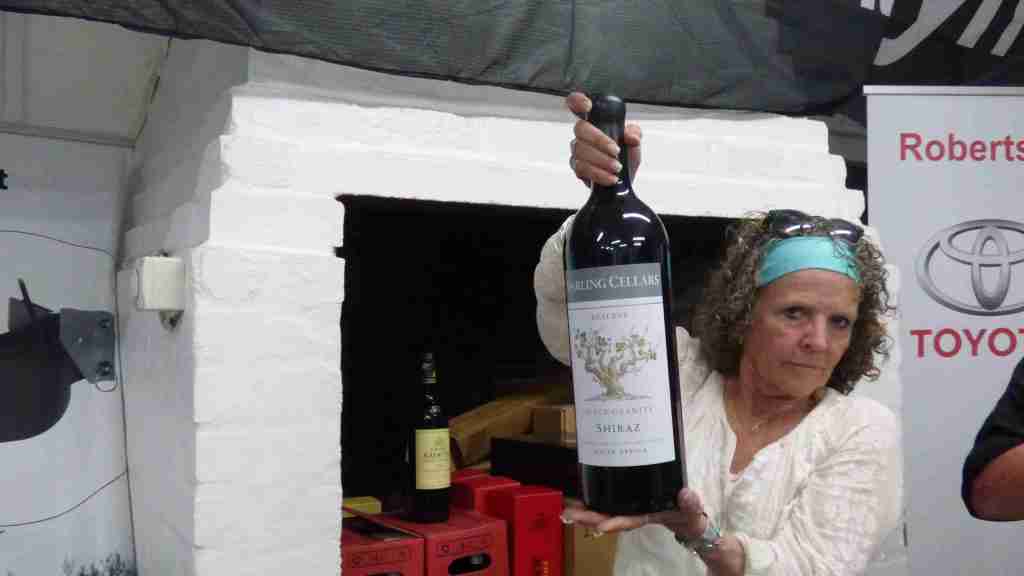
One of our most cherished sponsors, Chas Everitt, has stood by the tournament for nineteen years. It was their wonderful idea to run the “Call Back the Past” blog series as a countdown to the Twentieth Tournament, and we are deeply grateful for their continued support. Our tournament manager, Grant van der Westhuyzen, is not only a competitor but also an agent for Chas Everitt, owned by his mother‑in‑law, Strepies. As a small token of appreciation for her unwavering support of TOMT, we have sent Strepies a special bottle of wine.
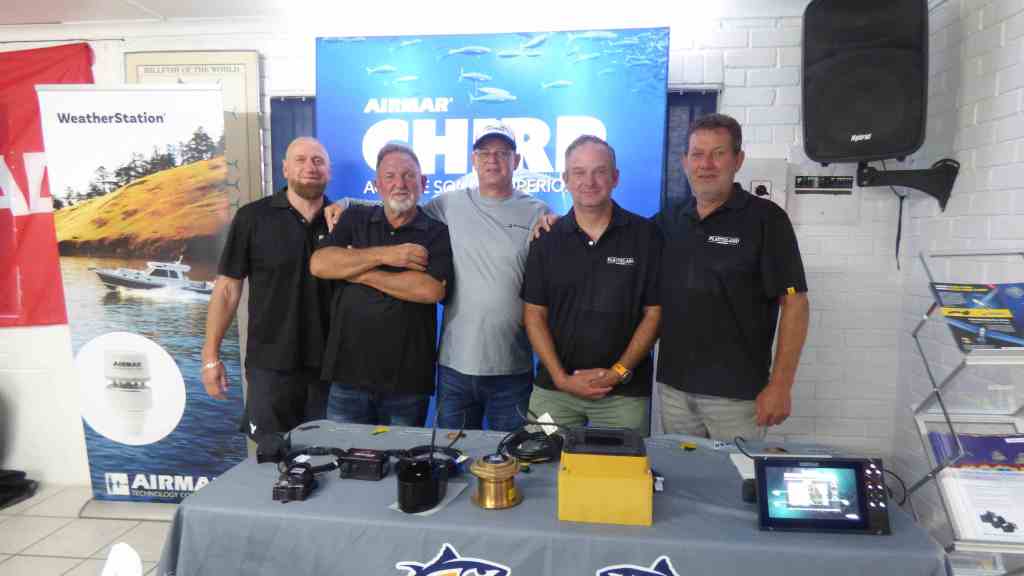
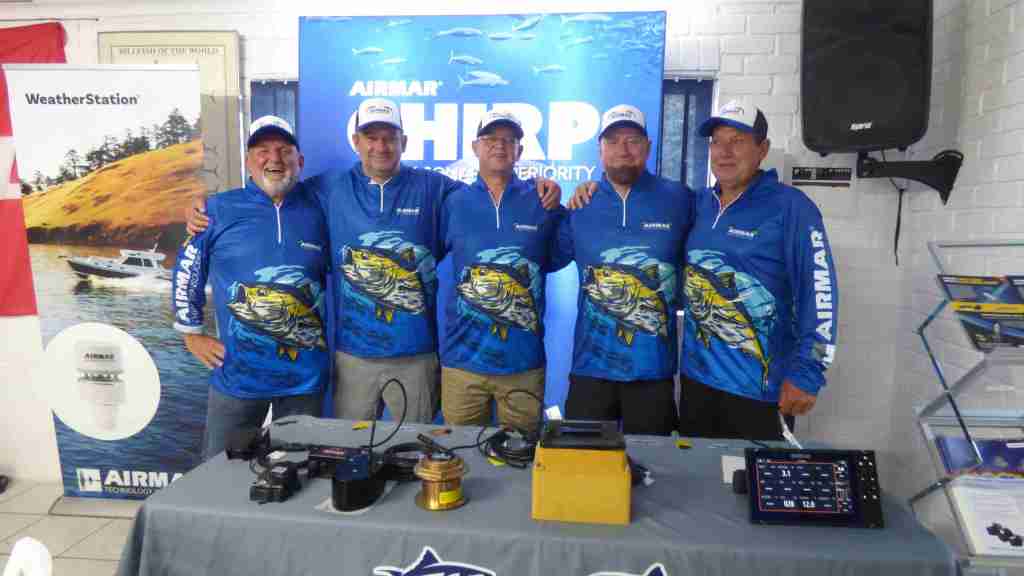
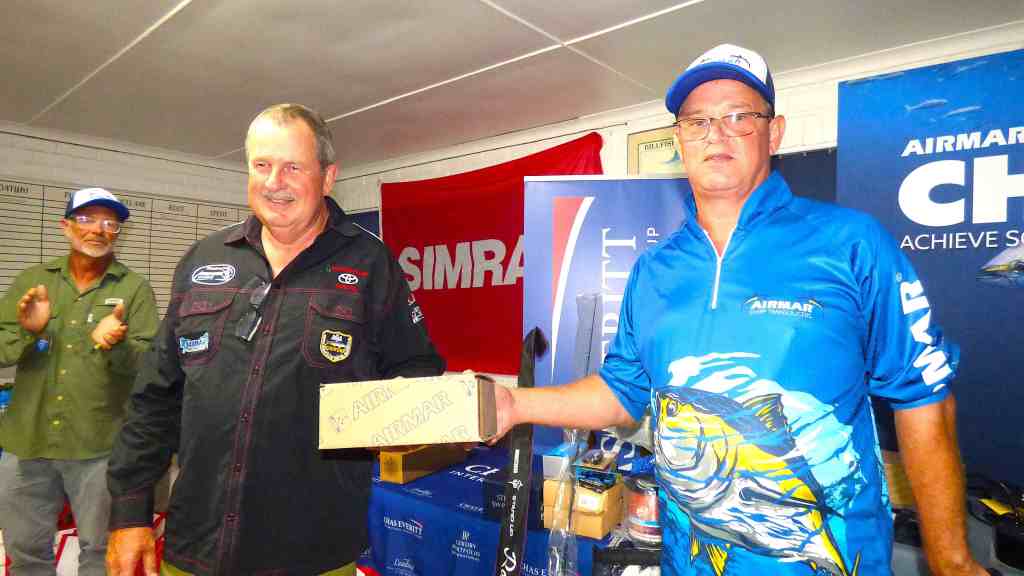
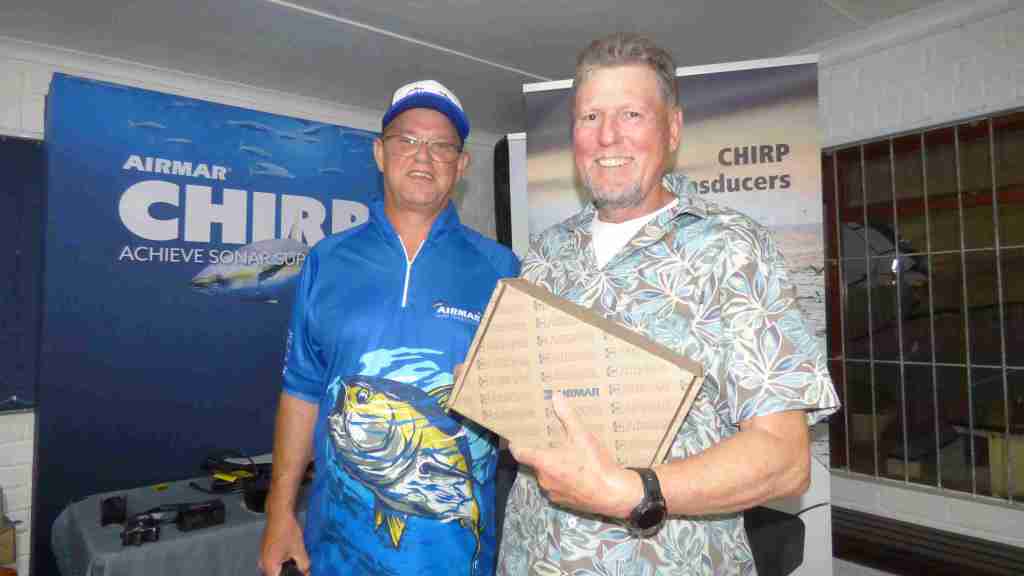
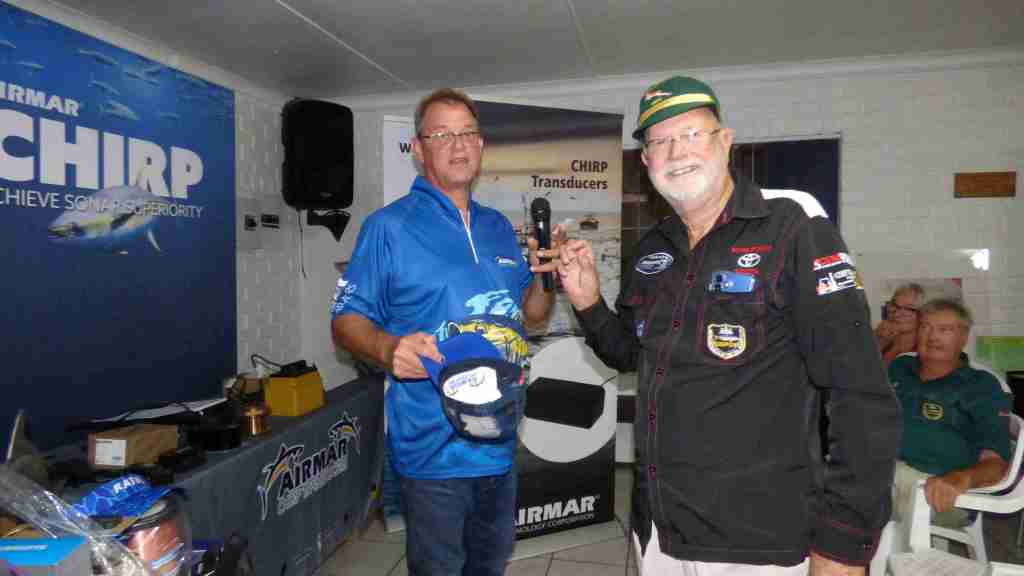
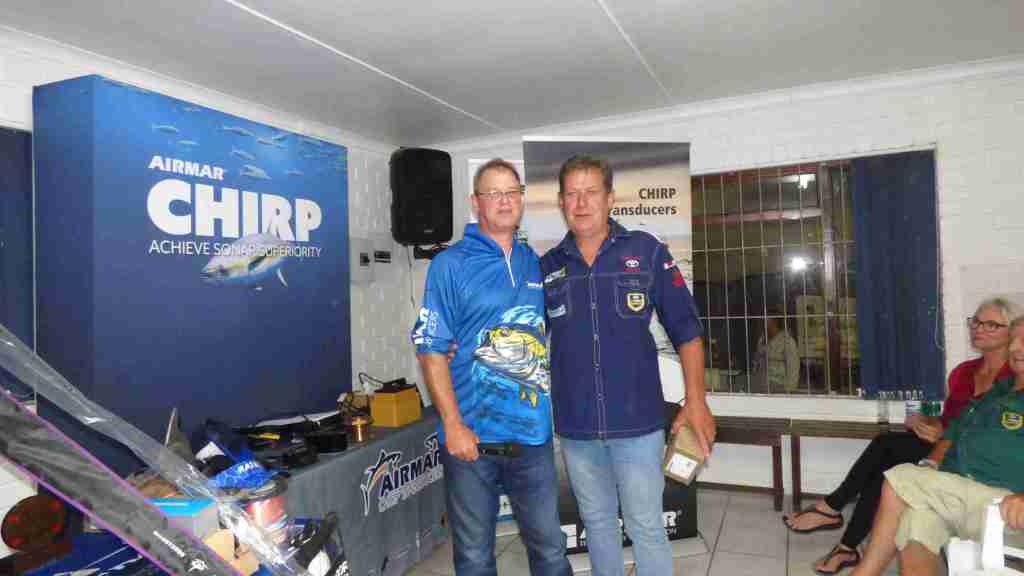
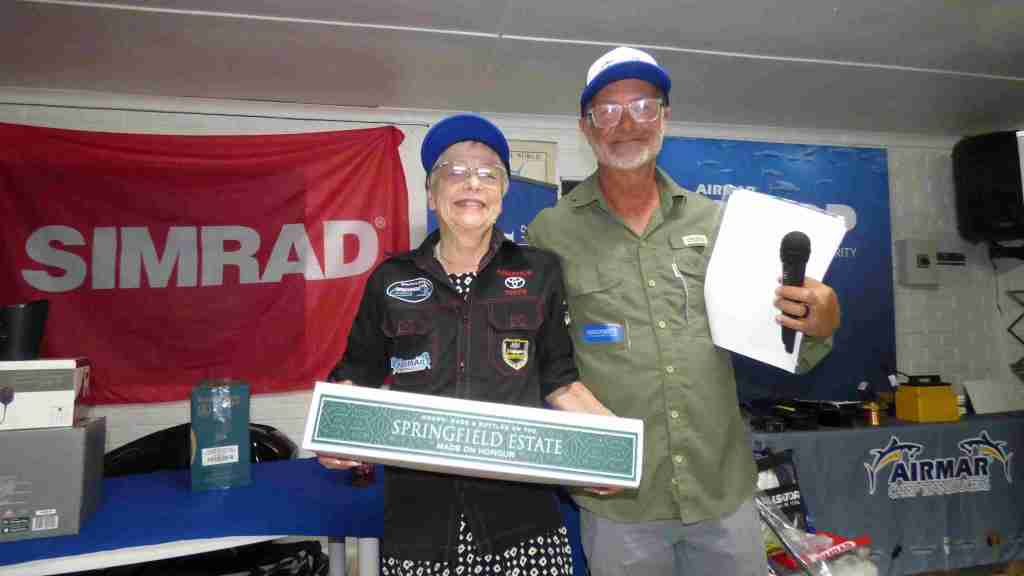
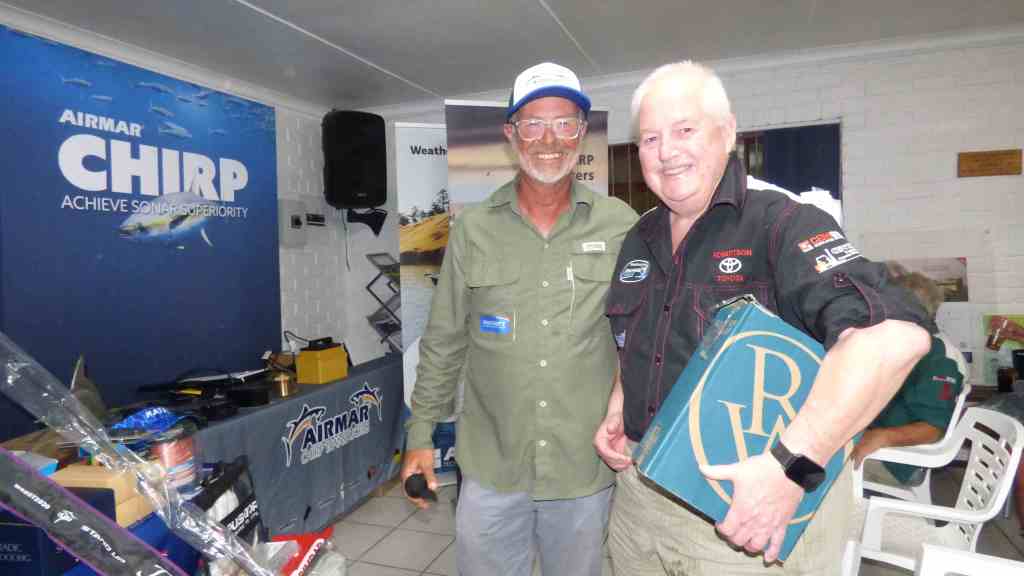
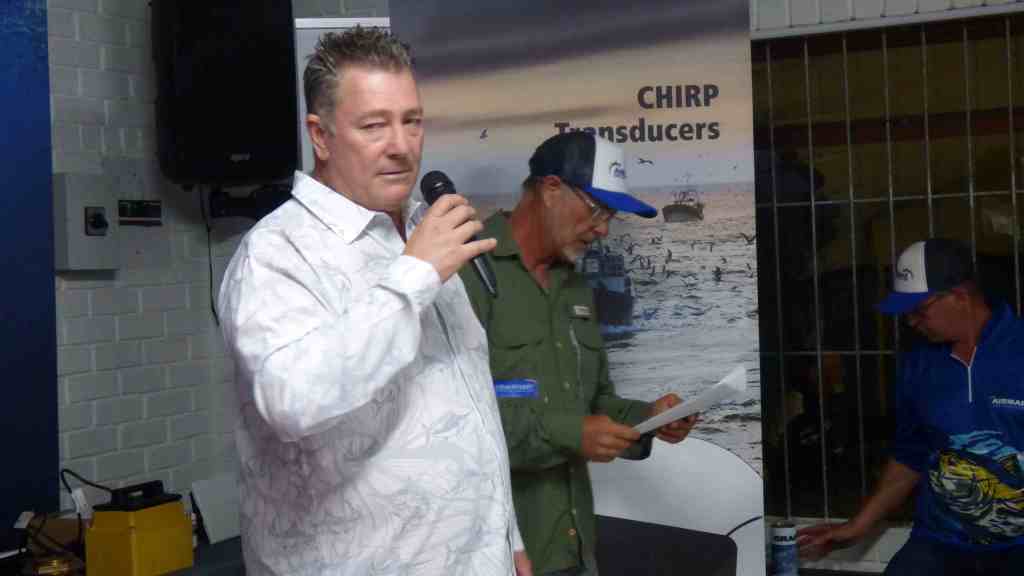
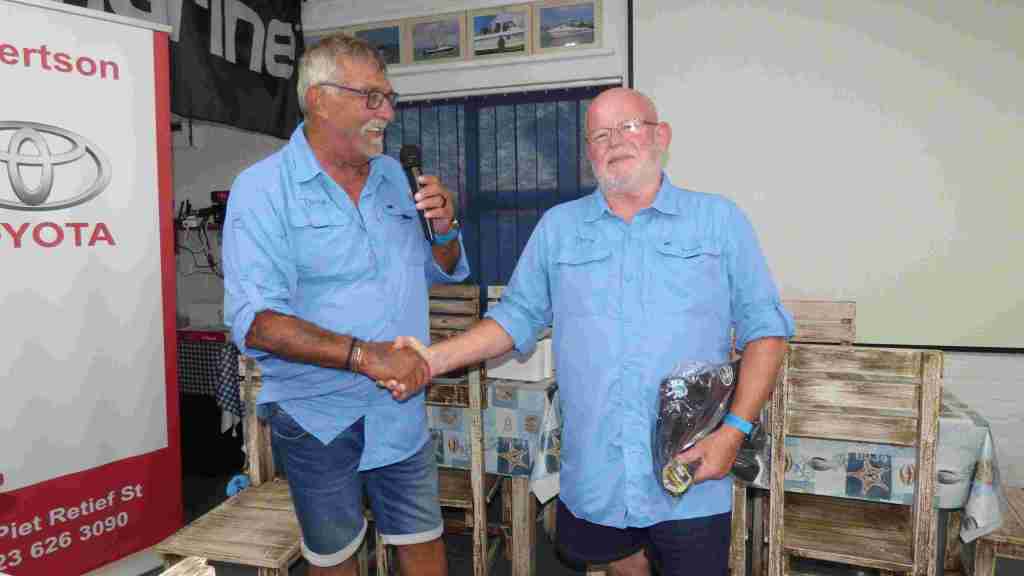
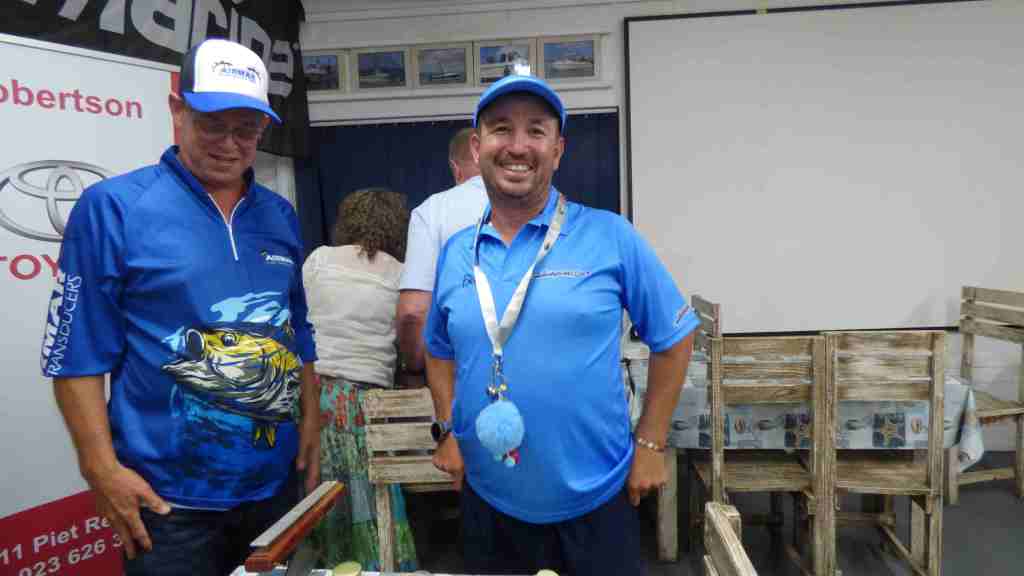
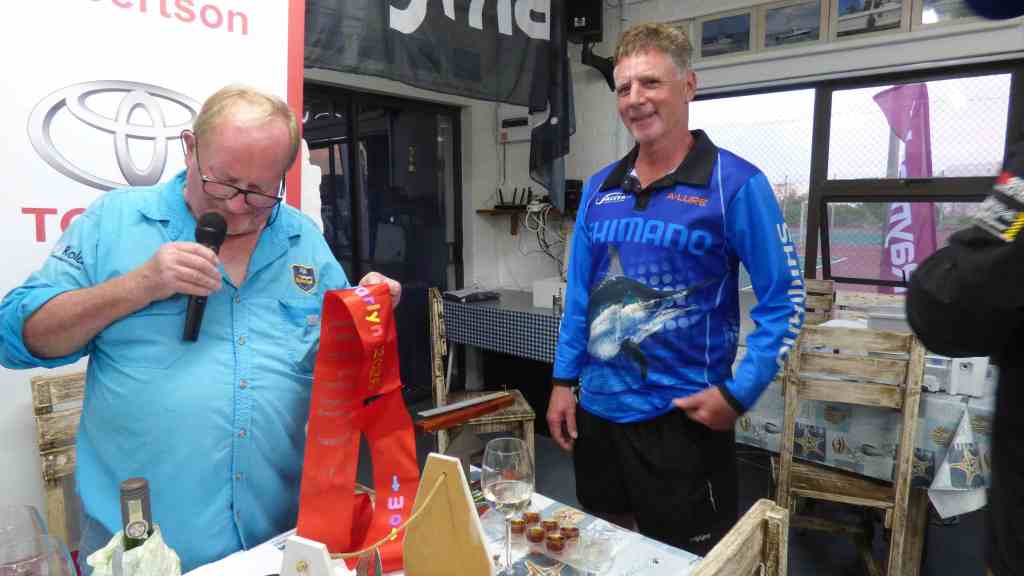
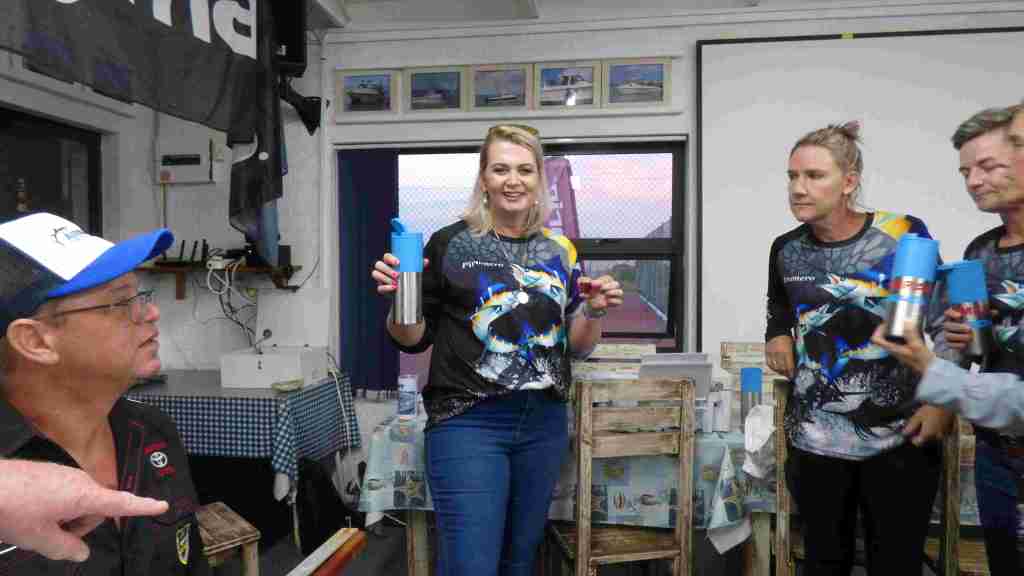
In the Anglers’ Goodie Bags, Airmar stickers were included. Two of them would be prize-winning stickers. All the skipper had to do was put it on his boat, take a photo and submit it for judging. Only Grant Crighton, Airmar representative, would recognise the two winning stickers, which he revealed at the final function and presented the prizes.
Johan Theunissen from Sun Seeker wins an Airmar Transducer for having a winning marlin stickerSecond winner – Chris Goatley from John Graeme
There was also a lucky draw prize, which Earl Fenwick – 1971/72 Springbok Angler, had the honour of drawing. Earl, who ably helps Andrew Perrins, safety officer for the tournament, was sorely missed this week as he had to spend five days in hospital. We are delighted to report that he is fully recovered from his malady and is back in fine fettle.
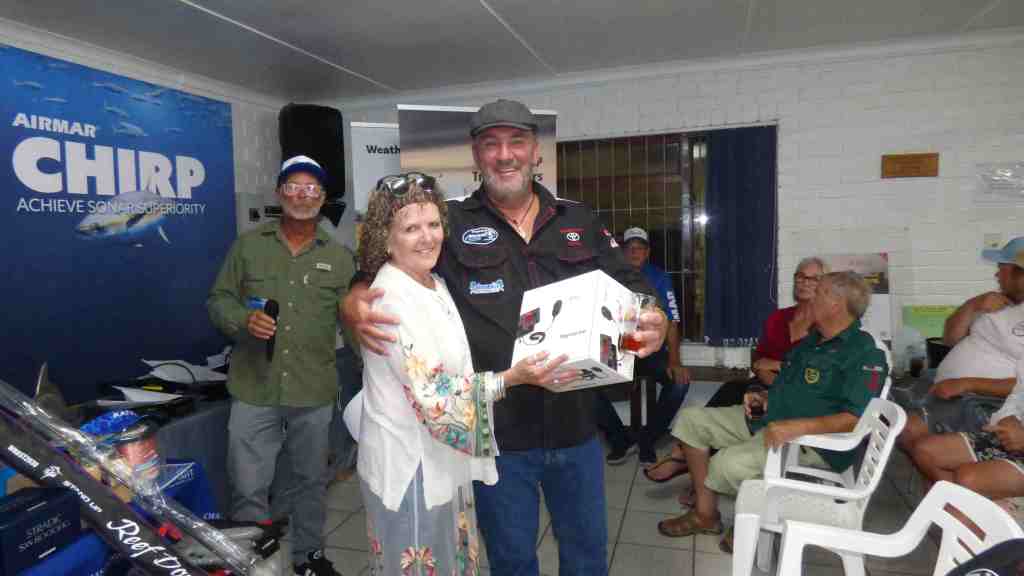
Earl Fenwick draws the lucky ticketMarius Lodewyk from Nerina gets an Airmar TransducerA Gift for Yours Truly Trevor Brinch (Spotter One) Receives a gift for his part on the Safety at Sea Committee
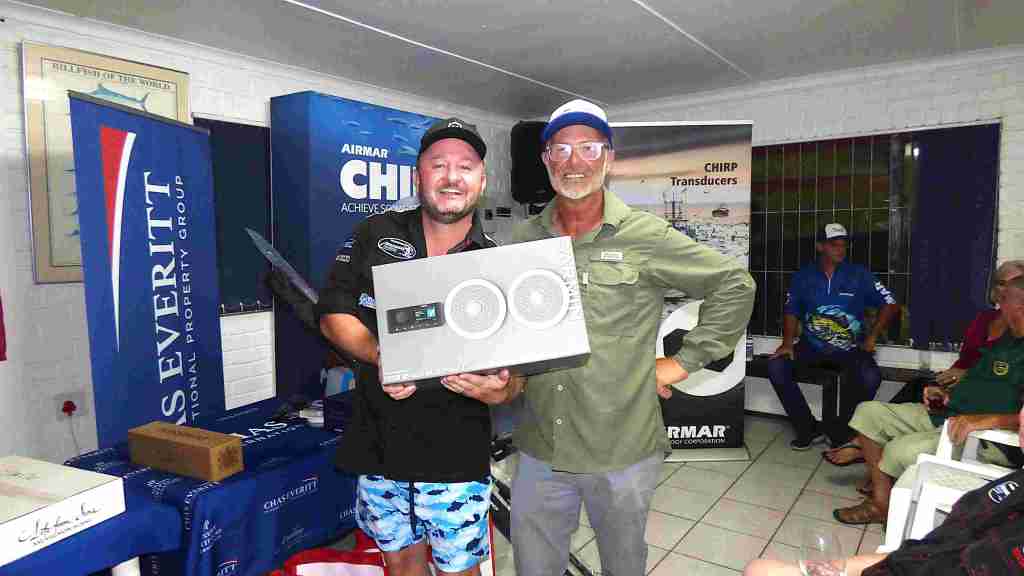
There was also another draw. I was asked to draw the first ticket, and The Gambler it was! Dahlene dipped in and called Onlyfins to receive their prize.
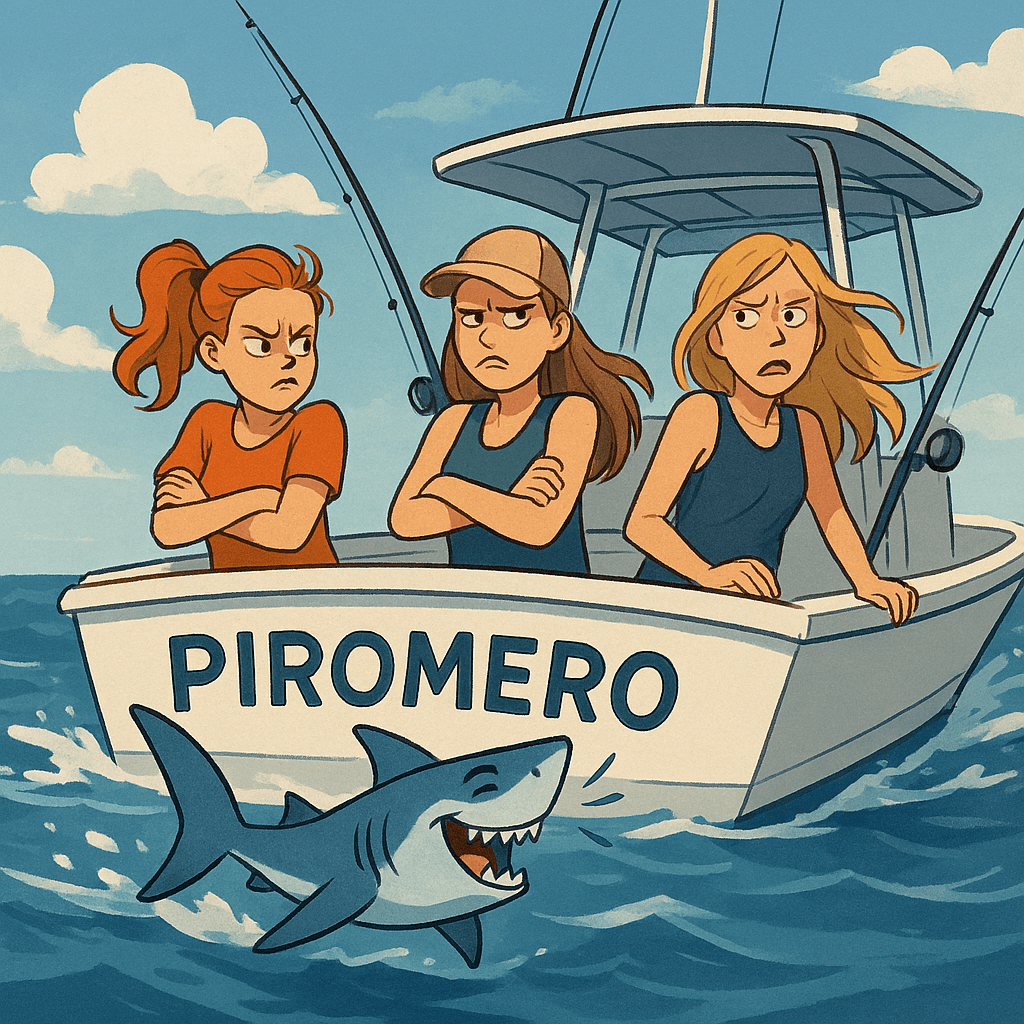
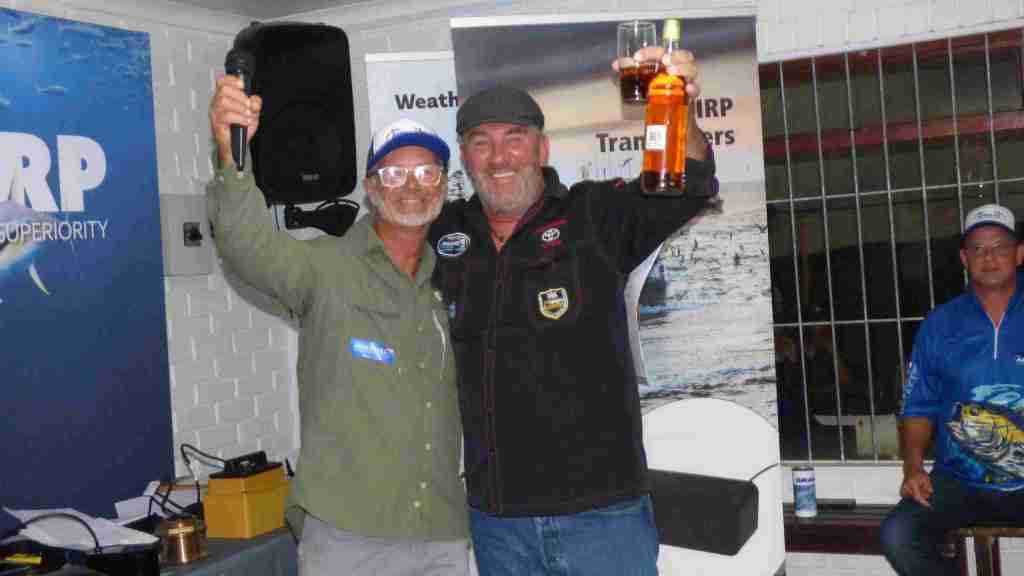
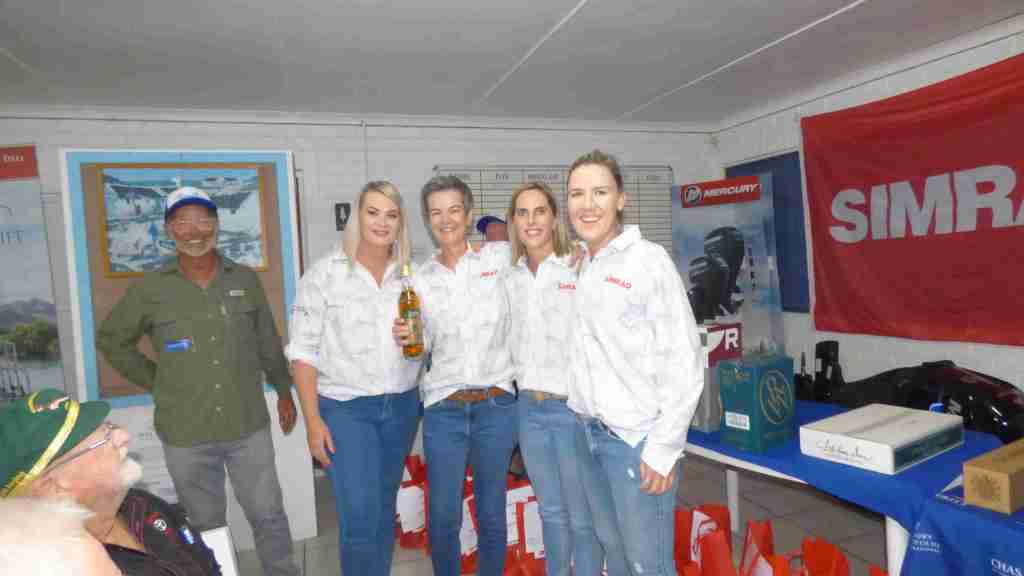
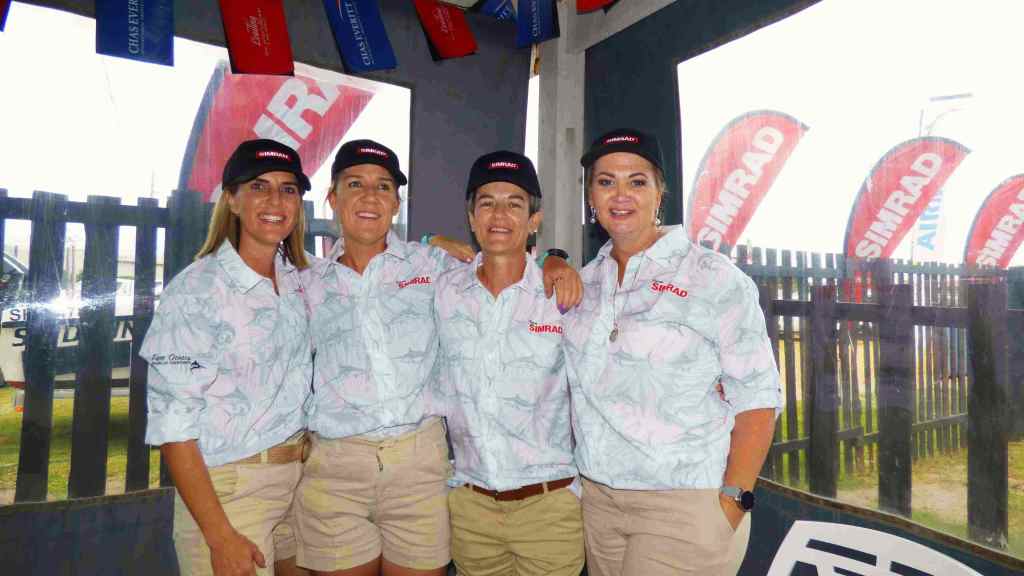
The Gambler wins a Raymarine RadioOnlyfins wins a Speaker System from GarminI don’t want to be biased but this year this was my favourite team, and here they receive the award for the most mischievous team!This is Brad Baker from Simrad, who sponsored the girl team on Piromero
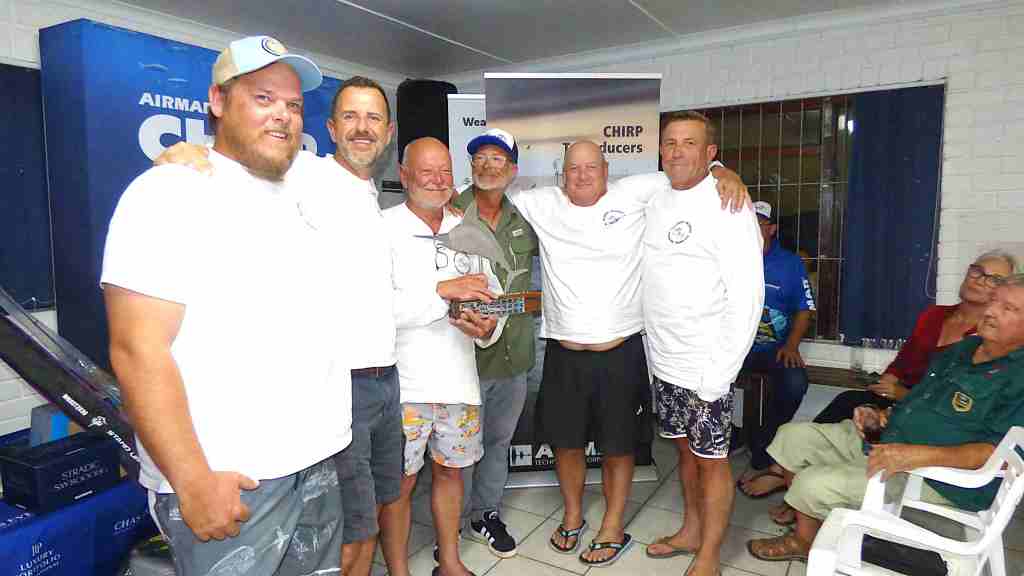
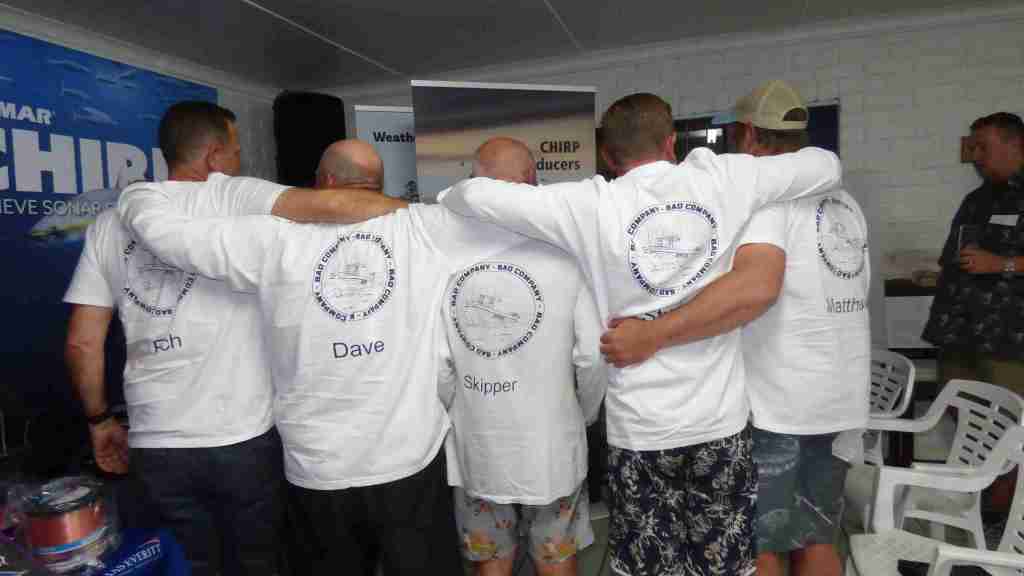
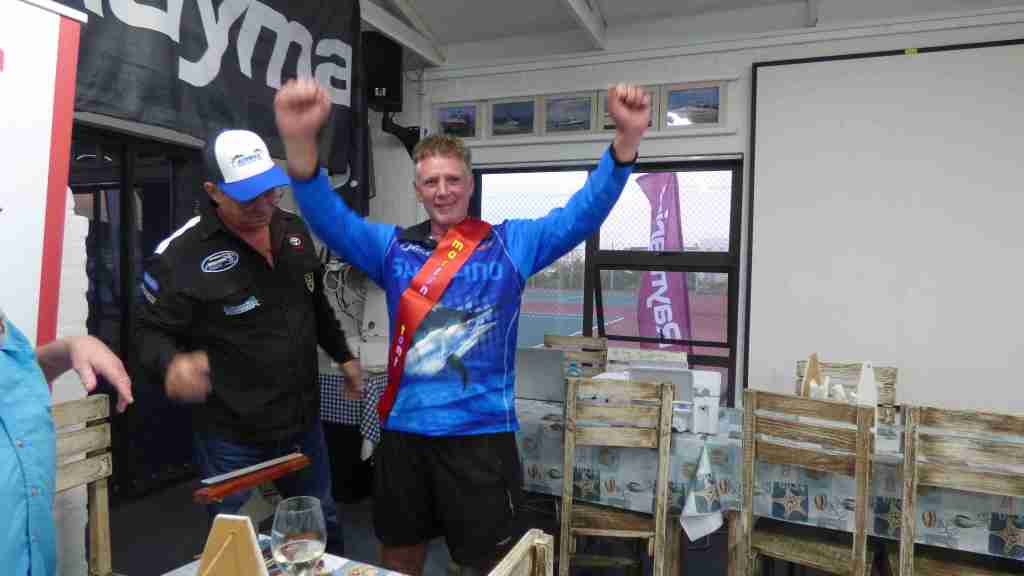
Finally, it was time to announce the winner of the Twentieth Two Oceans Marlin Tournament. This year, only one marlin was caught, measured and released, so it was no surprise when Bad Company was announced. Finally, it was time to announce the winner of the Twentieth Two Oceans Marlin Tournament. This year, only one marlin was caught, so it was no surprise when Bad Company was announced as the winning team. Well done to these awesome anglers. Read Matthew’s tale of tangling with a marlin in the previous blog post! Read Matthew’s tale of tangling with a marlin in the previous blog post!
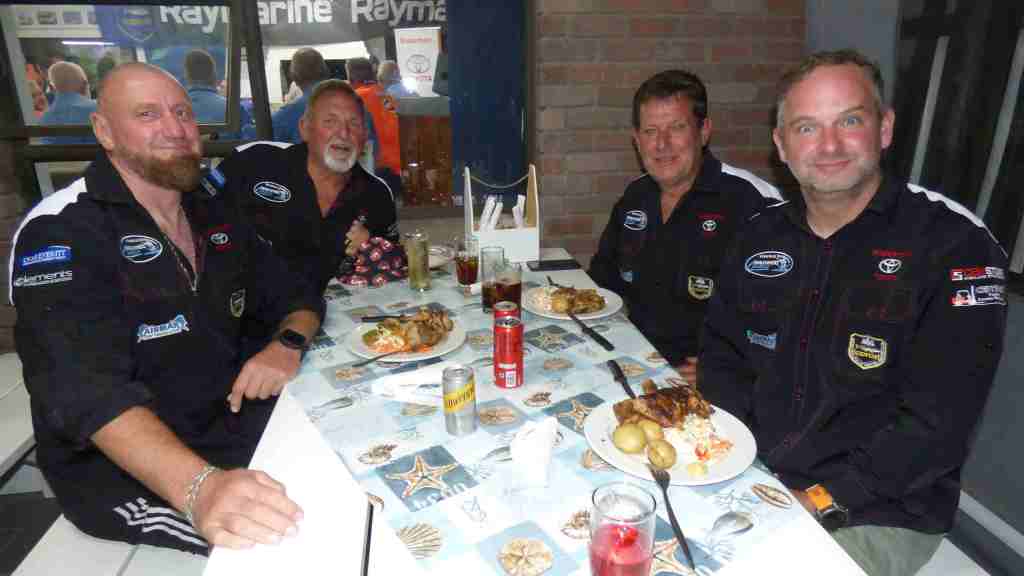
Matthew, Richard, Mike (Skipper), Grant (Tournament Manager), Dave and StuartRichard, Dave, Mike, Stuart and Matthew
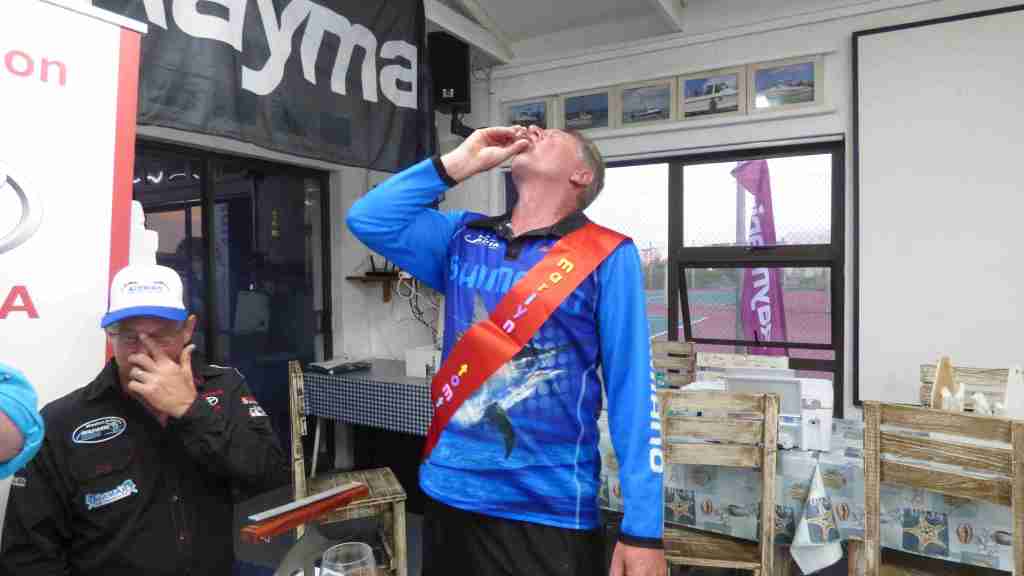
Once again, the Two Oceans Marlin Tournament proved to be a highlight for everyone involved. Many anglers shared how much they enjoyed their week, and it’s clear that this event is about far more than the thrill of the catch — it’s about community, camaraderie, and the joy of gathering with people who share a love for the ocean. A heartfelt thank‑you goes to Marinda and her exceptional team of catering staff and bar ladies. Your hard work, warm hospitality, and seamless service ensured that every meal and every moment was a pleasure. From the friendly smiles at the bar to the flawless coordination behind the scenes, your dedication was felt and appreciated by all. Deep appreciation also goes to the remarkable individuals who kept the tournament running smoothly. Dahlene, your meticulous record‑keeping and financial oversight kept everything on track. Grant, as tournament director, and Dudley, as Club President, your steady leadership and coordination were invaluable.Andrew, your commitment as safety officer ensured that every aspect of the event was conducted responsibly, and your spirited contributions to the auction — along with the traditional strafdoppe and snuff sniffs — added their usual touch of fun. And to Trevor (Spotter One), always ready to respond to radio calls from the boats at sea, your reliability and calm presence are deeply appreciated. Finally, our sincere gratitude goes to all our sponsors for their generous support. Your contributions elevate the experience for participants and spectators alike, helping us bring this tournament to life year after year. It is through partnerships like yours that we can create such meaningful and memorable moments. Thank you for believing in this event and for being an essential part of its success.
The contest between the Weather Gods and the Weather Committee continued today. The Weather Committee did not give up without a fight. They offered the gods a compromise – We’ll send the boats out for just a little while and if you insist on being nasty we’ll call them in at your bidding. The Weather Gods agreed and when they saw how determined the anglers were to stay out there all day, they held off the stormy weather and let them play till lines up at 16:00. The day at sea might not have produced the coveted marlin but at least they had fun pursuing the lesser species and enjoying the comeraderie of fellow anglers.
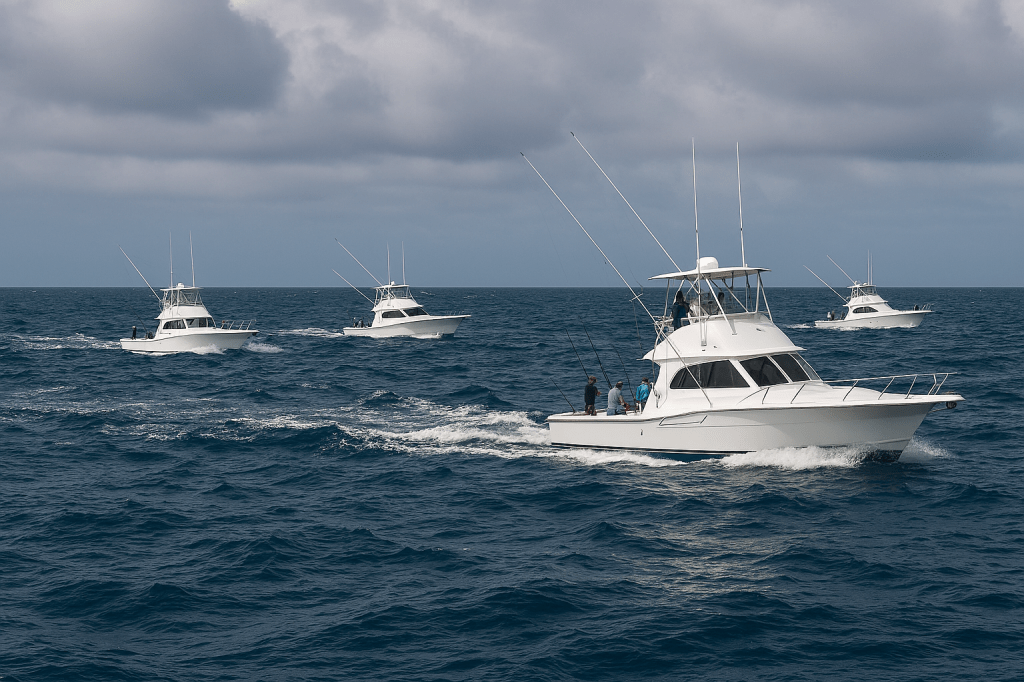
AI Generated Image of the boats at sea,
The evening function brought on the usual fun of disciplining those who dared to do mischievious deeds and get caught! Some of the charges are of course totally trumped up but others are well deserved! The case of the missing fire extinguisher was solved and the pretty little culprits appropriately dealt with! But to be fair, the wee lasses did return it before a potential fire raged through the clubhouse! Andrew Davidson who Andrew always addresses with a line from Billy Joel’s Piano Man – Davy who is still in the navy and he probably will be for life, was presented with a 20 year year Marlin Shirt as he has participated in every tournament since its inception. But that did not get him off taking a straf sniff and dop for some trumped up charge!
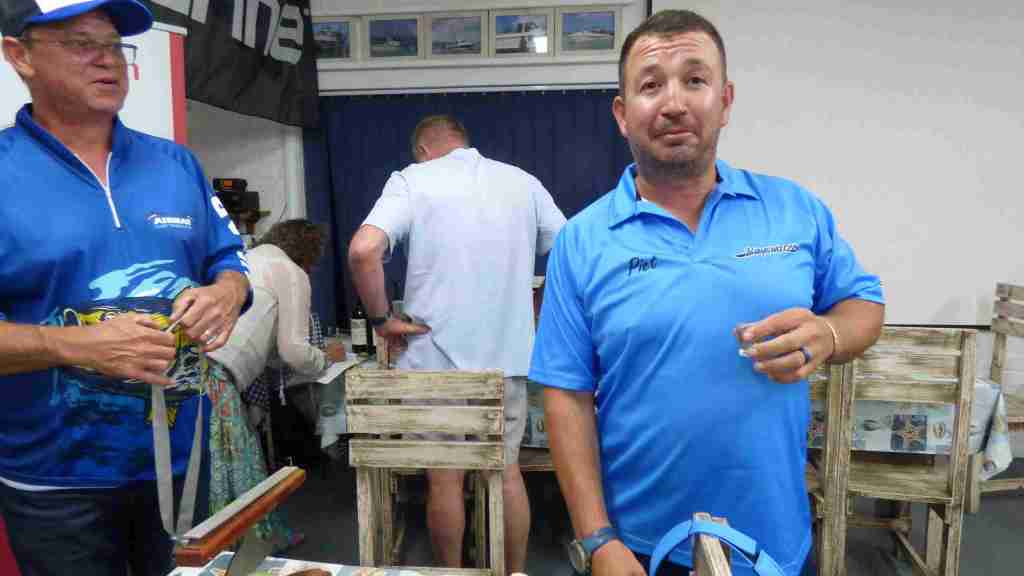
Dudley – Suidpunt’s President presents Davy with his 20-year shirt DavyGawieLourensDudleyAnd even Marinda!and youth won’t get you off!Naughty Boy PietGets the Naughty NecklaceThe Pretty Thieves!
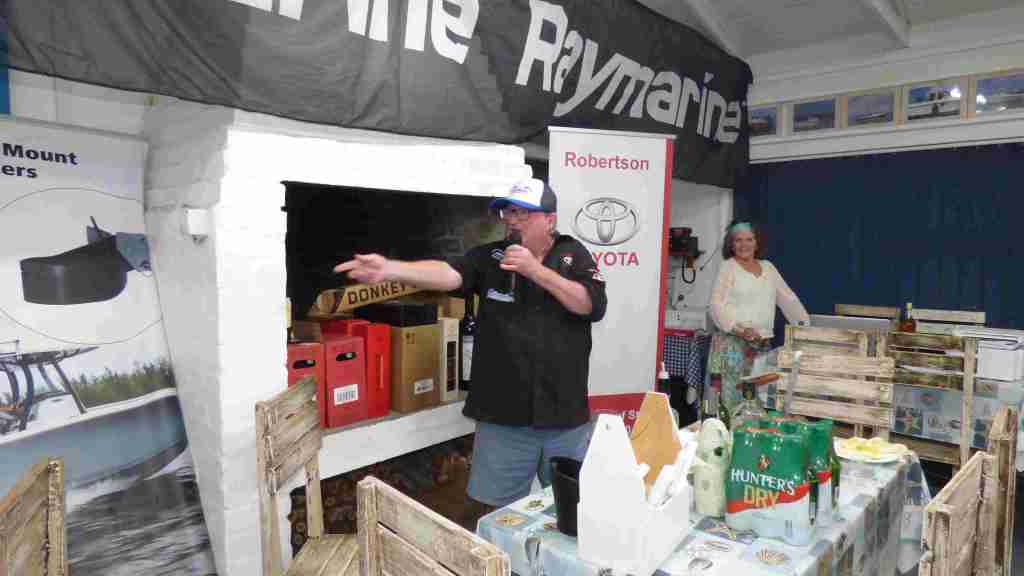
The big event of the week though, was the Wine Auction. Every year at TOMT wine and occosionally other donated items are put up for auction to raise funds for Suidpunt Diepsee Hengeklub. The club generously offers their facility for TOMT and Marinda and her team work tirelessly to see that all goes well. This evening the anglers showed their appreciation by generousy bidding on the excellent wines donated by FPM Suppliers. Thank you Jacque van Niekerk!
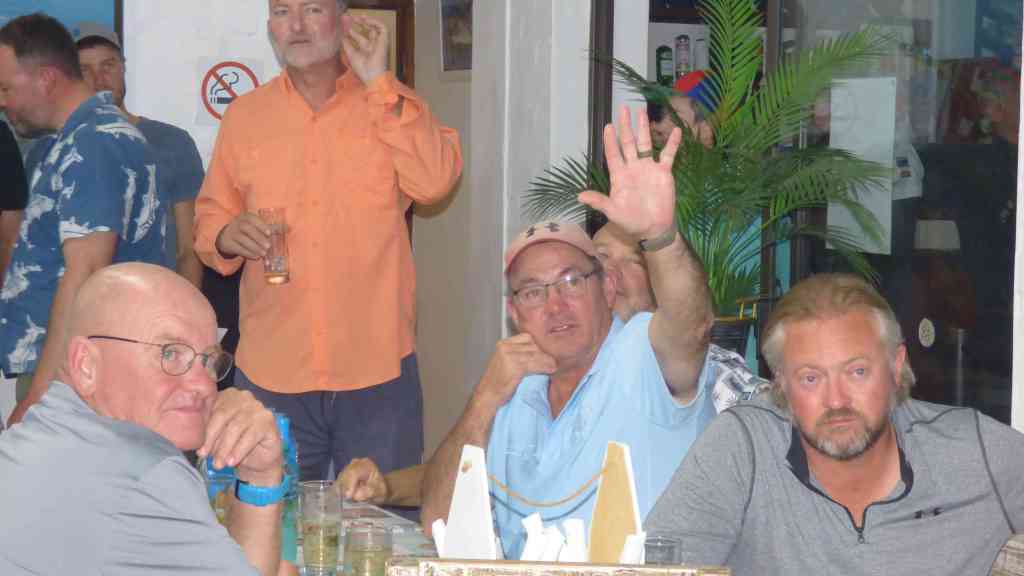
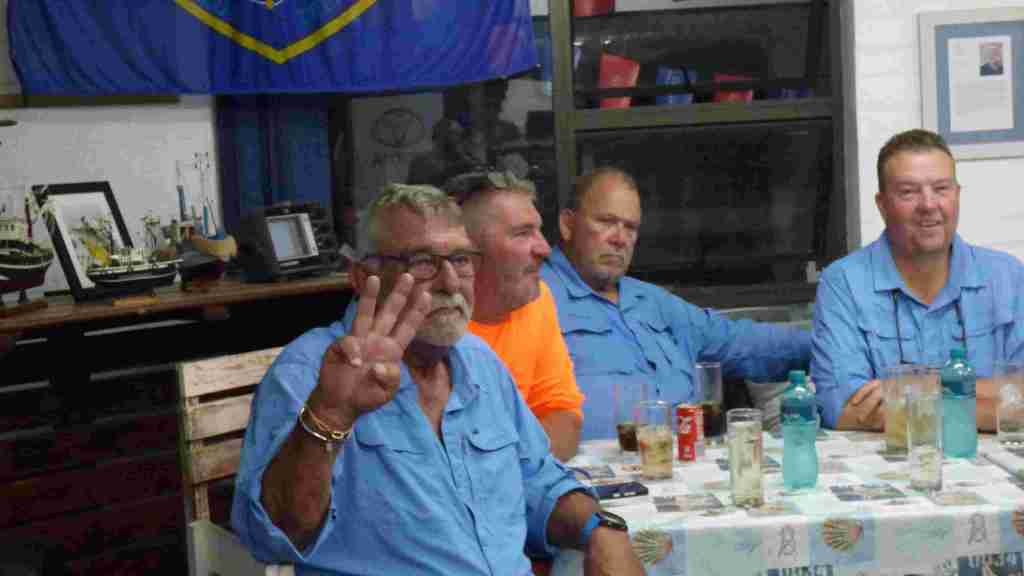
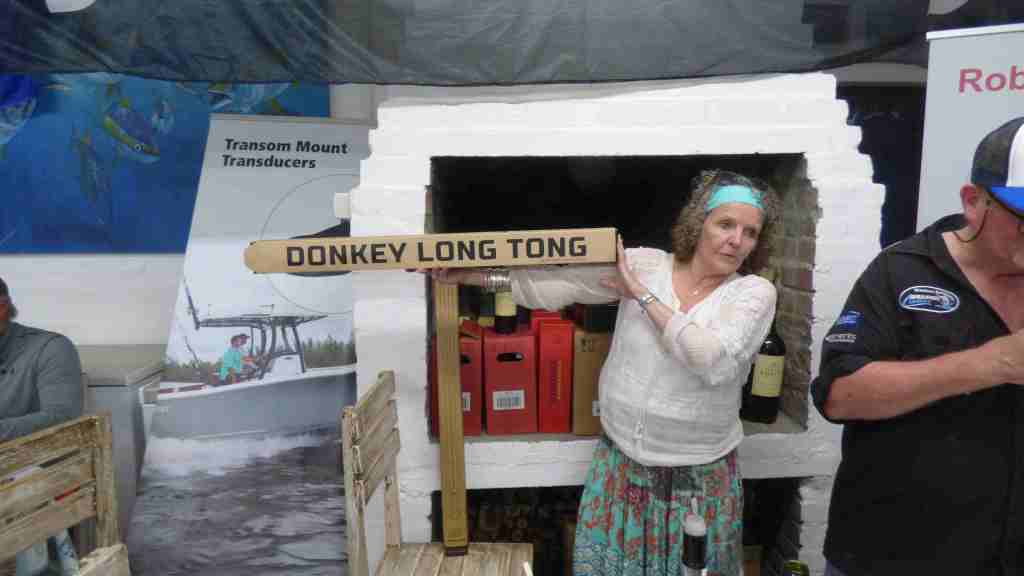
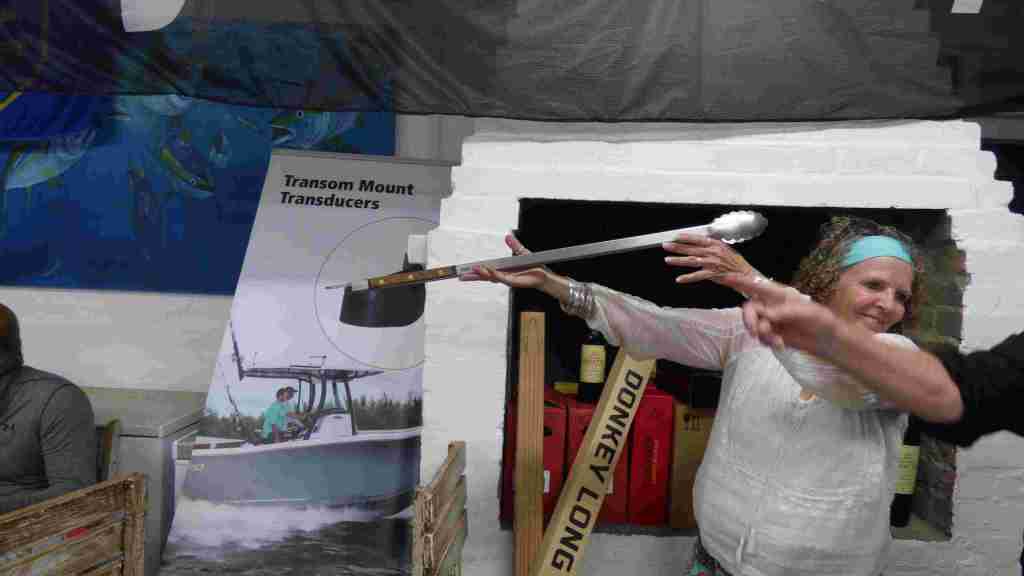
The BiddersOne of the many bottles of wine on auctionWhat am I offeredMe pleaseThree ThousandTongs to make any master braaier proudOut the box!And there’s another one!
Friday 27 February 2026 The Weather Committee had no opposition from the Weather Gods today and the boats went out. Tonight is the final function and prize-giving. Watch this space for all the results.
On the first fishing day of the tournament, Bad Co was the only boat to catch, measure, and release a marlin. Matthew Paulsen tells the story.
There’s always an overwhelming sense of excitement at this time of year, knowing that we’ll all be heading down to Struisbaai for the annual TOMT event. The anticipation of possibly catching a marlin keeps our group of friend returning year after year.
After a good catch-up with the crew on Sunday evening and a good night’s rest, it was down to the harbour on Monday morning at around 06:00. Marlin Control confirmed that the comp was on, and we set our course for the 12-mile bank. The weather forecast was a SW swell of 2.1m and a westerly wind of about 15-18 knots. For us on BAD COMANY, that means putting on the waterproof jackets and holding on tight. The plan was to run out to the 100m contour line, put lines out, and plod our way into the weather towards the back of the bank.
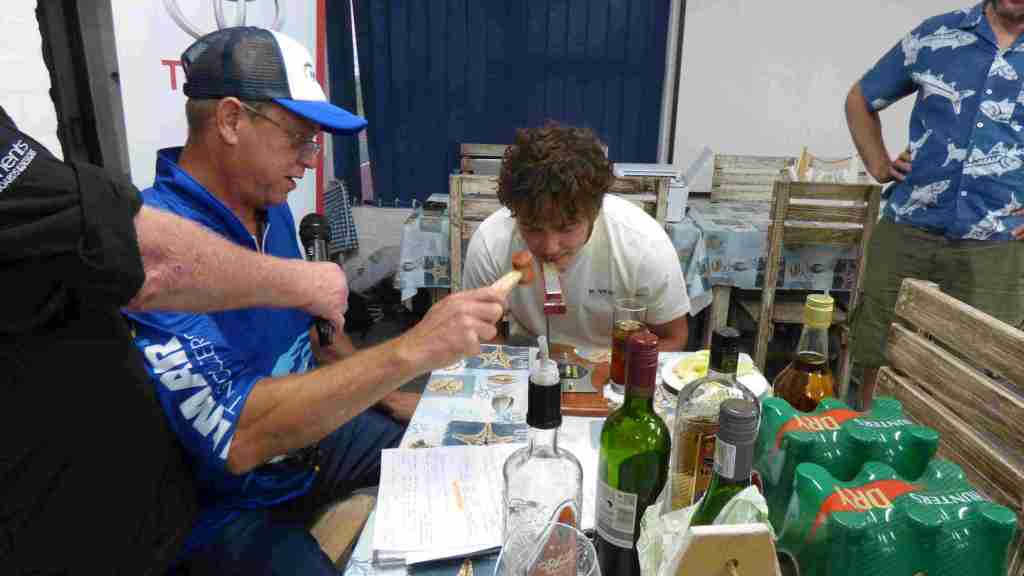
About a mile from the 100m contour line, we started having coms issues and couldn’t seem to figure out why. Mike fiddled with almost every setting known to man on the radio and still couldn’t sort it out. After about an hour and a half of scratching our heads, Stuart came up with the idea that it could possibly be a loose connection between the antenna and the radio, and managed to find the problem. The fitting behind the radio had not been screwed in all the way, and that earned Mike a sniff of snuff and a strafdop at the club that evening.
Problem solved, we steamed west towards the 12-mile bank staring at the water for any signs of birds working or bait fish splashing. Eventually, we came across a huge flock of birds working some bait fish on the surface, but could not catch up with them. Just then, Jaques (MOJO) came over the radio to say that he, too had just been behind the birds and could not catch them. It is incredible to see how quickly the fish move in the water. After losing sight of them, we decided to stay in that area for a while. An hour went by and nothing….. another hour, nothing……
We decided to turn the boat and head with the wind, giving us a bit of a breather from clenching onto the rails. Once we had turned east and managed to dry off a bit, we started seeing some signs of life in the water again. We started seeing more and more birds diving and bait fish splashing. A big patch of bait fish popped up about 100m in front of us, and we headed straight for it. Once we were in the middle of the feeding frenzy, we heard one of the outriggers pop, and a reel started screaming. We were ON!!! That’s when the chaos began.
We weren’t prepared for it at all! Luckily, the crew made quick work of clearing the lines, and we could start fighting the fish. I only realized that it was me to fight the fish once I had cleared the first line. I pulled the rod out of the gunwale only to find that I had not yet put a harness on. In fact, we didn’t even know where they were on the boat. Scratching around frantically, Mike found one and made his way towards me. Getting the harness adjusted to fit me was yet another 10-minute fiasco. By then, all I was able to do was hang onto the rod for dear life. The fish was incredibly strong and took about 500m of line off the reel on its first run.
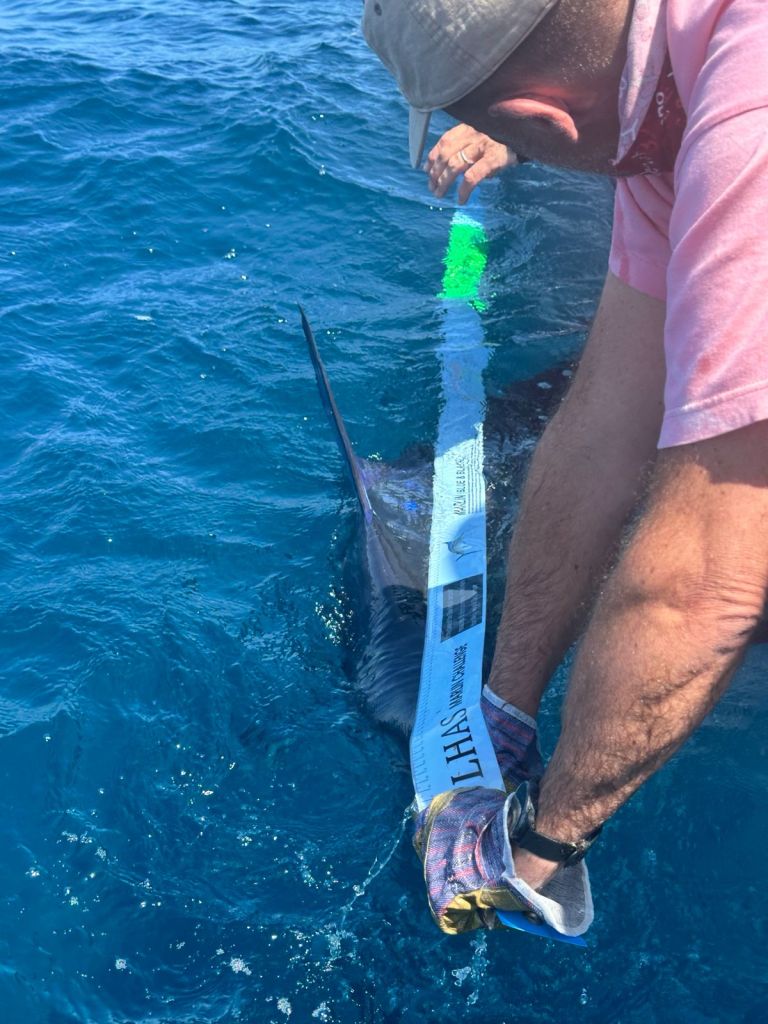
Harness on and I was able to start the fight. Trying to follow the line in the water and figure out where the fish is, is very difficult but I needed to see it jump. I saw a huge slash in the distance and was almost sure it was a marlin. Once I put sufficient tension on the fish I was able to turn it and start bringing it in towards the boat. The crew and I waited for it to jump again but it didnt causing us to second guess whether it was actually a marlin and not maybe a mako marlin. It felt like it took forever to gain a bit of line but slowly it started getting closer. I couldn’t take my eyes off the line waiting to see what it was. Eventually I saw the dark shape coming towards the boat and its distinct colors lit up. It was beautiful!!!! A first for me. Up until this day I had not yet had the opportunity to be up close with one of these magnificent fish. The amount of adrenaline running through my body was incredible causing my mouth to dry out, my arm muscles to cramp up and my hands to shake tremendously. A huge sip of cool drink managed to help and I was back into it. Up until this point we had forgotten to radio in and ask Marlin Control for a designated color. Andrew gave us a color and we could start landing the fish. Stuart was the trusty leader man and once he touched the leader it was all up to him. The fish came in up to the boat easily but once Richie grabbed the bill it was a different story. The fish went absolutely crazy but Richie was able to hang on. Stuart got the hooks out and we put the tape measure on it. After that it was time for the release.
Boat in gear and the fish looking great it was time to send it back. What an amazing feeling being able to watch the fish swim away strongly!! Its colors still lit up,it took off to the depths to fight another day.
Note: To view the group of photographs, click on the first one to enlarge it. Use the arrows to navigate the slideshow. Press ‘escape’ to return to the blog post. On your phone, swipe to view each photo and tap the ‘x’ to return to the blog post. You may also need to tap the information icon to view the captions.
Monday 23 February 2026 The battle between the Weather Gods and the Weather Committee continues. This morning, the weather gods were kind and allowed the Weather Committee to win – 1 each so far. Lines in was called at 08h00, and the search for the mighty marlin began. There was brief excitement when one or two hook-ups were called over the airwaves, but they were either on-offs or Maco Marlin, which do not count!
But by the afternoon, it was action all the way. We did not hear from Mike from Bad Co call in a hook-up as he was having radio problems. But hooray for Matthew Paulsen – he released a striped marlin just south of the 12-mile bank. The battle lasted 22 minutes. Other hook-ups were called in, but sadly, they were off again.
Lines up was called, and 16h0,0 and the boats were all back at the harbour by just before 18H00
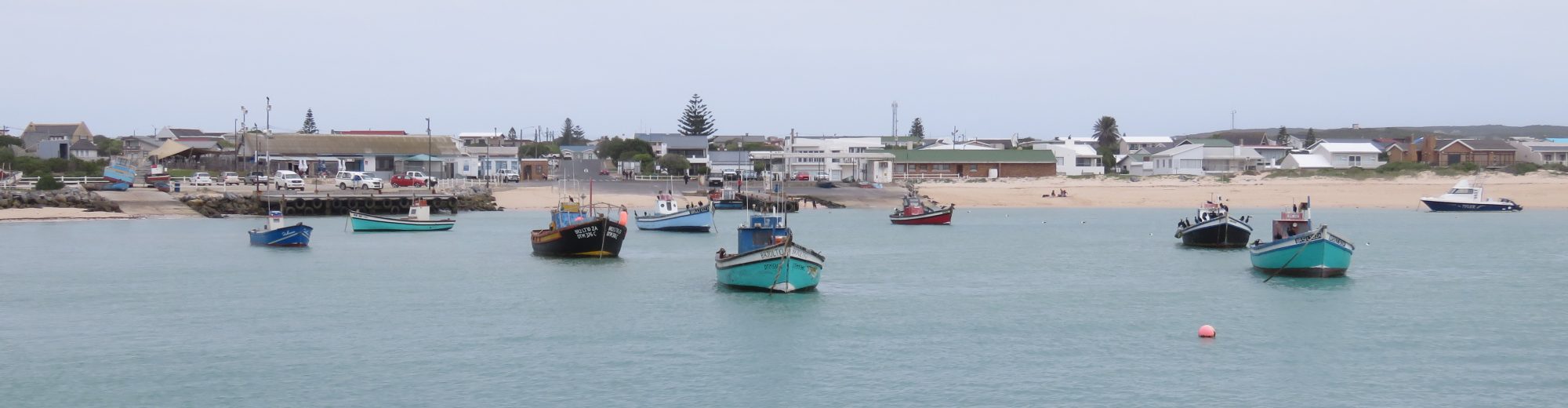
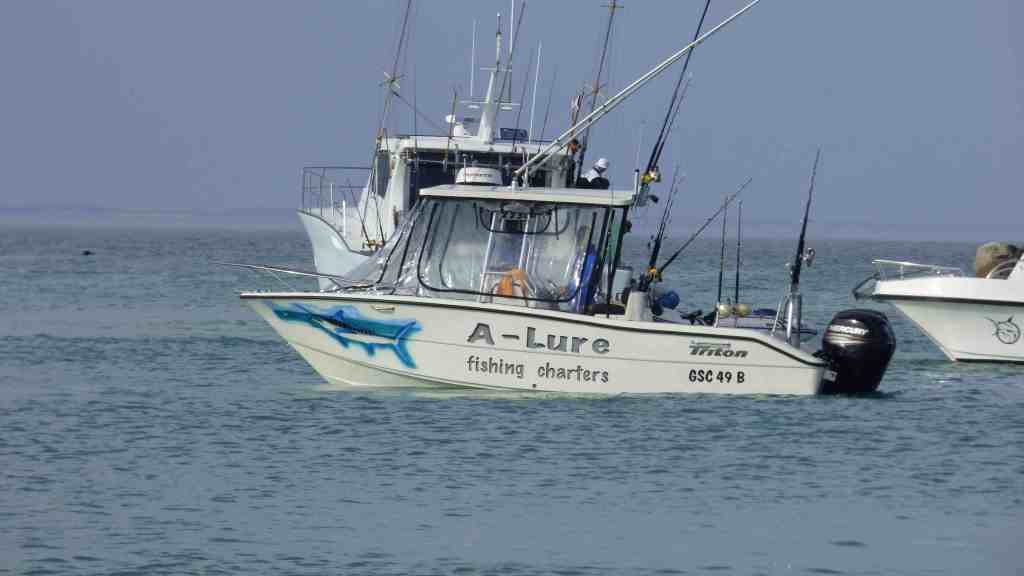
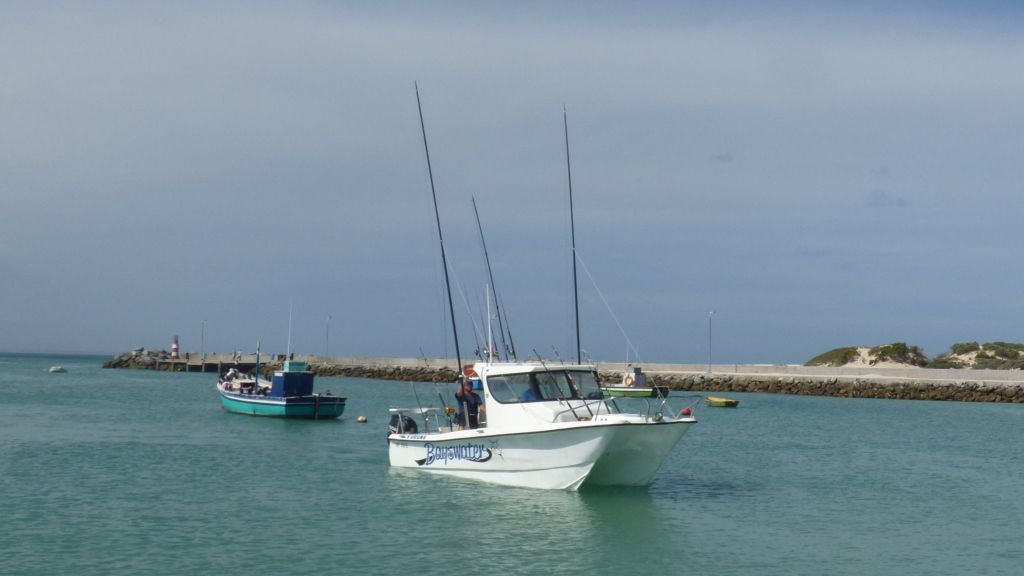
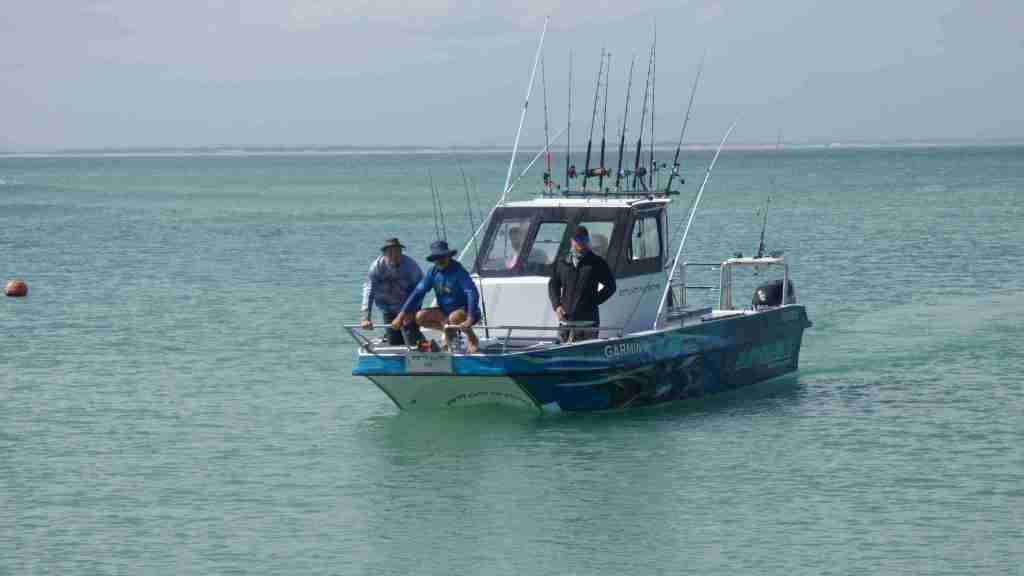
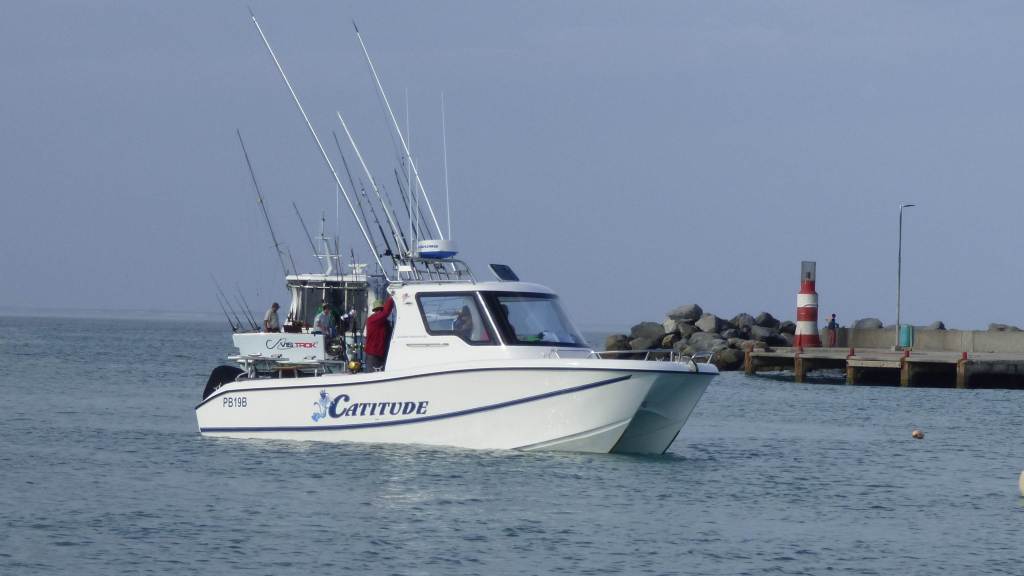
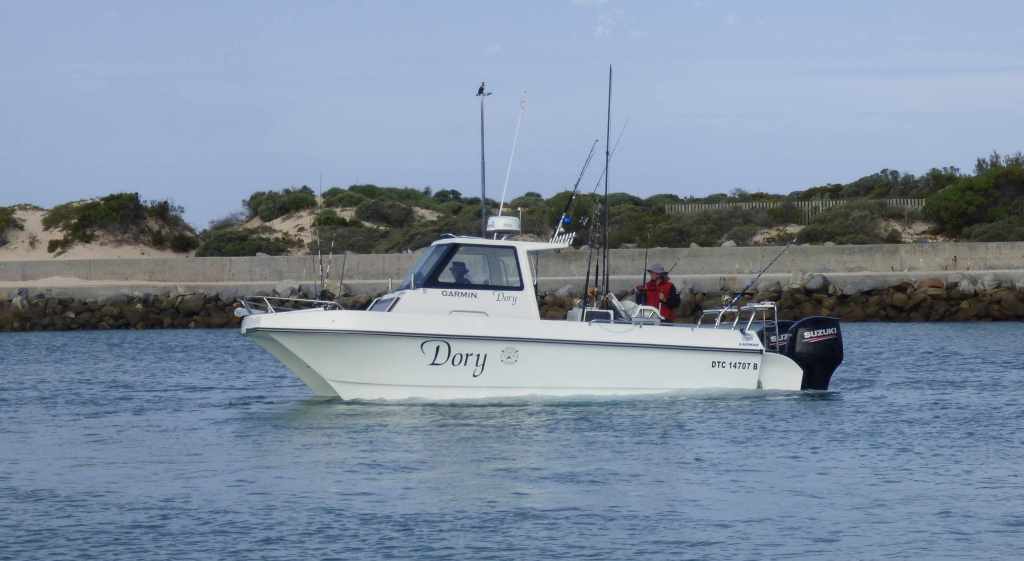
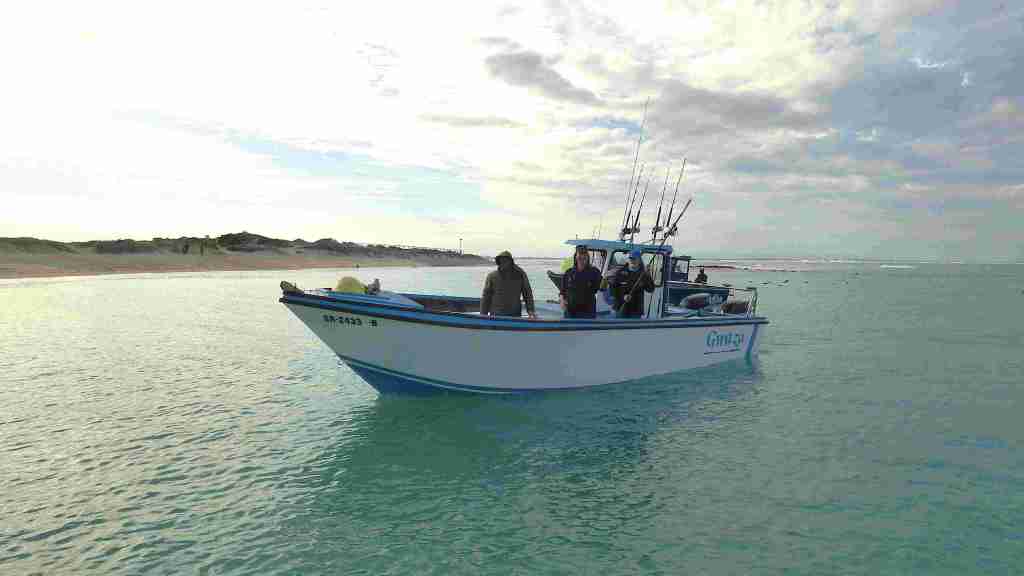
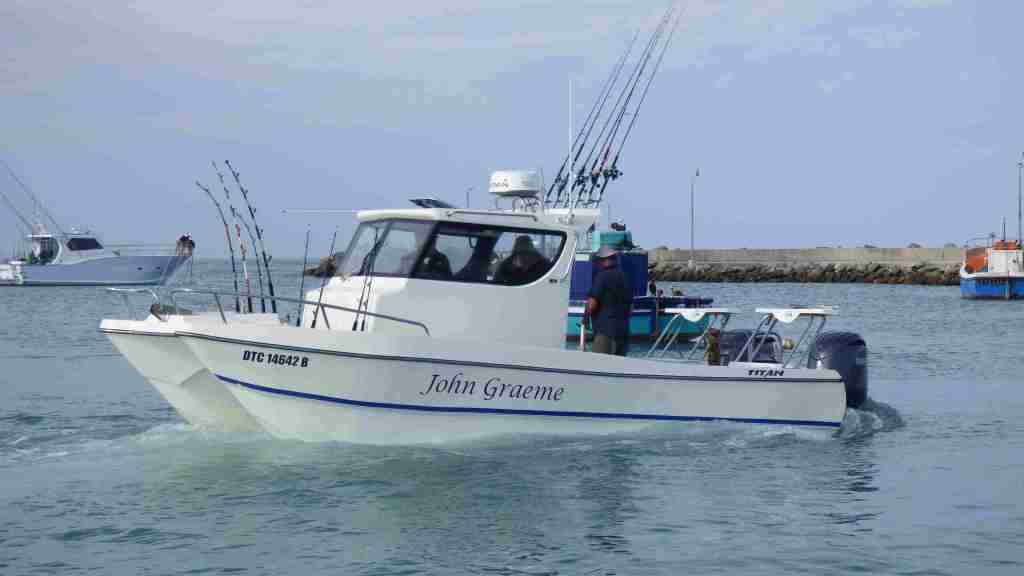
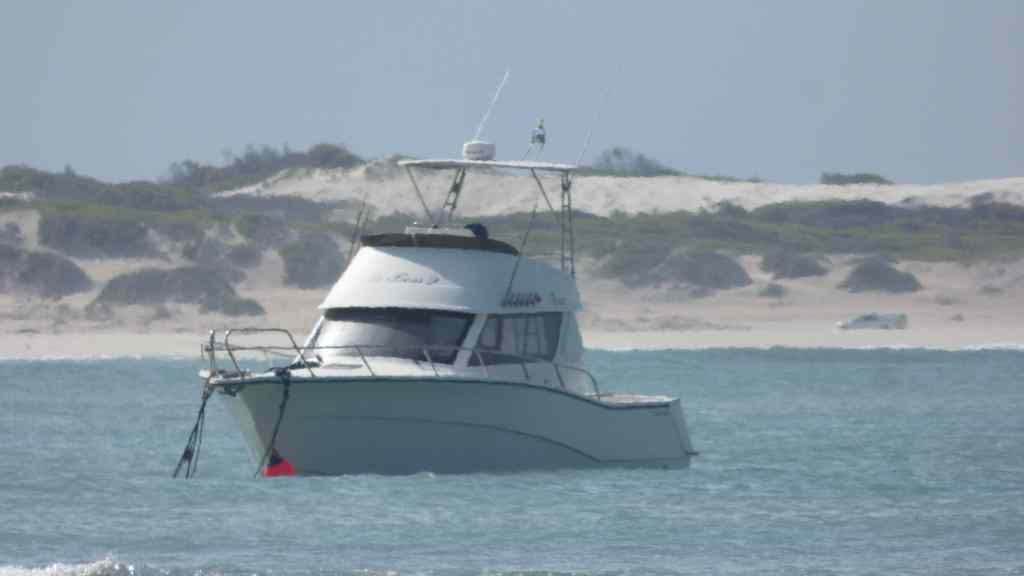
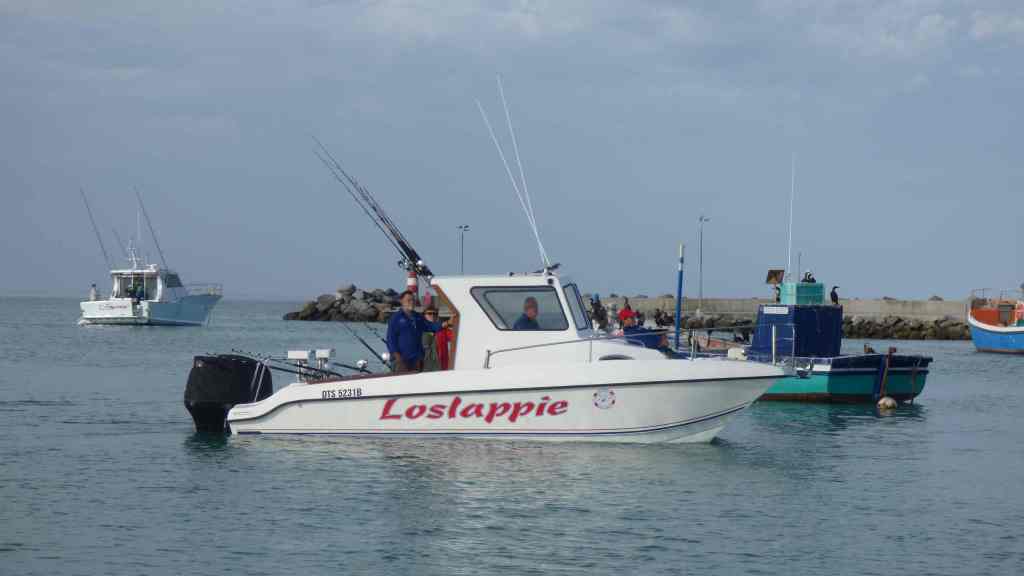
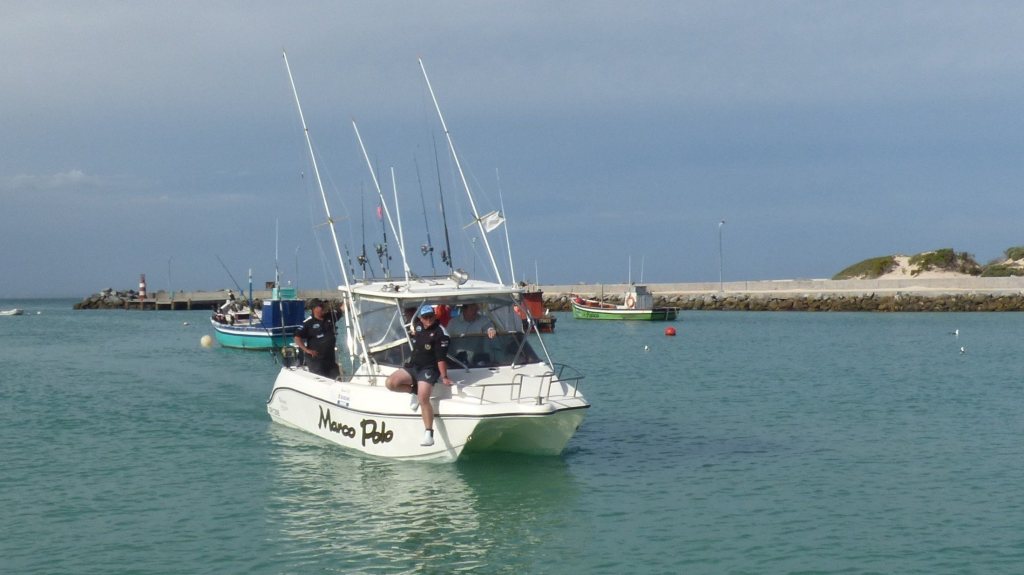
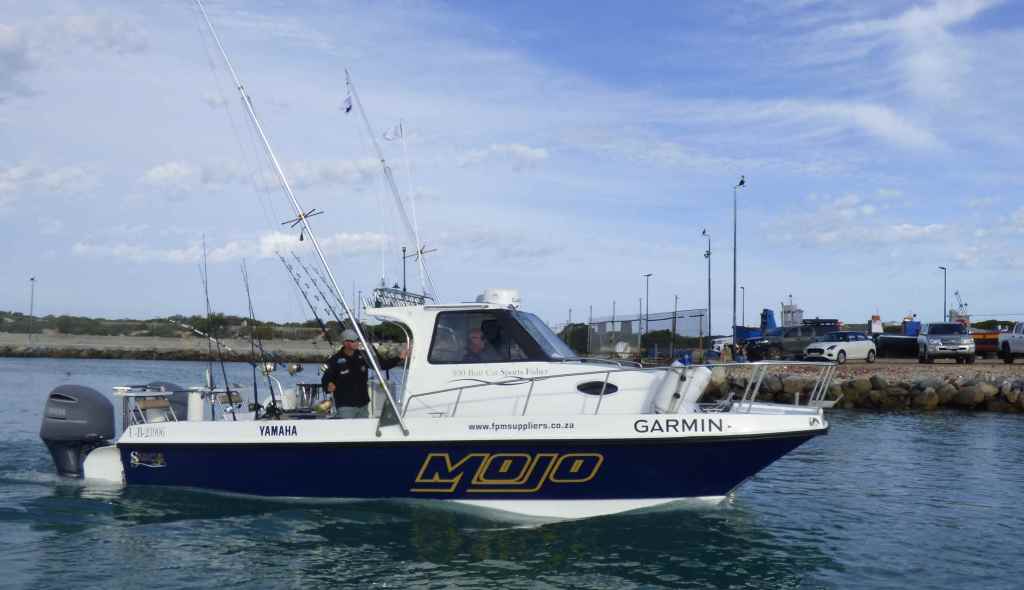
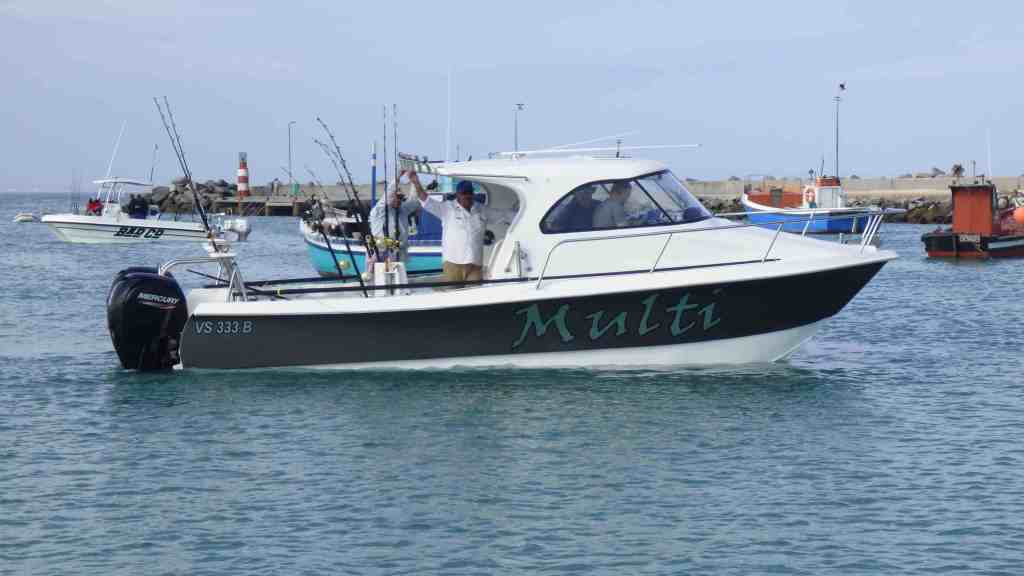
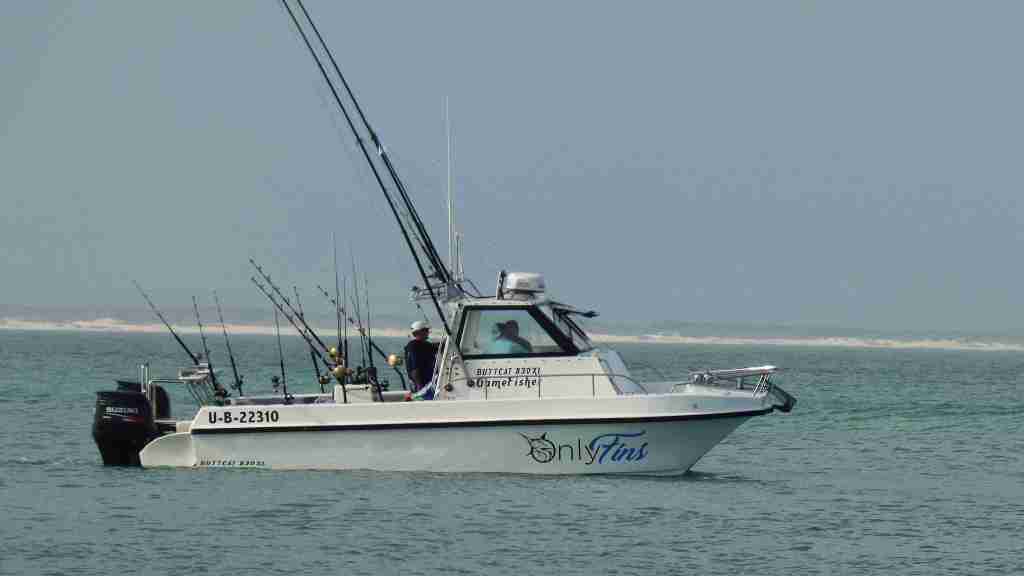
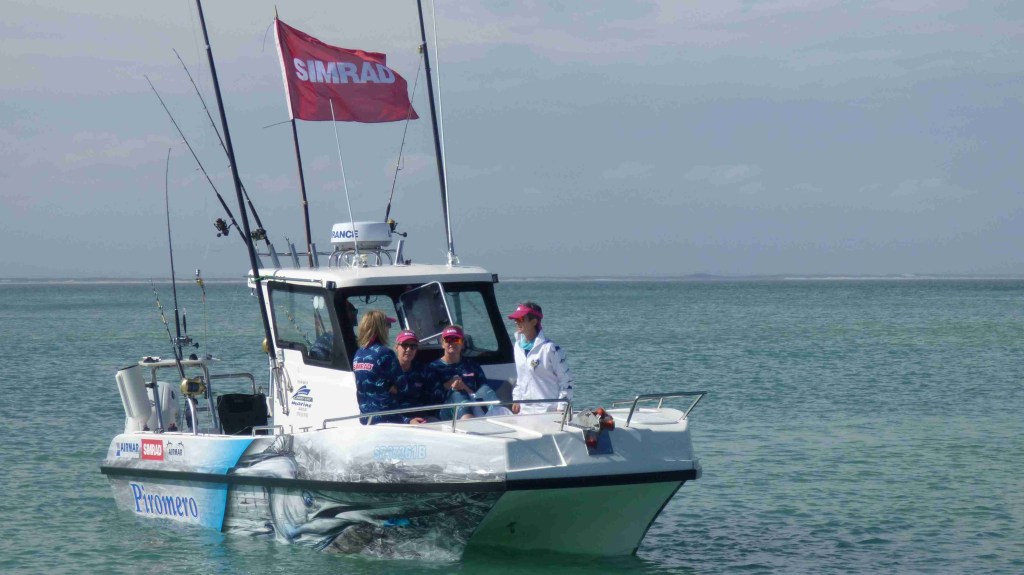
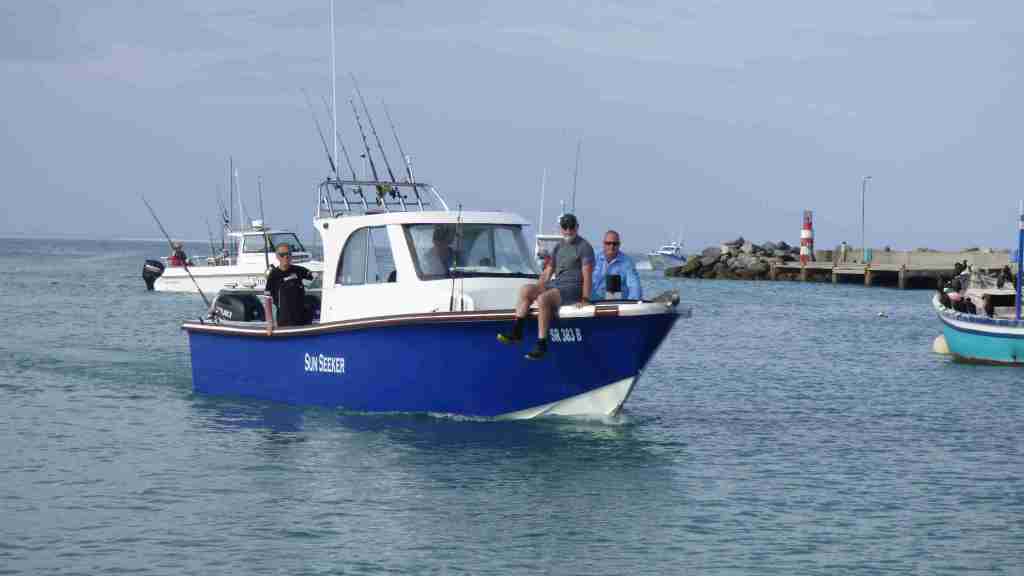
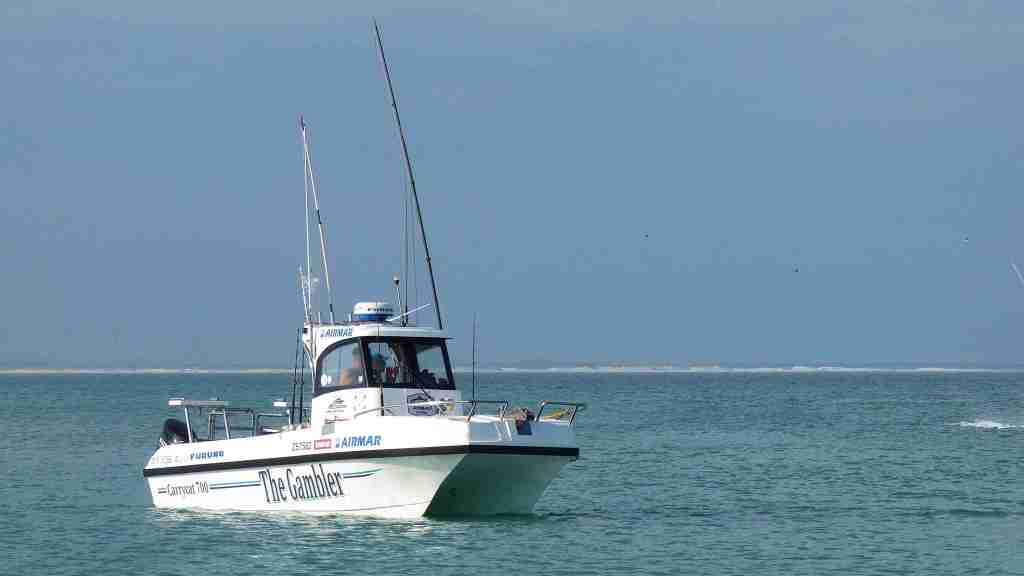
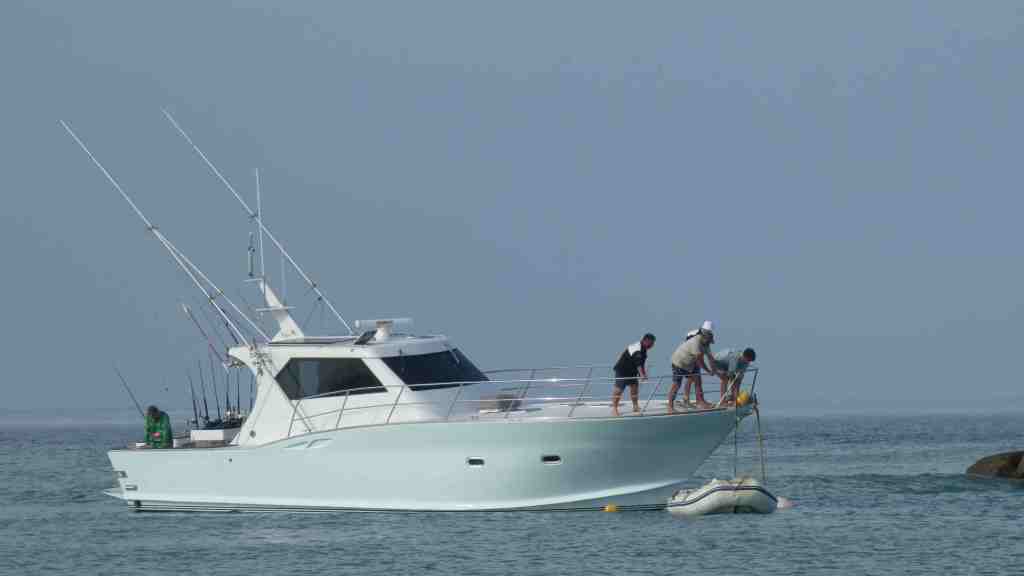
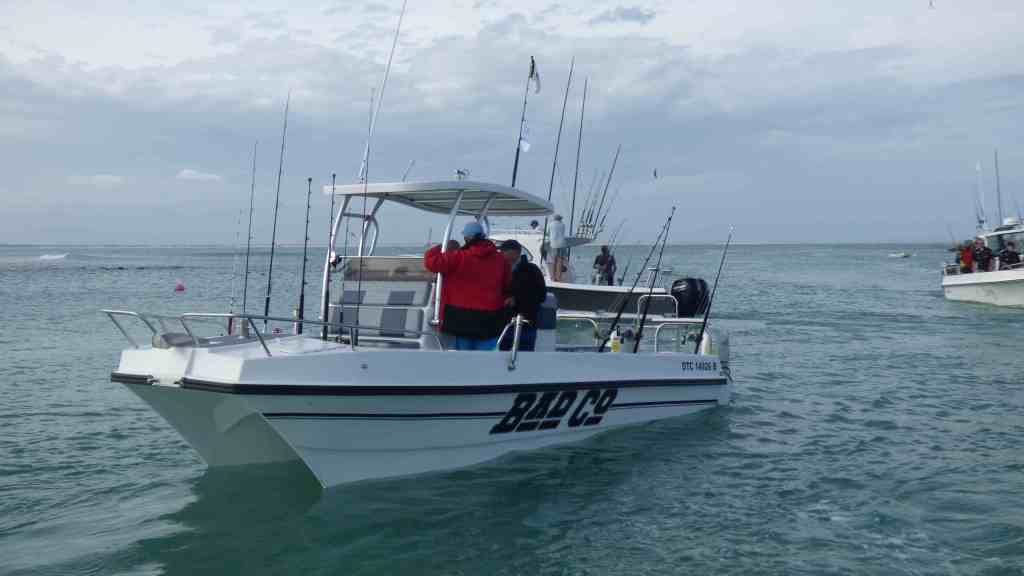
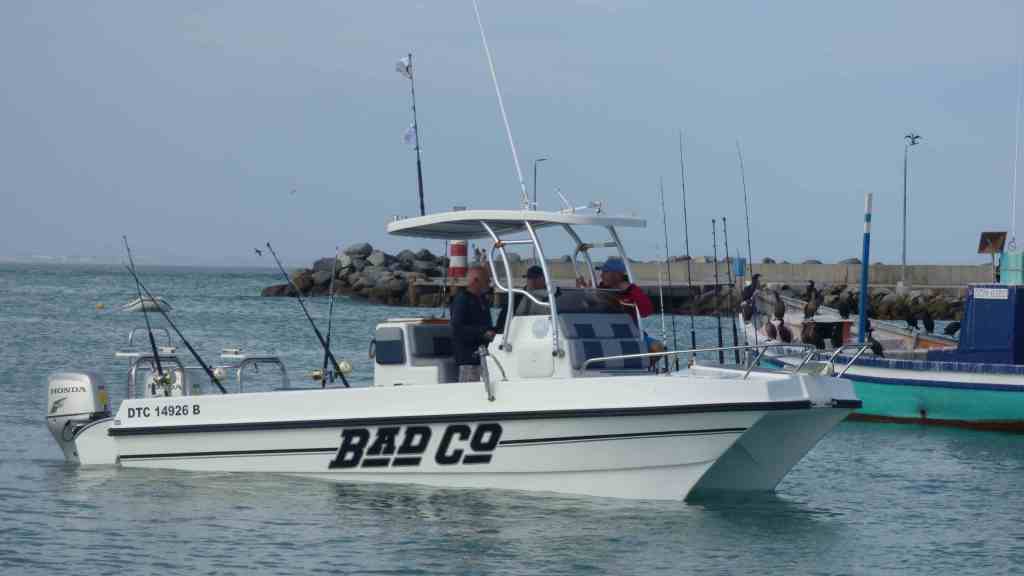
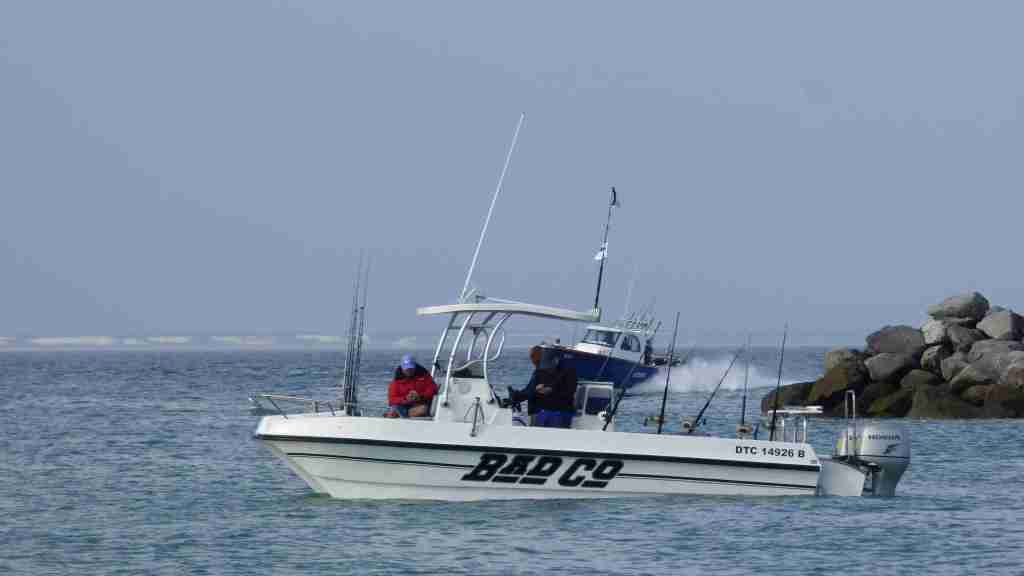
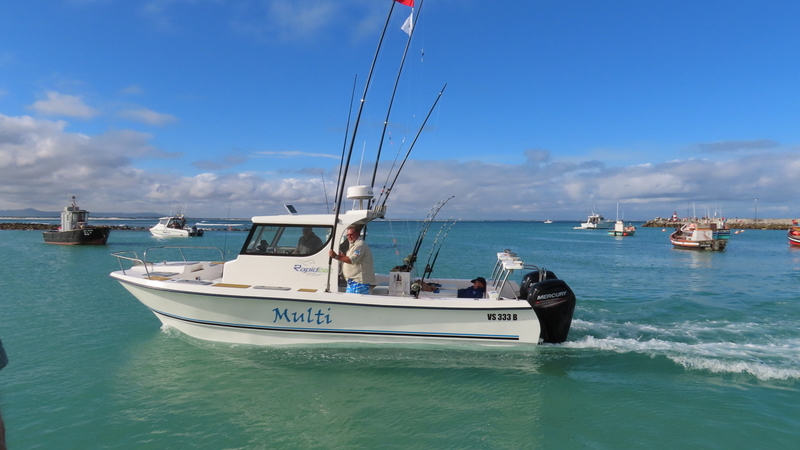
Adventurous A-lureBayswater bobbing in the harbourThe brave and the bold on Butt CheeksCatitude in Cruising moodDory dawdling homeGlorious Gwaza in the golden lightIndigo inching into portJohn Graeme cruising in gently Le Boss lazing on her mooringNothing loose about LoslappieMarco Polo master of the seaMojo moving inMulti making memoriesNippy Nerina nudges into port Onlyfins owns the oceanSassy girls on Piromero -sponsored by SimradSun Seeker sliding into portWatch out for Gangster GwazaFantastic Vistrok on its mooring Bad Co’s boys buzzing after victoryA bright day for Bad CoBring it on Bad Co!
There was fabulous food, fun, and laughter at the evening function, but after a hard day at sea, most of the anglers headed home quite early!
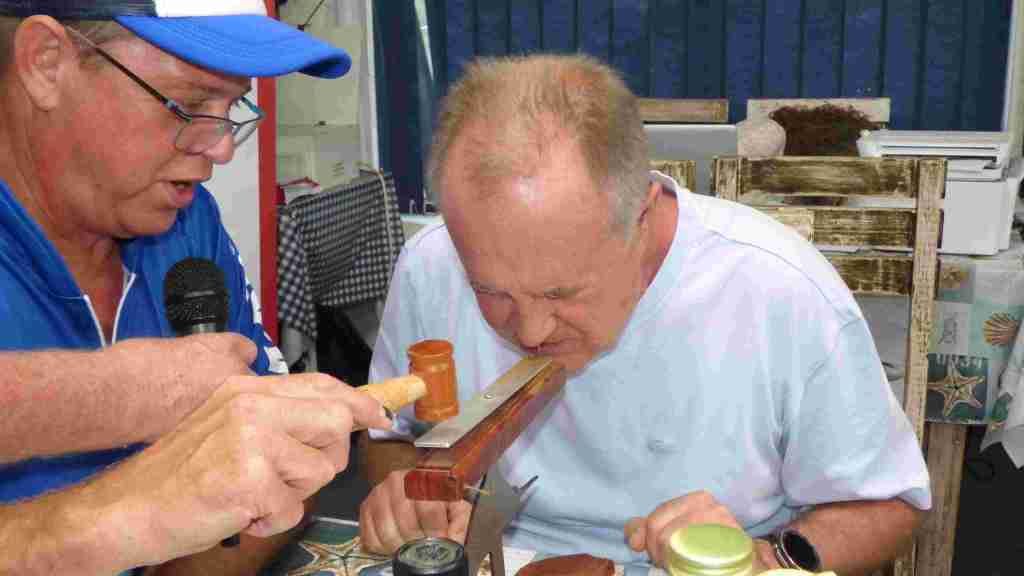
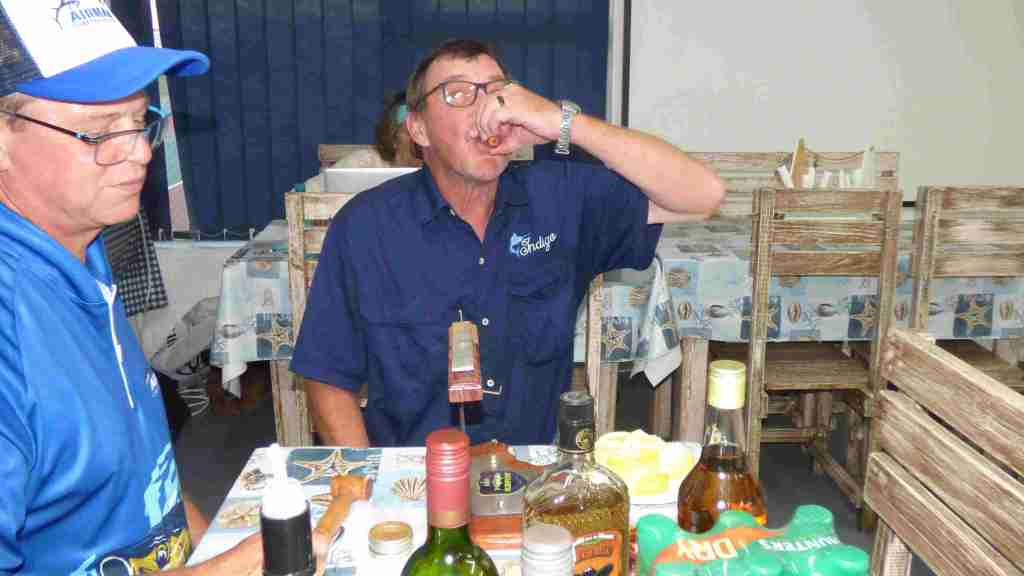
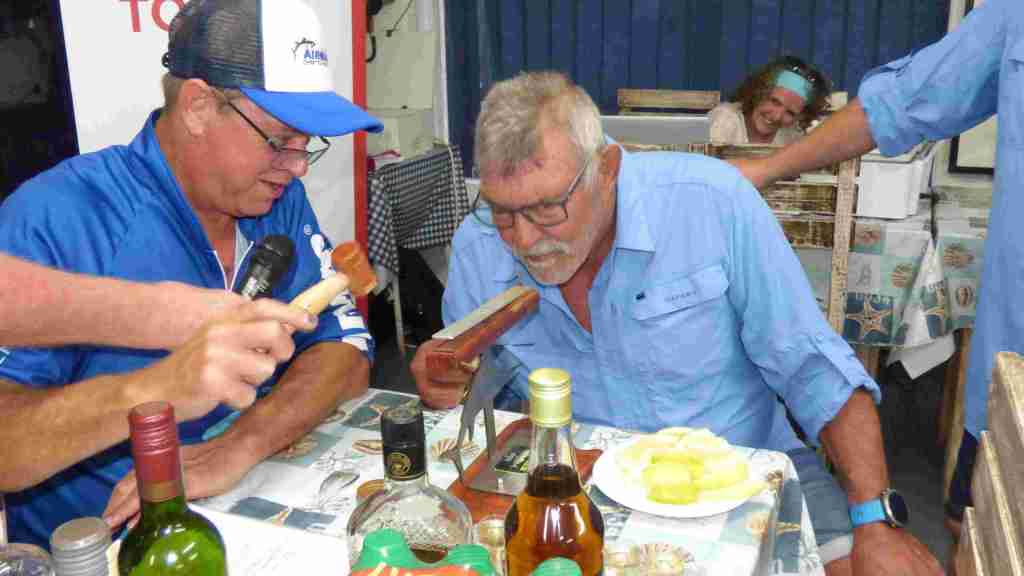
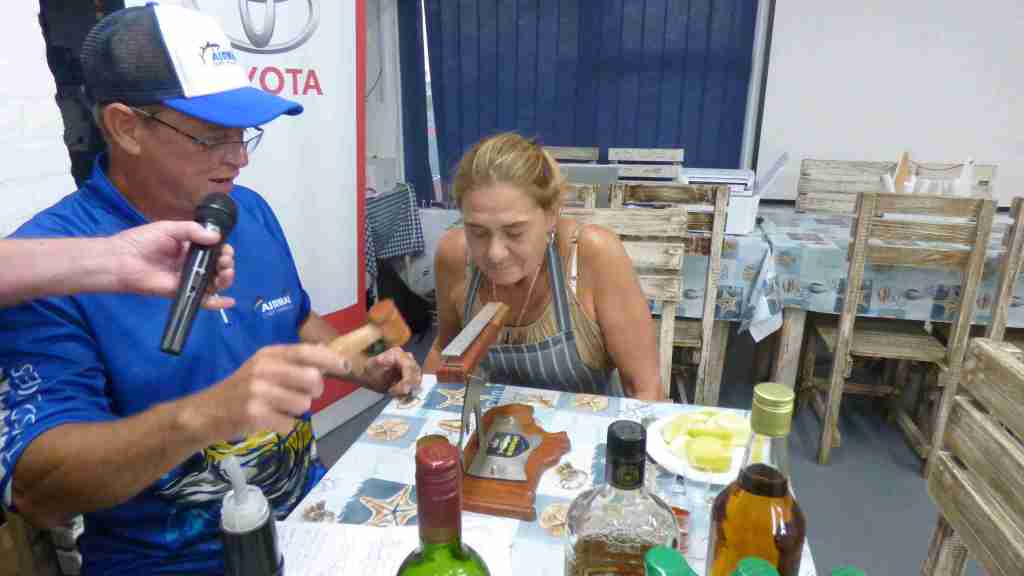
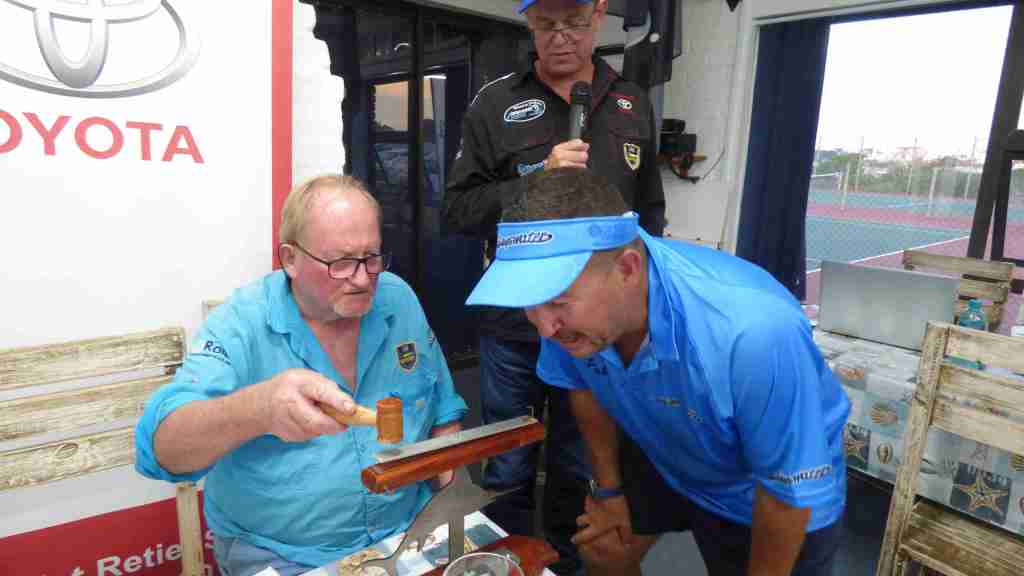
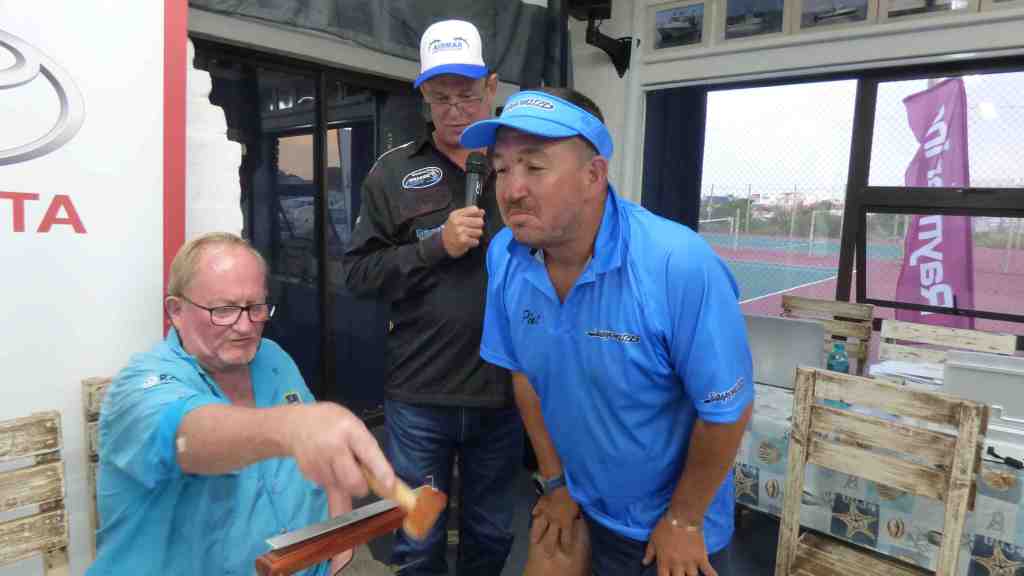
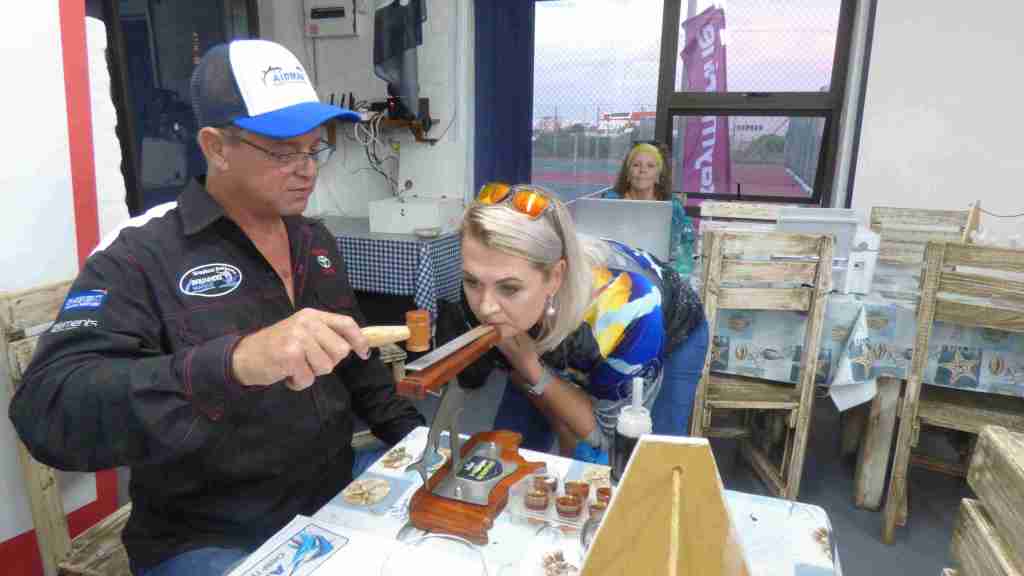
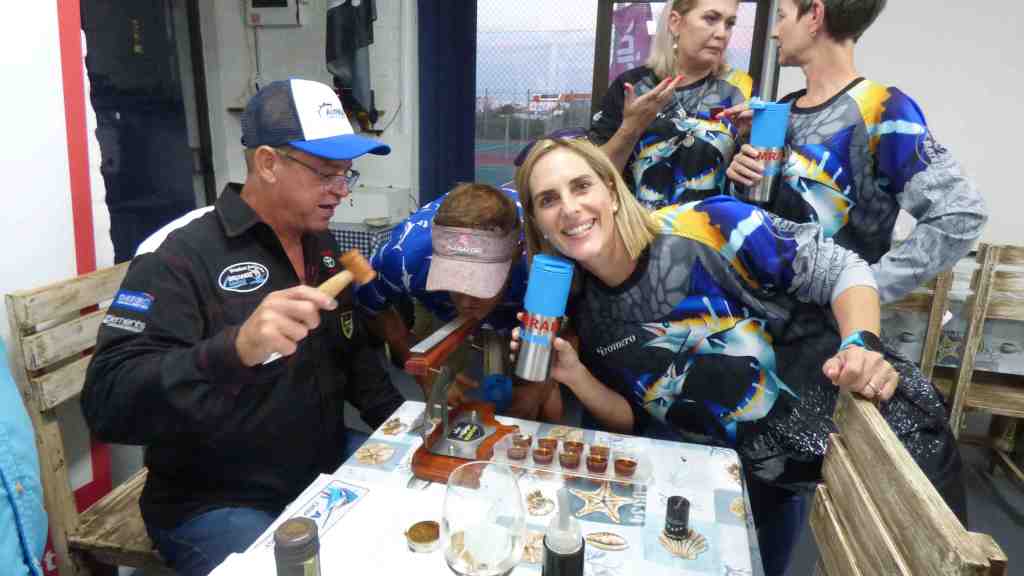
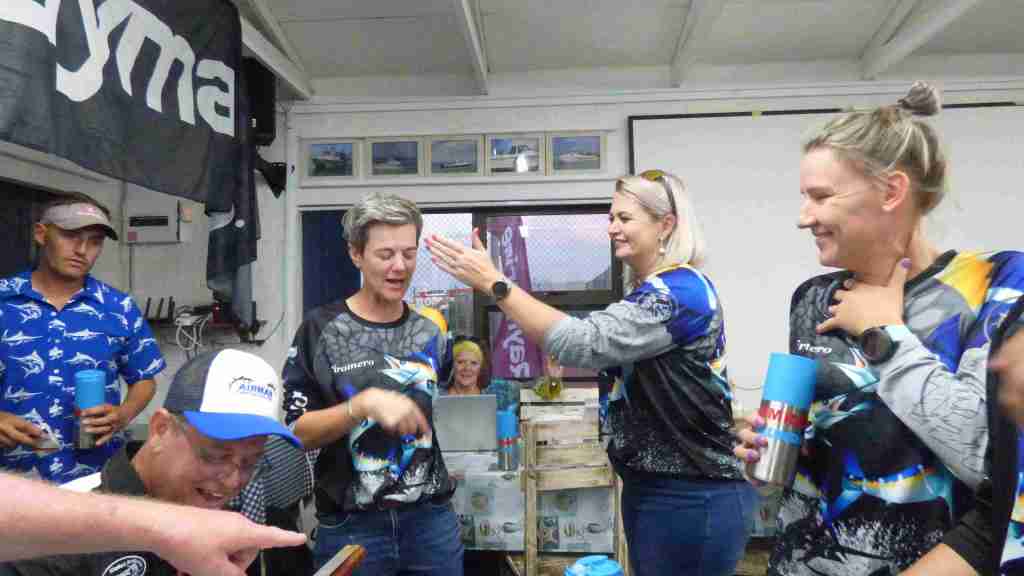
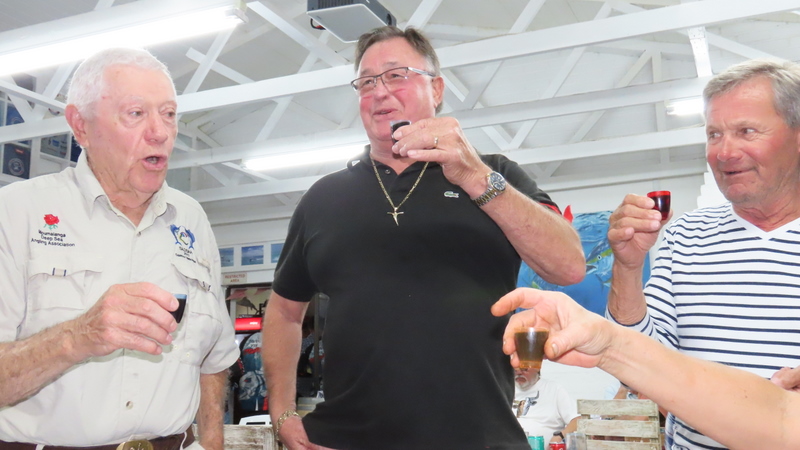
The usual snuff sniffs and strafdoppe were meted out for all those trumped-up charges, all taken in good humour.
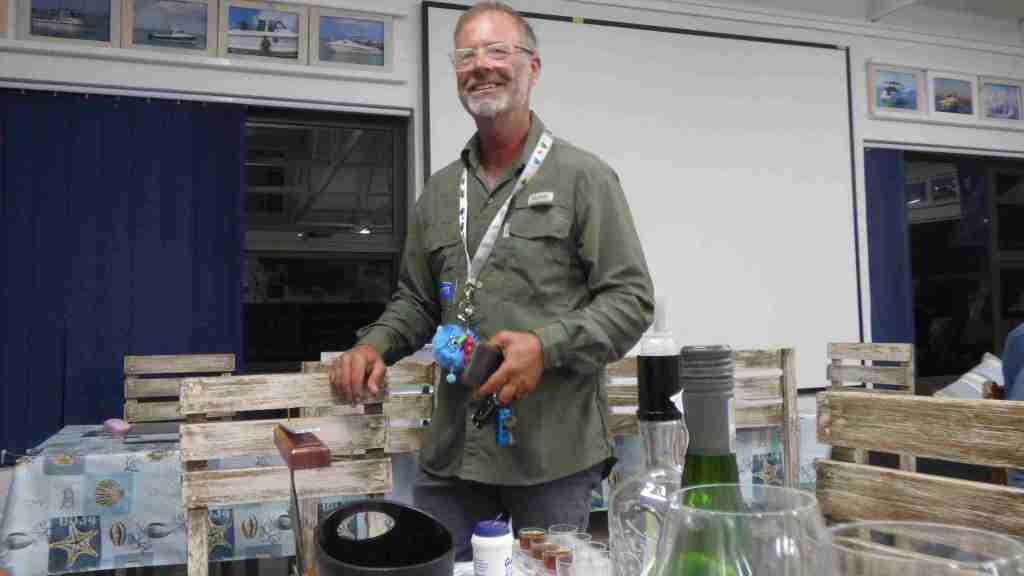
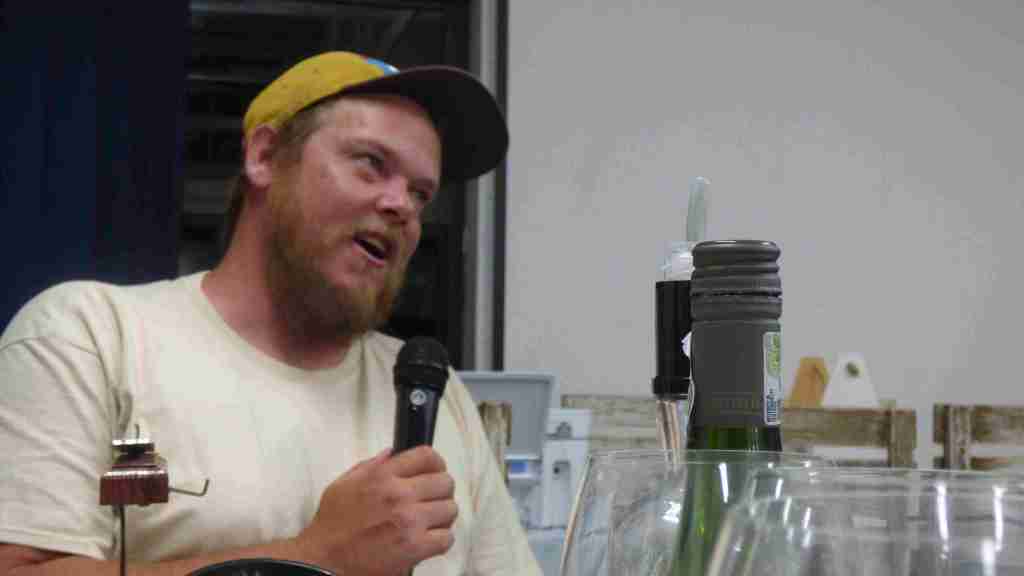
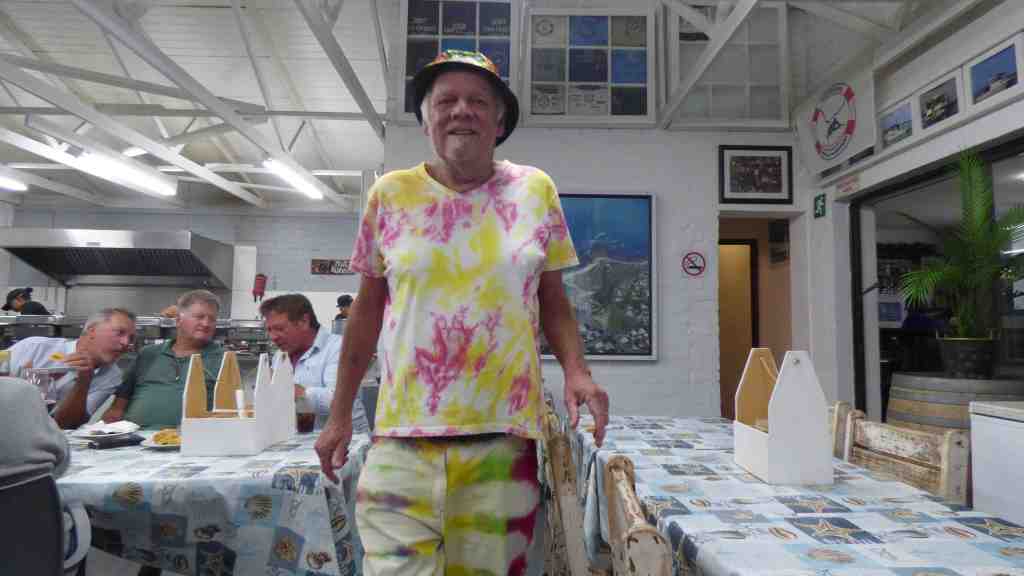
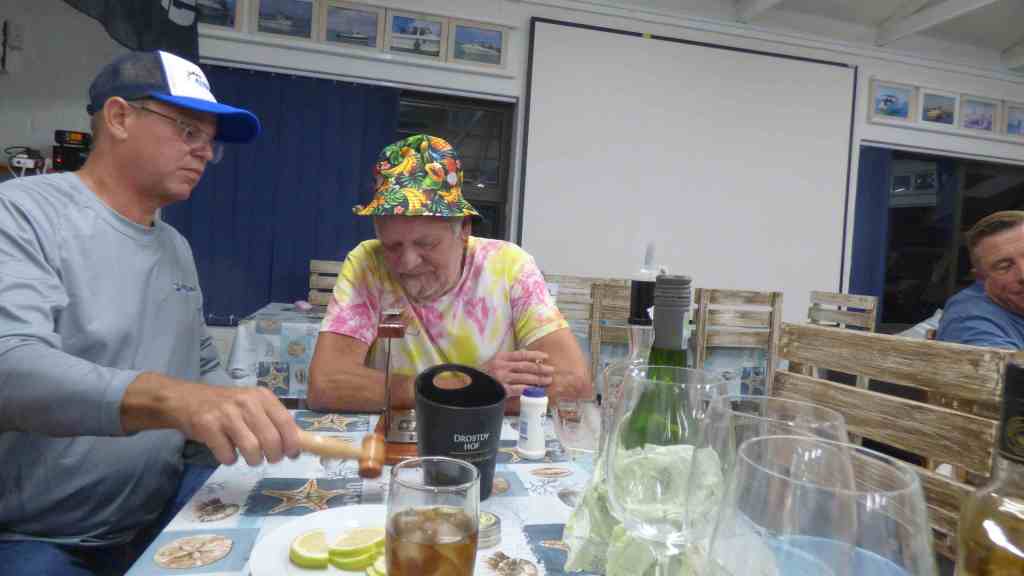
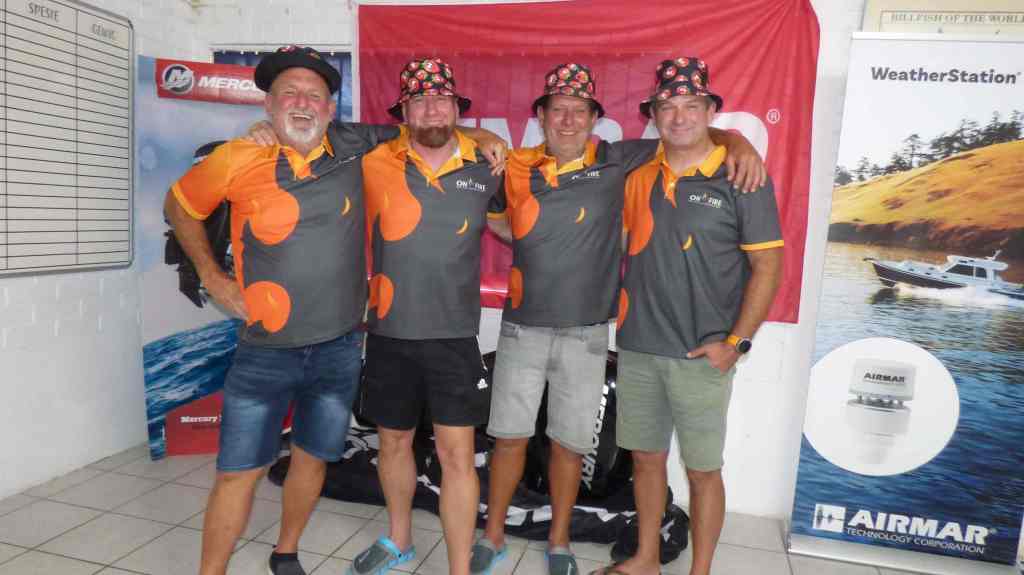
Grant got the idiot of the day awardMatthew told about Bad Co’s MarlinI can’t believe his dad turned up to TOMT looking like that!John took the straf!No they’re not twins – just good buddiesMike downs a strafdop
Wednesday 25 February 2026 Yesterday, the competition was called off due to bad weather and today the same verdict from the weather committee. So the score is now Weather Gods 3 Weather Committee 1.
Apologies for only posting now, but I am waiting for the Angler’s Tale. Watch this space. It may appear in a separate post later today.
Note: To view the group of photographs, click on the first one to enlarge it. Use the arrows to navigate the slideshow. Press ‘escape’ to return to the blog post. On your phone, swipe to view each photo and tap the ‘x’ to return to the blog post. You may also need to tap the information icon to view the captions.
Sunday, 22 February 2026
The weather committee, consisting of Trevor Brinch (Spotter One), Marc Maximus, Julian Nina, Rikus de Beer and Ron Penninkhof, is responsible for ensuring the anglers’ safety at sea. Last night, it looked as though the first day’s fishing might go ahead, but before 7 am this morning, the weather gods had other plans, and reluctantly, angling for today, Sunday 22 February 2026, was called off.
Weather Gods vs Weather Committee – WG -1 WC – 0
Not only did the weather misbehave, but Struisbaai/Agulhas sat without electricity until just before 6 pm. So what to do? Easy — Marinda fired off a message letting the guys know the generator was running and the cricket was on TV!
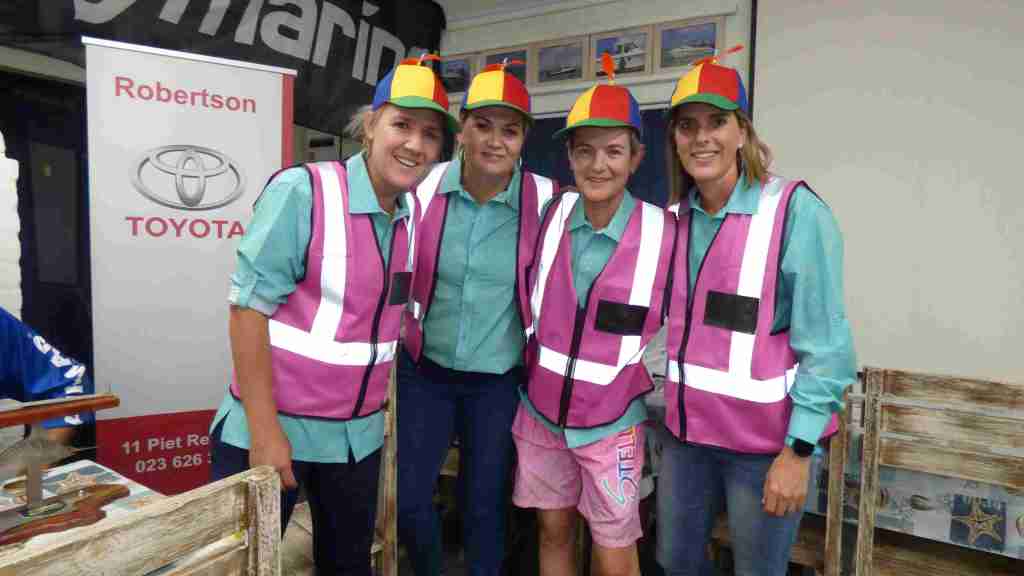
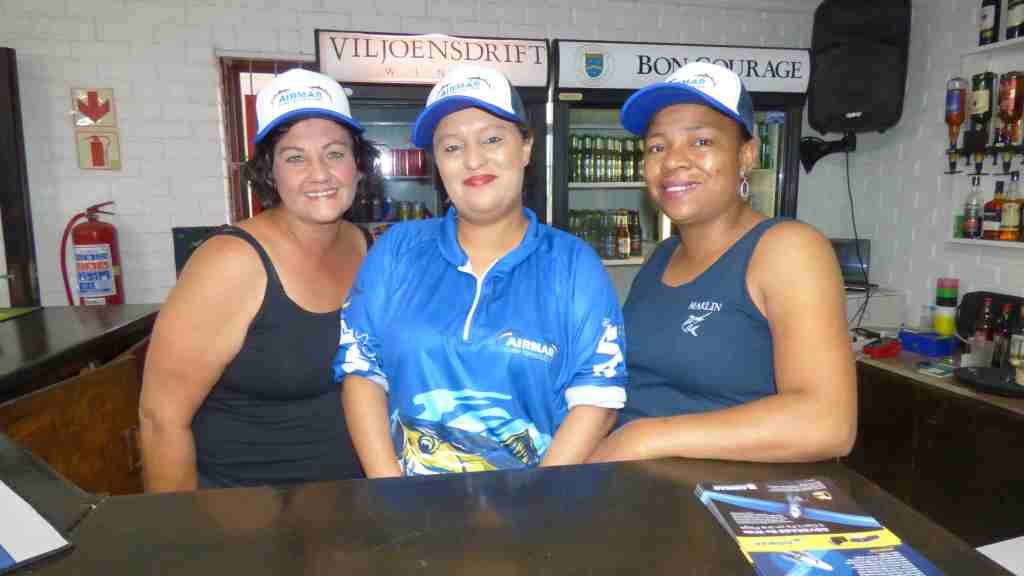
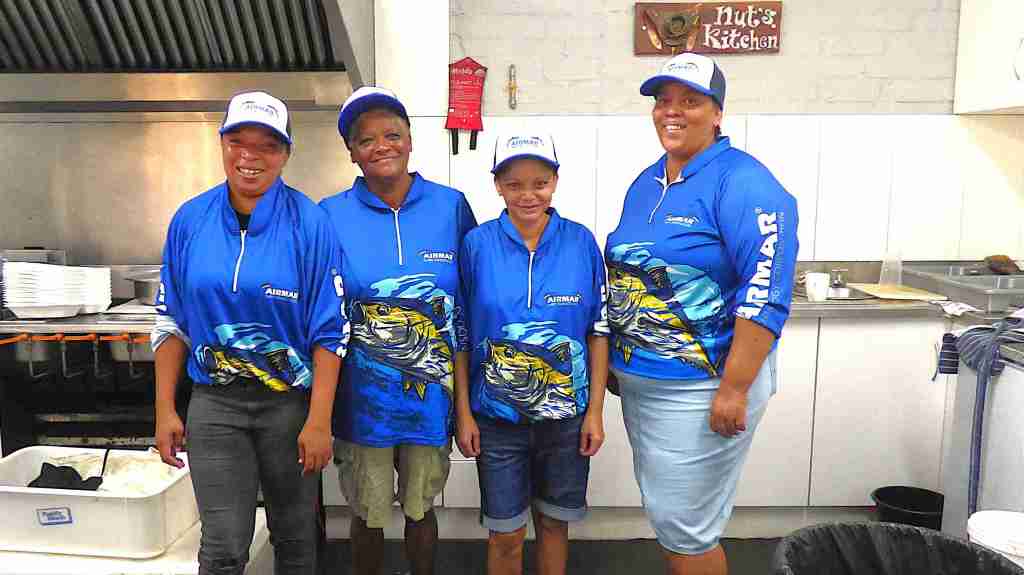
Can’t go fishing so watch the cricket!Airmar on their caps and full of sparkly smiles, the bubbly bar girls were there to keep the spirits high!
By dinner-time the power was back and everyone was in good spirits and ready to tuck into Marinda’s fine food – delicious seafood was tonight’s fine fare.
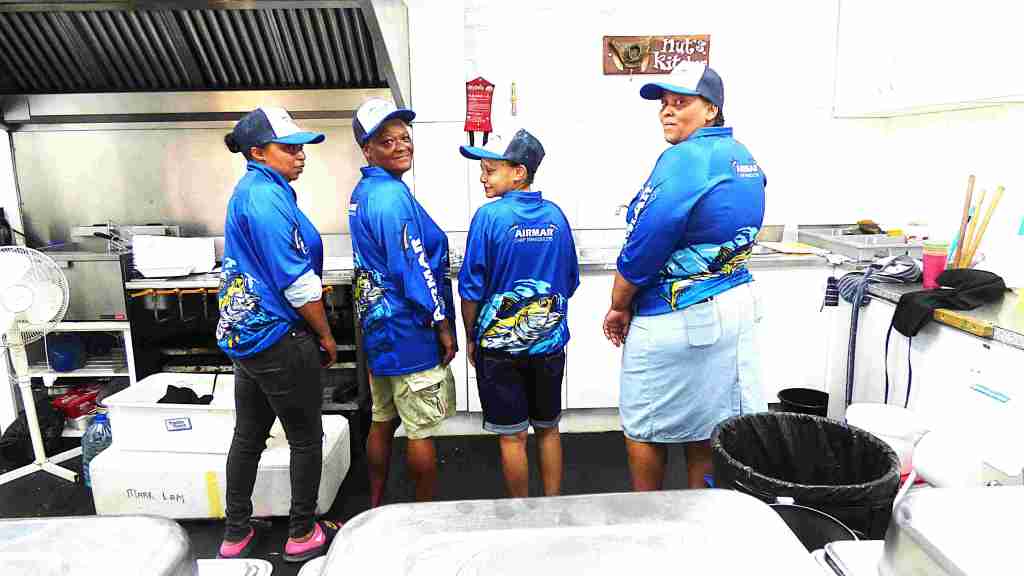
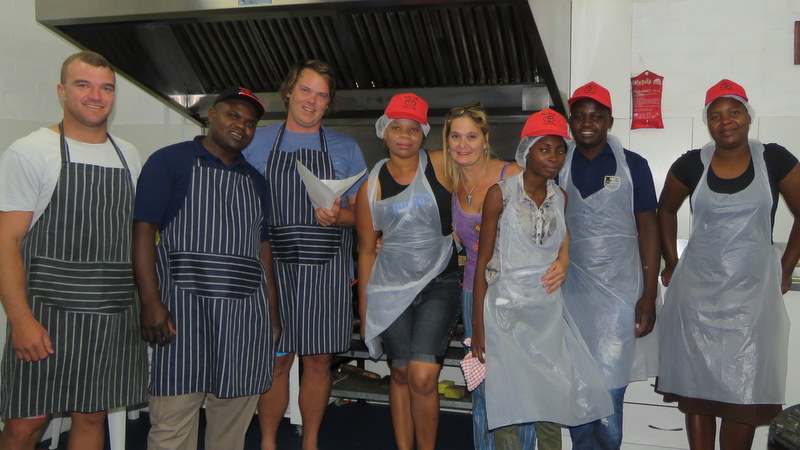
Our amazing kitchen staff serve up smiles in their Airmar sponsored shirts and capsThe Kitchen Crew are sizzling hot in their Airmar Gear
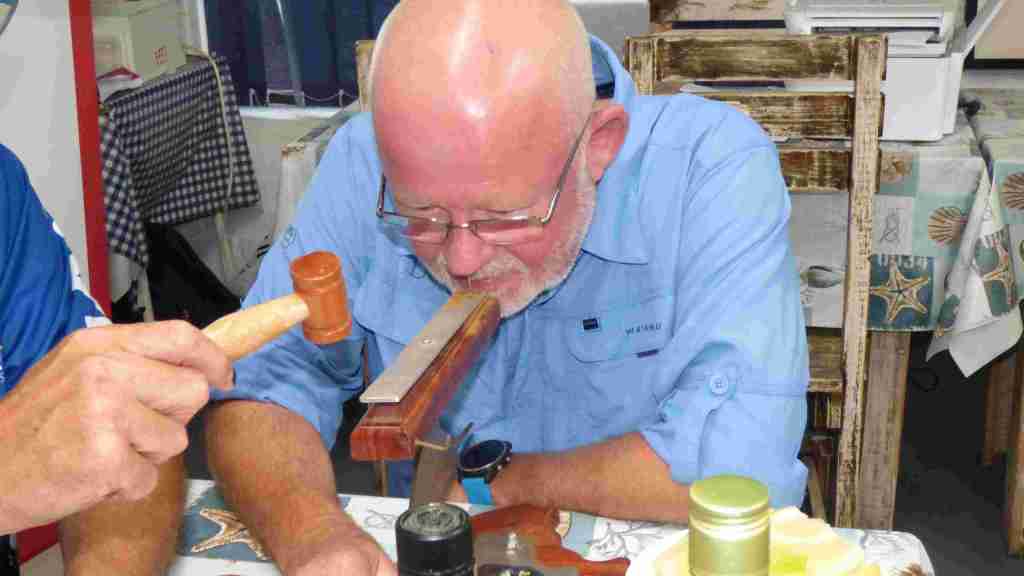
During the evening teams mingled with other teams, stories were told and of course snuff sniffs and straffdoppe were metered out for a variety of trumped up misdemeanours.
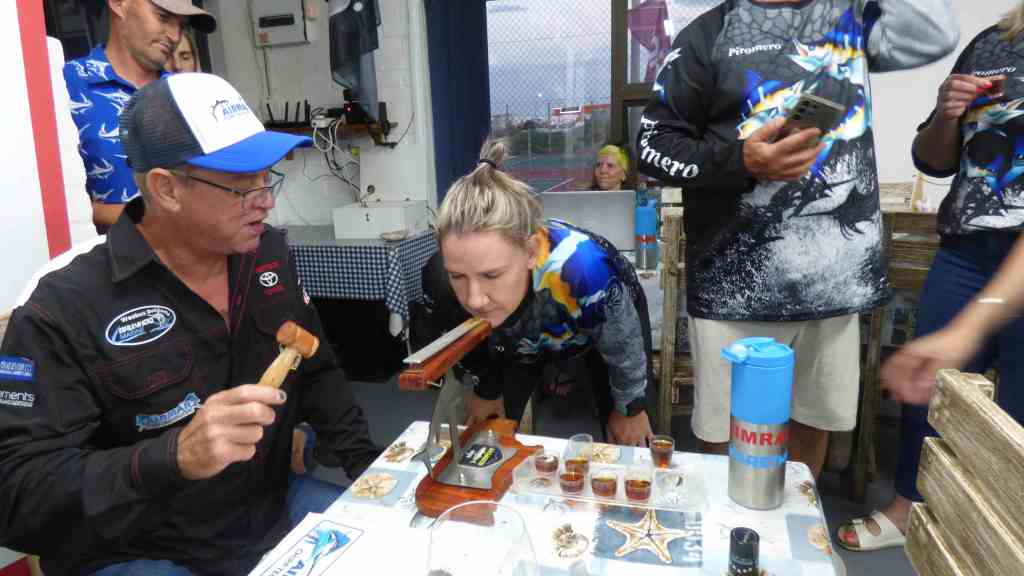
Team Simrad on Piromero – Only Girl Team competing – Sponsored by SimradAlways well-dressed – Team NerinaStunning Team shirts for Team LoslappiesTheir names on the back!A Happy Reunion – Andrew and Lourens who sponsors Lamb for the tournamentBad Boy PietEk is ‘sorrie’ almalDon’t come late to the tournamentYou get to wear the ‘stupid’ sashand take a strafdop
And if you’re a girl it doesn’t mean you’ll get away with it – Only girl team, takes it like the men!
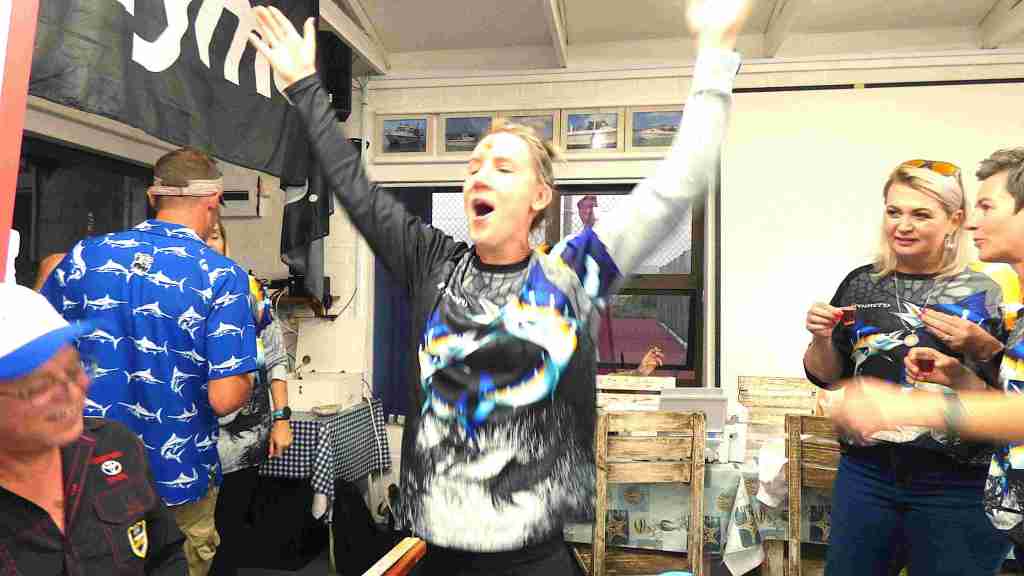
Snuff? Sorted!Strafdop? Bring it on!These girls don’t scare easilyThe snuff burns and dop bites but the girls just laugh it offBring it on!It takes more than a sniff of snuff to conquer me!
Monday, 23 February 2026 The score between the Weather Gods and The Weather Committe was evened this morning when the tournament was called on! Watch this space for the exciting developments of the day!
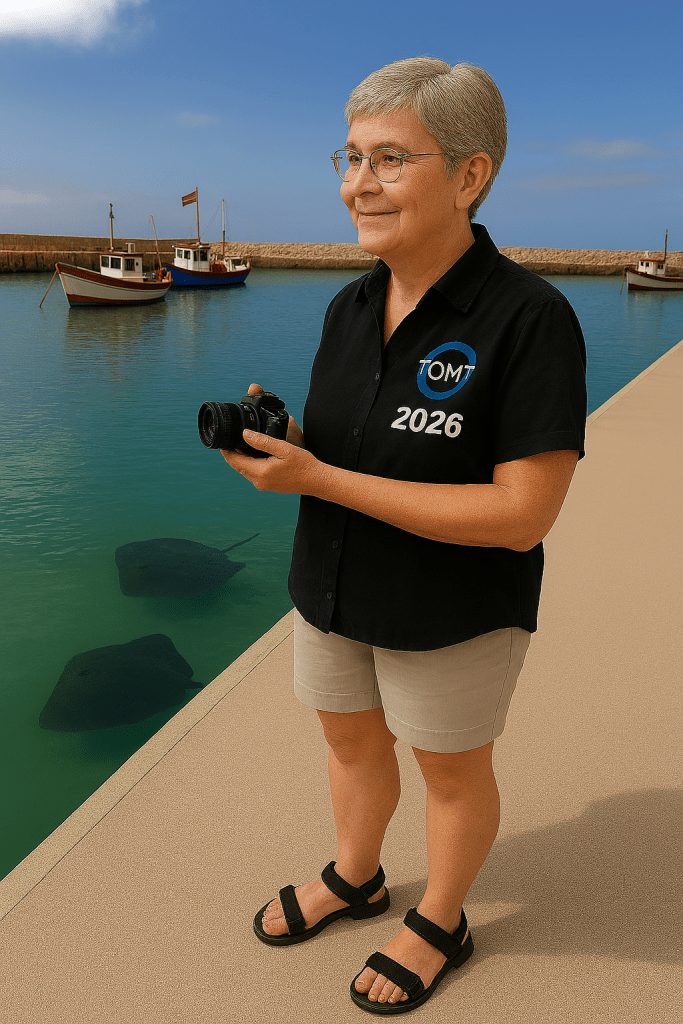
Watch out for a grey-haired old lady standing on the jetty with her camera at the ready. She is waiting for the intrepid anglers to return from the deep. Hopefully they will pose and smile as they come alongside.
The stories that follow come straight from the decks of the boats that rose to the challenge in 2025 — tales of grit, camaraderie, and the sheer thrill of marlin on the line. Tonight, as we gather for the opening function, may these memories fire up every angler heading out to sea this year. The ocean is waiting, and so are the stories yet to be written.
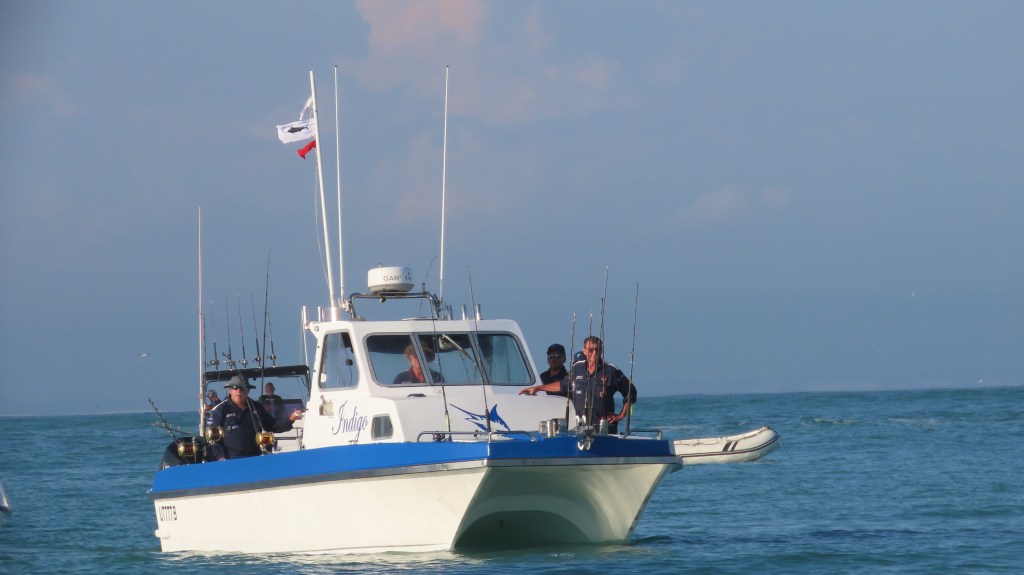
Team Indigo, caught the first marlin of the competition and were the second prize winners. Monday 3 March 2025 Chasing Dreams: My Journey in the Two Oceans Marlin TournamentBy Peté (Jannie) Kotze
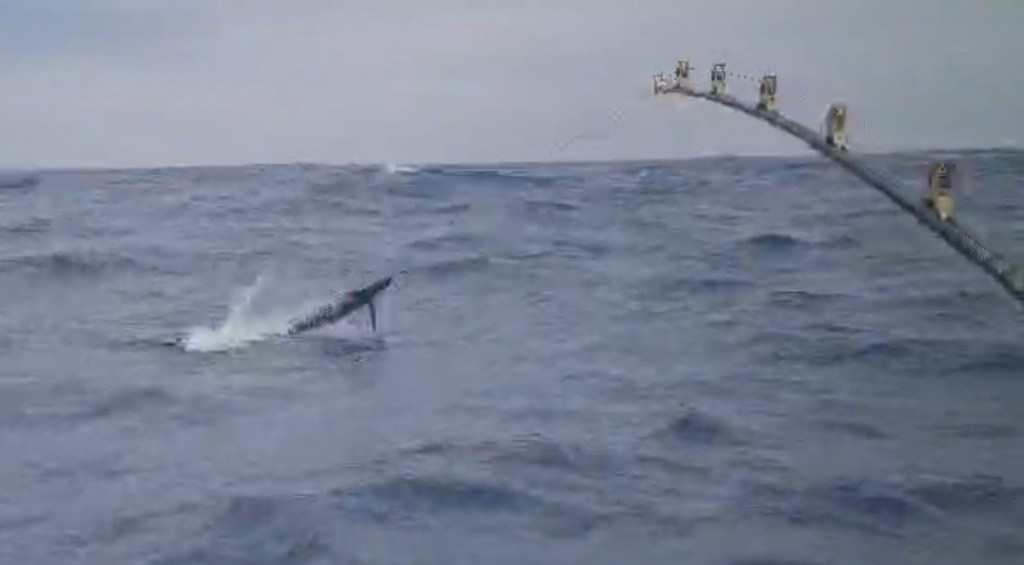
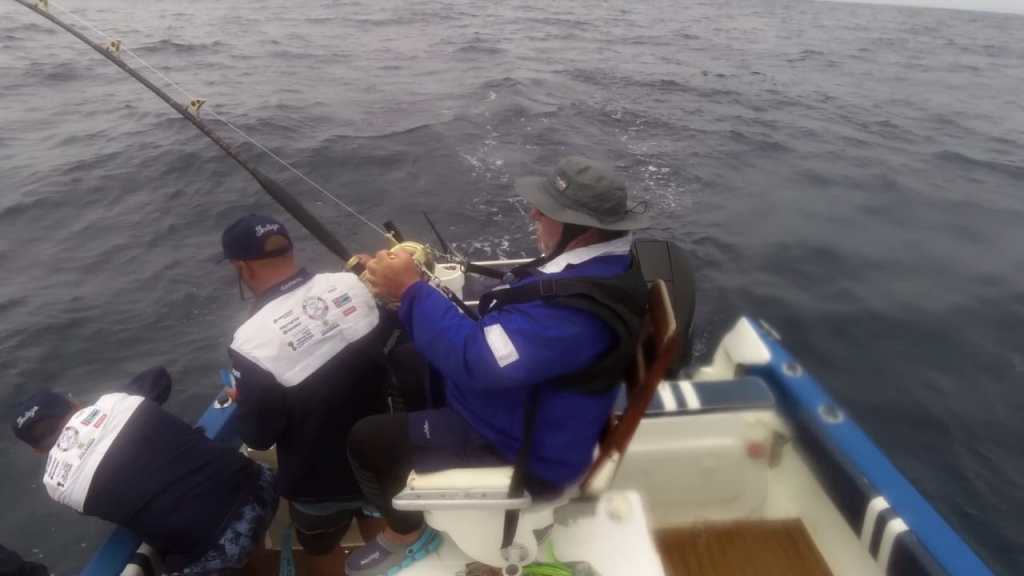
For six years, I have attempted to catch my first marlin in the Two Oceans Marlin Tournament. Would 2025 be the year my unfulfilled dream comes true? Above all, I participate in this tournament for the fun and camaraderie, yet the desire to catch the elusive fish remains strong. Last year, I almost caught one, but it got away, and the sting of losing it was still sorely felt, especially as the crew did not let me forget it! On the first fishing day of the tournament, we were finalizing the Cona position when the back-line went off. The skipper spotted a single working bird, and putting our lines out early paid off. We were close to the 45s, a bank 45 miles due south of Struisbaai. We got distracted on the way with a good-sized dorado at Halfway House, not expecting a strike just then. We were unsure. It was too soon, and the pull was not so strong. Then the 80’ ‘Alutecnos started shrieking, and we were in business. What followed were majestic aerial displays, excitement, anxiety, and adrenaline, all keeping me fighting through the deep burn in my arms! May this be my first TOMT marlin, I prayed! Don’t let this be a repeat of last year’s loss! The fear of a recurrence kept me going.
Jannie working through the burn in his arms
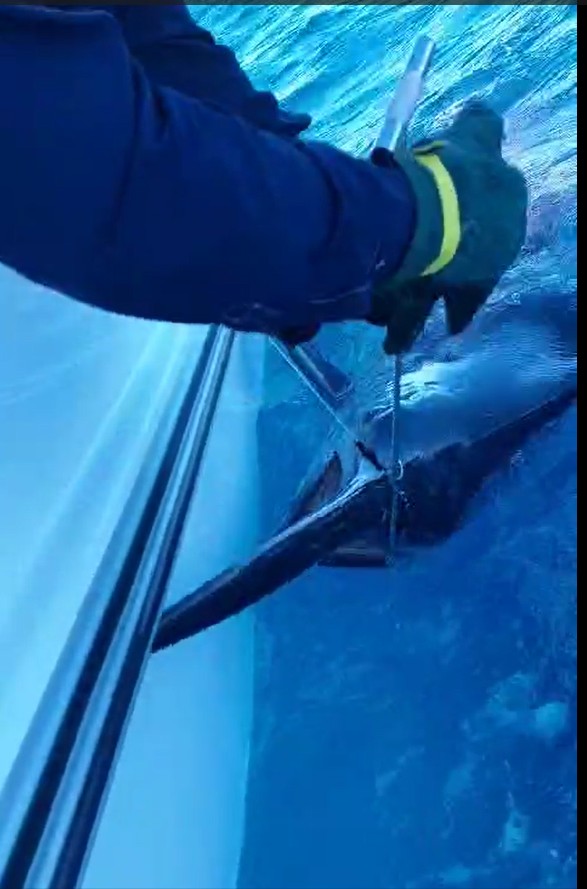
The forty-nine minutes felt like an eternity. At last, Werner pulled in the leader. However, this black marlin had the final say. It kicked under the boat before we could properly remove the hooks. It swam off in the wake, released by the engine, still towing our precious pink and blue Cona!
Spot the bill of the marlin
My marlin bogey is off my back, but I already dream of the next and the next marlin. “Is this normal?” my wife asked. I nodded affirmatively. My heartfelt thanks to my Indigo crew mates, Gawie (skipper), Werner, Lourens, and Craig. This one is for our dear friend Eugene, who passed away suddenly in January. His spirit was with us all the way on the boat.
Indigo flying the marlin flag
For a boat to get one of the mighty marlin is amazing but getting two in the same competition is just the cherry on top! Team Dory, won first prize for measuring and releasing two marlin.
Tuesday 4 March 2025 Dory’s First Marlin of the Tournament By Andrew Davidson On the 4th of March 2025, Dory left Struisbaai harbour at around 06:50 and headed out to the Halfway House area. This is a well-known fishing spot en route to the famous Alphard Banks, about 40 nautical miles east of Struisbaai. Sea conditions were close to perfect, with a light swell and nearly no wind. Upon reaching the area, the team had their coffee and a light breakfast. We had just started trawling and settling down for the day’s fishing, talking about how fortunate we are to have been a crew for the past nine years, when we saw a black marlin coming from the port side.
It hit the short cona, then immediately moved to the starboard side long cona, striking it as well. The marlin then struck the long port side cona and moved away. During this, we continued trawling at about 8.5 knots, hoping to go “vas,” but it did not happen. The entire crew was happy to have had these strikes, but the marlin was not on yet. We all thought the marlin had left us when the “Hongkong” cona was struck with a huge hit by the marlin. It was game on. I was on the rod and got into the fighting chair, and the fight started. We had the privilege to view a black marlin jumping out of the water and giving us an unforgettable show of its power and survival skills. The fish was about 350 meters from the boat at the back, fighting me with all its power to escape and get the cona out of its mouth. After about 30 minutes, I retrieved most of the line the marlin took and we could see it behind our boat. My thoughts were that the fight was over, but the marlin had other ideas. As I got the marlin closer to the boat, it decided to take a deep dive straight down into the sea next to the boat. After taking line again, I managed to turn it around, and the retrieving process started again. This happened another two times before I managed to get the marlin next to the boat. Emile managed to get hold of the leader line and pulled the marlin alongside. Chris was the video operator, and Dudley kept the boat on course next to the marlin. As the marlin was next to the boat, Emile and I managed to remove both hooks on the cona from its mouth without any injuries to the fish. The black marlin was measured, and according to the tape, it was about 181 kg. We released it in good condition. We watched it dive under our boat towards the starboard side, and we had the pleasure of seeing it swim away.
The fish alongside the boat Orange band was assigned to this boat when they called in
This was the second black marlin I have caught at a Two Oceans Marlin Tournament, but the feeling of absolute respect, power, and beauty of such a fish will never leave me. It is an indescribable feeling to have one of the fastest fish in the sea fighting you. The best feeling of catching marlin is releasing it and seeing the fish swim away uninjured and in good shape.
Dory flying the marlin flag
Thursday 6 March 2025 Dory’s Second Marlin of the TournamentByChris Gillit
As a team we felt jubilant that Andrew (Davy), on Day 2 of the tournament had caught and released a 180kg Black Marlin. What were the chances that we could get a second one? Nobody had caught on Day three, but when Day Four greeted us with fantastic conditions, we decided to go to our old hunting ground, the 12-mile bank, where we have had great success in the past. We reached the 100m contour and found shoals of mackerel like never seen before. We were convinced there would be a marlin in the area. With no luck by early afternoon, we decided to go shallower and work some structure. This decision paid off! At 14:00, the Japan elastic broke, but alas, there was no hookup. We continued trolling and could see a marlin lit up and following the Japan. After two passes, the Captain Morgan lure was engulfed, and we were on. This fish was angry and was jumping continuously as it headed for the horizon. It was my turn in the chair. I have been trying for 14 years to catch a marlin and to say I was nervous is an understatement. My teammates were fantastic and with their encouragement, the fight began. Again, with an 80 wide nearly empty I knew this was going to be a tough task.
The fish alongside – yellow band was assigned to this boat when they called in a hook-up
Fifty-five minutes later, we brought the fish to the leader. After a quick measurement, the tape showed she weighed around 220kg. We carefully removed the hooks and released her, watching as this magnificent fish swam gracefully away.
Call back the past is now over. Thanks for reading, and may the memories shared here set the stage for new awesome stories to be written in the days ahead. Tight lines to all the teams. May the weather Gods be kind, the sea generously provide the mighty marlin, and the camaraderie stay strong. Keep an eye on this space as we share each day of the Twentieth Two Oceans Marlin Tournament.
Only three boats caught marlin this year, but the radio crackled with enough “maco shark!” calls to keep everyone wide‑eyed and guessing. Hats off to the boys who kept their spirits high and pushed through to the finish.
Jaen van den Berg tells the tale Maverick Tale. With the help of the Maverick Team sponsored by Airmar he caught a Marlin on Monday 12 February 2024. He tells his story in Afrikaans. It is loosely translated into English below. Maandag gedurende hierdie kompetisie het een van my grootste drome gerealiseer -‘n gestreepte marlyn. Al die lyne was in die water gereed vir aksie terwyl ons besig was om te braai en ek die marlyn in die spread raaksien. Alles is net so gelos en die groot adrenalienloop my beet pak … die marlyn is aan die longrigger! Die dek word vinnig opgeruim en alles is reg en uit die pad uit terwyl ek die marlyn onder beheer probeer kry. Die geveg is aanen ek het ongeveer 45min gestoei en getrek met baie raad, bystand en groot opgewondenheid van die crew. Eindelik is die marlyn langs die boot getrek die hoeke verwyder, die marlyn getag en release.
English translation On Monday, the first fishing day of this competition, my biggest dream came true. I caught a striped marlin! All lines were in and ready for action while we were busy making a braai, and I saw the marlin in the spread. We left everything as the adrenaline kicked in. The marlin was on the longrigger. The deck was quickly rearranged, and everything was sorted out while I tried to get the marlin under control. The fight continued for forty-five minutes, with plenty of advice and support coming from the other crew members. The excitement was extreme. Finally, the marlin was brought alongside the boat, and the hook was removed. We also tagged him Thank you to the crew, JP Groenwald, Ron Penninkoff and Juan Needham, who helped me to shorten my Bucket List.
Maverick wapper met trots die marlynvlag
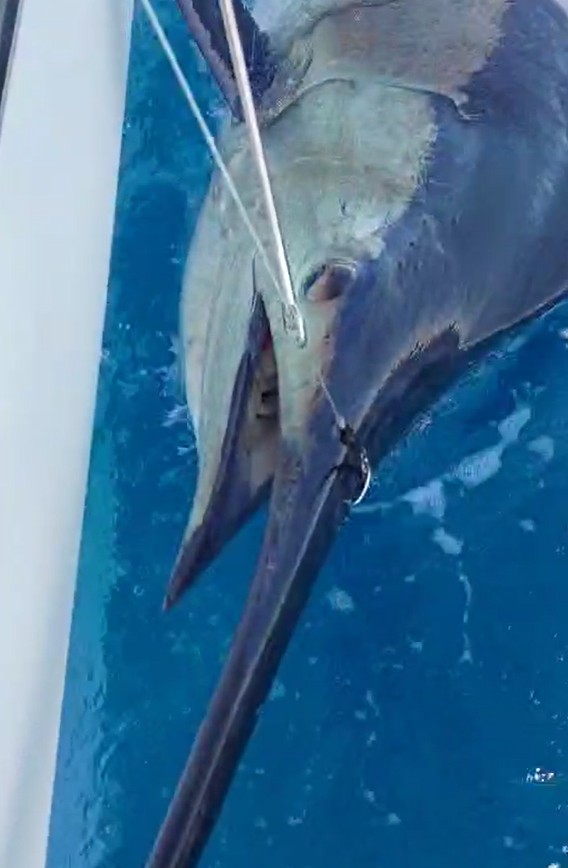
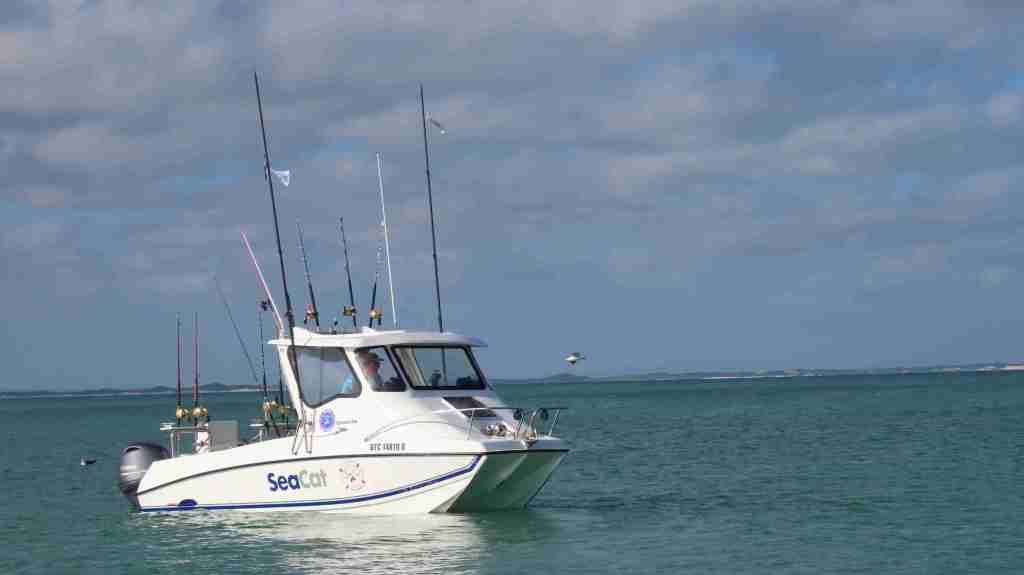
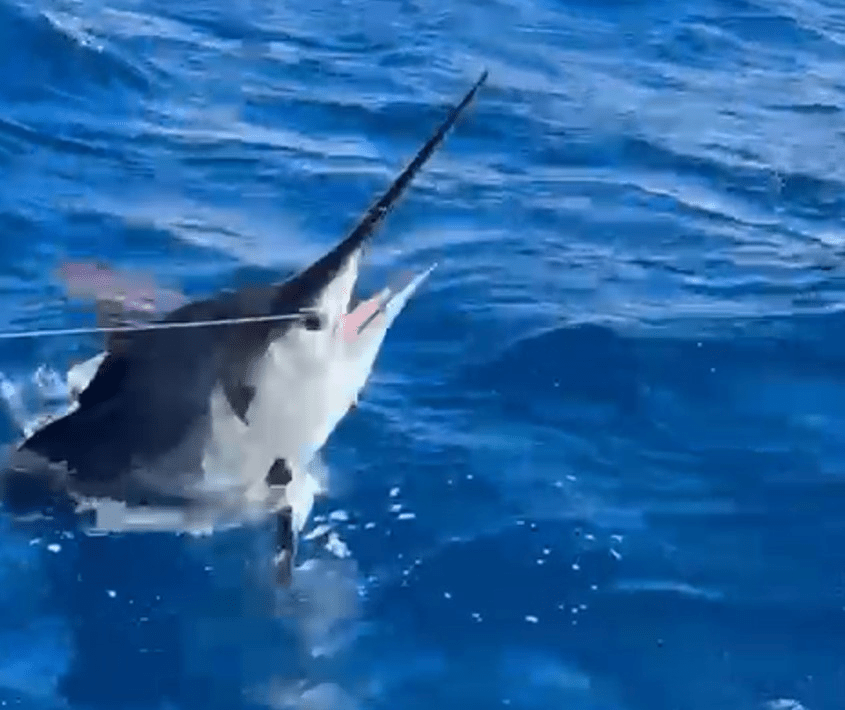
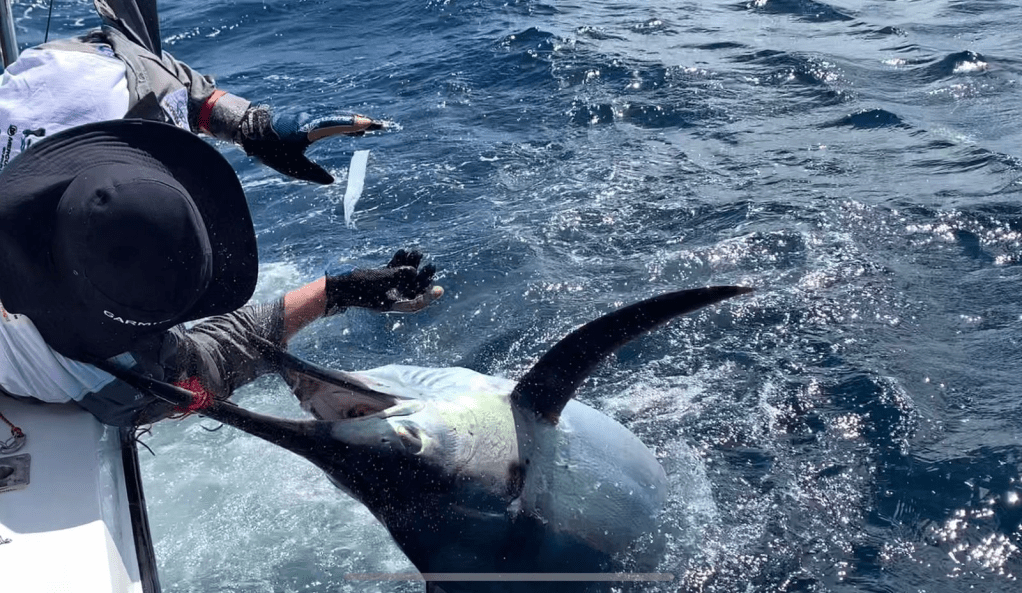
On Tuesday, 13 February, Simon Hipkin, with the help of his teammates on Sea Cat 2024 winner, caught his first-ever Marlin. This is his story Our day out on Seacatby Simon Hipkin It’s my third year here, and up until late yesterday afternoon, I’d yet to see a marlin. Yes, we have had strikes and near misses, but that’s not quite the same! As one of the smallest boats that enter the Two Oceans Annual Marlin comp, we don’t have the ability to run to Alfards and the 45 contour. We’ve had a game plan each year – get live bait and try to keep them alive long enough to get plucked by a marlin. We’ve stuck to this year-on-year and only trolled Conas when we were between spots. Yesterday, we tried everything but couldn’t find a single live bait. So, all in on black as they say. We rigged a spread of 5 Conas and that floppy floppy thing. With 30 minutes to go, my two teammates were both suggesting lines up. Fortunately, I declined, and with 5 minutes to go, we hooked into a black marlin. The exhilaration of that beautiful dark body leaping out of the water is all it’s cracked up to be! It’s a memory I hope I’ll carry with me to the day I die!
Chris Steyn, skipper and cameraman, and Ben Johnson, the leader man, you guys were incredible. Neither of them had skippered or leadered a marlin before yesterday. I’ll go to war with you guys at my side any day. The elation of getting the fish to the boat, Ben grabbing the leader, to the agony of it, to have it swim off again, just adds to the overall satisfaction. We managed to get it to the boat once again, leader it, remove the hook, and watch it swim off. I’m hard-pressed to remember a better day on the water, and if not the best day of my lifetime, it’s certainly right up there.
Sea Cat proudly flying the Marlin Flag
Baie dankie aan die crew JP Groenewald, Ron Penninkoff en Juan Needham wat gehelp het om my bucketlist korter te maak.
Andrew Pawson relates how he caught his marlin with the help of Team Multi We prepared well for this competition and decided to target a striped marlin. Although we did the “Livey” thing, having seen how successful that was for John Graeme last year, we still had no success. It was almost lined up, we were in the zone where our skipper had caught marlin before, so we changed the size of the lures and looked for a stripey. Luckily, the timing was right, and the first fish of the day was in my slot on the boat. I was on and quickly realised that if this was a stripey, it would complete the “Slam” for me. Black, blue and a stripey. What a relief when the call came that it was indeed my target fish. Needless to say, I had all the advice from an experienced crew with the normal amount of adjectives!
The fight was tough but worthwhile. We landed the marlin within the extra time. I have to thank my skipper and crew for the privilege. There is really no better feeling for me than landing a trophy fish like this. Maybe winning the World Cup, again!
Multi returning in triumph
It is always a privilege to be part of this tournament!!
Call back the past ends tomorrow when the Nineteenth TOMT tales will be told, but fear not. As the curtain falls on these historic stories, the Twentieth TOMT is already stirring on the horizon, and you can be sure the next wave of stories is waiting to break.
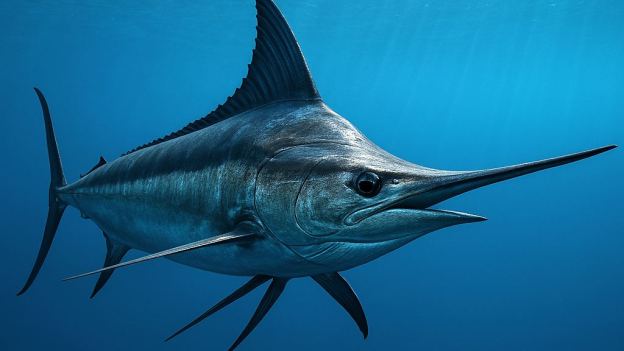
The Twentieth Two Oceans Marlin Tournament is just two days away, and Struisbaai is waiting in excited anticipation. While the organisers fine‑tune every last detail, and I have my camera charged and ready for action. I am that grey‑haired lady with a camera and far too much enthusiasm chasing the anglers for the perfect photo. By the time the boats return from a gruelling day at sea, the anglers are exhausted and focused on docking… and there I am, an unavoidable apparition in their path, hoping for one good shot before they escape. This is not the only scary part about me. Beware if your boat is lucky enough to do battle with the dragon-marlin – will hunt you down for your story. If it’s not in my inbox within a day, I’ll nag without shame.! So come prepared, dear anglers. Struisbaai — and its resident paparazza — are waiting.
In the meantime, read on about the amazing stories from The Seventeenth Marlin Tournament of 2023!
Wayne Cooke of John Graeme tells the story of how he bagged his first marlin and the first one of TOMT 2023 It is Day One and we are lines‑in for my fifth Two Oceans Marlin Tournament in Struisbaai. I must admit, I do not have high expectations, as I have yet to catch a marlin—or even be part of our team catching one. As usual, the Bonnies are set and ready for action. As has happened over the years, the boat grows quiet as the day drifts on. Then I’m told that it’s my turn for the next hour to watch the rods. Around midday, one reel starts to slowly give line, and there is definitely something eating my Bonnie. The next minute, our other rod also goes stiff and starts giving line. “Shark!” one of the crew calls, as surely it’s not possible to hook two marlin—especially as I have never even seen one live. Hylton Goatley takes charge of one rod and I take the other. I promise myself that I am going to give whatever is on the other end time to swallow the bait, and I free‑spool for about two minutes. At the same time, Hylton goes tight on the drag, and a big black marlin jumps clean out of the water. There is now total chaos on the John Graeme. Some run for the Black Magic, and others just run from sheer excitement. I then decide to tighten up the drag on my reel, still not believing what is happening. I am happily looking out the back of the John Graeme, expecting whatever is on my line to show itself, as not too much line is being taken. Well—if I bother to look ninety degrees to my left—I will see a massive marlin jumping and going crazy.
All attention is now on me as I hear skipper Chris Goatley radioing that we have not only hooked the first marlin of the day, but are still tight on the second. I have never had so much attention from the crew before. I’m offered water and asked if I’m feeling okay. The doctor on board even offers to inject me if I need a boost at any stage. I am pumped with excitement as I realise it’s up to me to catch this one for the team. This fact is mentioned to me more than once by my teammates. “Don’t f**k it up, Cookie,” I hear one of them warn. With great skill from our skipper, Chris Goatley, and fifty‑five minutes of hard fighting, my first marlin finally shows itself next to the John Graeme. With all the crew’s skill — and plenty of shouting — the fish is measured and released to fight another day. It is a day I will always remember, but most importantly, the pleasure it gives us all to see it swim away is just magical. John Graeme proudly flies the “Caught a Marlin” flag.
John Graeme proudly flies the “Caught a Marlin” flag.
Serge’s Story
I was on the boat Indigo, skippered by Gawie Bruwer. Being a novice to marlin fishing, I did not realise what a team activity it truly is, nor how much experience is required from the rest of the crew. Without the skipper keeping the fish correctly positioned in relation to the boat, the crew member pulling in the leader and grabbing the bill, the person removing the hook, and—importantly—the camera operator confirming the catch, there would be very little chance of successfully catching and releasing such a magnificent fish.
I was fortunate to catch a striped marlin and to be part of the crew that caught a black marlin, allowing me to witness the glorious colours of both excited fish as they lit up close to the boat. The black marlin gave us a fantastic aerial display, making for truly memorable moments.
Stripey caught by Serge of Indigo
Jacque’s Fifth species of Marlin – Story by Grant van der Westhuizen
From zero to complete pandemonium is the only way to describe the sensation of raising a marlin and enticing it to strike in the 2023 Two Oceans Marlin Tournament. The hours of preparation, maintenance, planning, research, and money that go into catching one of these beautiful creatures of the deep all become worth it the moment you see the silhouette of one of these majestic beasts appear in the spread. The skipper and crew of Mojo had managed to raise a couple of striped marlin on Day One and Day Two of the tournament, and to the frustration of all aboard, the fish simply wouldn’t commit to what we had to offer. They seemed well‑fed, lethargic, and hesitant to strike. After careful deliberation, we decided to stick to our guns and fish the same area as the previous day — after all, we had seen the fish. Let me paint the scene of a typical day in the 2023 TOMT. Generally, the day starts out full of optimism, but as the hours grind on without any result — or worse, disappointing results — the mood can shift. Combined with sun, wind, salt, and doubt, it becomes a mental marathon. At the start of Day Three, we reached our fishing grounds and began setting the spread: two teasers short (starboard and port) with a flasher between them, two short Konners, two long, and the Japan running way back. The usual tweaking to get the Konners running at their optimum — and the continual adjusting required to keep them there in ever‑changing conditions — is a responsibility shared between Mojo’s fishing master, Gareth Beaumont, and me. It had been pre‑arranged that if we raised a striped marlin, skipper Jacques “Mojo” van Niekerk would be on the rod. After all, the man already has a Pacific blue, an Atlantic blue, a black, and a white marlin under his belt, and it would be fitting for him to catch his fifth species in his home waters. We had been trolling for half an hour when one of the competing boats, barely five hundred metres away, went tight on a marlin. In the spirit of the 2023 TOMT, we were happy for them — but it was disheartening nonetheless. Not long after, Indigo, with skipper Gawie Bruwer and crew, successfully caught and released a healthy striped marlin. The pressure was on. We kept grinding away, and at 12h00, under the watchful eyes of Beaumont and me, we spotted the dorsal fin and shoulders of a marlin breaking the beautiful purple‑blue surface behind the long. As usual, the adrenaline shot through my veins just in time to see the fish disappear — and just before disappointment could set in, it was back. The anticipation of a screaming ratchet was short‑lived as the fish vanished again, only to reappear behind the same Konner for a third time. Surely this was the moment. But again, it disappeared… only to return once more — and this time, it committed. Within milliseconds, the unmistakable scream of a marlin reel’s ratchet shattered the silence. The well‑oiled crew of Mojo sprang into action, each manning his designated station. Skipper Jacques van Niekerk stayed at the wheel while fishing master Beaumont carefully and patiently set the hook. As the fish took off,Beaumont moved to the wheel, and Hannes Schreuder — leader man and vocals — along with cameraman Anthony Tait and myself,scrambled to bring in the lines, clear the deck, and get the skipper into the fighting chair. This was it — the moment we had all been waiting for. A few minutes into the fight, a beautiful striped marlin breached, showing herself in all her majestic glory. From there, it’s hard to say how long the fight lasted, but after what always feels like an eternity, the fish was leadered by Hannes Schreuder. After a quick measurement, a tag, and the hook removed, she was released to fight another day. High fives and congratulations all around — and the Konners were back in the mix. What an absolute privilege to witness the speed, strength, and agility of these animals.
First Stripey for Mojo!
First Fish of the Fourth DaybyChris Hepworth Brown(John Graeme) Wednesday, the 15 February, was a day I will never forget. We got onto a bumpy sea early, and we were all well aware of what we had to do. At the 12-mile bank, the colour of the sea was a deep gunmetal, and the temperature was close to 23 degrees C. After catching some Bonita, which we put out as live bait, the action started. Just after 8 am out the first line went. It was my turn on the rod, and I settled in with a big black marlin. Being my first marlin, this was a daunting fight ahead. The fish jumped early in the fight and then went deep. After 30 minutes, we brought the fish to the side and managed to measure and successfully release
This was probably one of the best experiences I have had. Catching this magnificent fish and then successfully releasing was a moment of extreme joy. I thank our skipper, Chris Goatly and the crew for making this possible. Long live the marlin.
Werner Kotze tells Indigo’s story in both English and Afrikaans
A Day I will never forget/ ‘n Dag ek sal nooit vergeet nie – Werner Kotze (Indigo) Ek kry n uitnodinging vroeër die jaar van Eugene om met hom op die boot Indigo wat deur die legendariese Gawie Bruwer besit en geskip word te kan gaan deelneem aan die TOMT. Die vierde dag se besluit was gemaak, nadat Serge Wessel ons eerste gestreepte Marlyn die vorige dag suskesvol gevang het om weer ver te ry op soek na n suksesstorie. Radio calls came in of several Marlin being fought and even successfully released from the complete opposite direction from where we found ourselves. Although our water looks great and we lost hours to reach our GPS coordinates, it feels like the Marlin gods have turned yet again against us. Could it be true…absolutely not! Ek draai na Eugene en vra vir hom ; “Het jy dit ook nou gesien?” Terwyl ons na die “spread” kyk sien ons hoe n Stripey die starboard outrigger slaan en vas is ons. Met die knip van n oog slaan daar nog n Stripey die portside outrigger en dit verander in ‘n malhuis op die boot. Ongelukkig verloor ons altwee visse, maar ons weet ons besluit om ver te hardloop was reg. Vinnig is al die stokke sommer weer in die water en ons bespreek wat moontlik verkeerd kon loop, bad luck is die gevoel en fokus skuif na die mooi water en so paar verdwaalde voëls. Elke persoon op sy pos in afwagting op die volgende strike. And so it happened – sitting on a beanbag next to the portside outrigger (aka the ugly one) a similar sound to a .22 gunshot broke the silence. The tagline’s elastic band broke off, a Penn International starts screaming insanely and a black Marlin starts jumping and dancing off the stern of Indigo. Teamwork is the key! Clear the rods, clear the deck, get in the chair, and start filming! Twelve years of trying and even losing marlin, I could only think of one thing, ‘DON’T F… THIS ONE UP! ‘ With precision skippering and excellent crew members, we managed to release a beautiful black Marlin that lives to fight another day. The fight and release lasted about 40 minutes, and with Lourens Odendal filming everything, I will always remember 15 February 2023 as a day full of excitement, adrenaline, and conquering my nemesis. Thanks, team Indigo!!!
Third Fish of the Fourth Day by John Leppan(John Graeme) Having boated the first fish on the 4th day our skipper nominated me to be next in the chair. After locating the bonnies we set about catching two fresh baits and getting them rigged. All the while we were listening to the radio as Indigo had just hooked their second fish. Our job at hand was clear, we needed that third fish! Fifteen minutes after setting our baits the ratchet on the starboard reel brought us all back into focus. No sooner had it started than it abruptly stopped. As the realisation of this lost opportunity sank in, silence befell the crew. Fortunately, this didn’t last as a portside rig exploded into life and brought us all back to our senses. Turning off the ratchet to calm the situation we allowed the fish to peel off the line whilst I got into the harness. Still not knowing what we were dealing with, I tightened up the drag and on cue, a beautiful black marlin surfaced 200 metres off the stern and walked in search of freedom. Having set the hook I then got as comfortable as possible and tried to concentrate on the job at hand. The John Graeme crew have always been generous with their advice. Knowing that we needed to boat this fish to get back pole position we all set about our jobs working hand in hand with our very able and calm skipper Chris. We tried to subdue a fish that was having none of it. Spending more time in the air than in the water this majestic beast tried every trick in the book to throw the hook. At times I had brief thoughts about being the guy who lost the fish. During this epic battle, and knowing the fleet was listening closely, we finally got hands on the leader and brought the fish alongside. As we were getting ready to bill and measure, the line parted, allowing the fish to swim away strongly back to freedom.
The celebration ensued with high fives all around and with man hugs that could be disturbing in different circumstances!I would just like to thank the crew and especially our skipper, Chris for his kindness and generosity.
My First Malin by Willem Skein(John Graeme) As was our usual custom, we were taking hourly turns to be on rod duty. All three of my crewmates had caught their first marlins ever in this tournament. The last two were caught a mere four hours before it was my turn. And the pressure was on to try to catch my first marlin and complete an unthinkable hat trick of three blackies in a day for John Graeme. As we set out from the harbour earlier that morning for what was to be the last day of fishing, I told Hepburn-Brown confidently that we were going to catch 3 fish today. At that time we were neck to neck with Indigo, and the competition could still go either way. Everyone on board could sense the tension of the possibility of getting pipped at the post, as had happened to John Graeme two years ago. The two earlier fish took line around 8h00 and 10h00 respectively. Shortly after noon, I quickly brushed thoughts of doubting my own prediction out of my mind. At 12h25, my heart rate instantaneously skyrocketed to the urgent sound of my reel’s screaming ratchet. Excited shouts of, “Come on Doc, your fish is on,” urged me into action. The fish stripped 200 m of line in no time, entertaining us with several impressive acrobatic aerials. Thankfully, I saw it was not such a heavyweight as my crewmates had to deal with. And by this time our skipper had advanced to the next level of marlin skippering, making me look even better on the rod. Twenty minutes later a beautiful black was craftily ushered to the side of the boat.
I felt a kind of humble gratitude towards this beautiful fish when I stroked it before it was eloquently released to reign the oceans again. Then the relieving and joyous thought that this fish had given us a likely unsurpassable lead started to descend on all of us. What a privilege it was to have been part of this incredible crew and to continue the legacy of love for the ocean and fishing.
An Amazing Team with a love for fishing and the ocean
The last marlin of the tournament was fought on Bayswater and Hannes Smuts tells the story.
Last Fish of the Fourth Day by Hannes Smuts (Bayswater) On Wednesday, 15th February 2023 at 14:45 we had the first strike on the boat. Piet called it in and we got extra time. I was the angler on the rod. The fish jumped out of the water at least six times which was the most beautiful site ever! I had it on the line for one hour and forty-five minutes. This was the strongest fish I ever had on a line and probably the biggest! I had the fish right next to the boat and Kokkie was on the leader and according to him, this was at least a 300 kg fish.
Hopefully these stories are already stirring the competitive spirit for the upcoming Twentieth Two Oceans Marlin Tournament. Keep an eye out — the Eighteenth and Nineteenth Anglers’ Tales will be dropping over the next two days, and they’re well worth the wait.
I’ve been blogging about TOMT since 2016, and the style has evolved quite a bit over the years. In the early days I simply snapped a few photos and wrote a short summary of the event. As time went on, I found myself taking more pictures and writing far more detailed accounts. But of course, I’m not the one out there on the water. By 2022, I wanted my readers to feel the thrill and adrenaline of catching such an incredible fish. So I began asking—well, insisting—that the anglers send me their own stories. There was plenty of resistance at first. Every one of them protested that they “can’t write”… and then proceeded to give me the most fantastic stories (which just required a tiny bit of editing). In the final lead‑up to the 20th Two Oceans Marlin Tournament, I’ll be sharing anglers’ stories from 2022 through to 2025—one each day until the tournament begins
The Catitude Story As Told By Uncle Ted Sunday 13 February 2022
The first day of the TOMT started with the team being in a high state of excitement as they anticipated a great day at sea. But as the day wore on very little occurred. We considered throwing in the towel and heading back to shore but being at sea is always better than being at home. Just half an hour, we said to each other and then another and another until the lines-up hour drew closer. Suddenly with one hour’s fishing time left, all hell broke loose when Mike spotted a black fin behind Catitude and yelled, “Marlin!” Ted was at the wheel and turned the boat and the boredom of the last few hours disappeared in an instant. Adrenalin coursed through our bodies as we all sprang into action, Colin and Mike grabbing the spare rods, Michel struggled into the fighting harness and reeling in the aggressive fish. The four other experienced fishermen yelled instructions in language that would make a pirate blush!
All this swearing must have helped because soon a 60kg marlin was brought to the side, handled with the utmost care, and after being filmed and photographed by Ted and Mike allowed to swim away, none the worse for his little adventure with a very excited Frenchman. By Ted Horn
Multi’s Story by Roger Barret Sunday 13 February 2022
It was the first day of TOMT 2022. Team Multi went out to sea targeting the very elusive Marlin species and dream sport fish for many an angler. Having a very quiet morning session changed to a very exciting late afternoon. At about 14:45, Team Multi hooked up on the Japan lure and things got interesting on the boat. The fish never showed itself and didn’t behave in any way like a Marlin usually does. The skipper, Vleis Visagie, decided to back up the boat to the fish because we thought it was a Mako shark. When the fish showed itself at the boat and Darius Steyn touched the leader we all saw it was a Black Marlin. Then all demeanour changed. The Marlin lit up at the boat and for the first time, fought back. The fish wasn’t tired at all. Luckily for us, Darius got hold of the leader again, and he just held on. Darius got some battle scars for grabbing and holding on to the bill. Everything happened so fast, but in the end, the fish was landed, measured, hook removed and the marlin was safely, and still full of energy, released. It wasn’t Andre Pawson’s first Marlin, but it was his first Black Marlin. Thanks to the crew of Multi, who worked together extremely well to catch this awesome fish, and the unforgettable memories that were made that day. Thank goodness we landed and safely released the fish. And thank God for the privilege.
The Mighty Multi
Lega Sea’s Story By Crew Member Daniel Tuesday 15 February 2022
Spykertjie the Marlin Angler: Ruben Burger (Aged 18 years)
On our first day of fishing in the Two Oceans Marlin Tournament, we did not get a fish to stick. When we set out on the second fishing day, we were all positive and super excited as we had a good feeling about it this time. Throughout the day, we worked hard and listened to the reports on the radio of other boats hooking up and losing. Eventually, a fish was landed. Over the radio, they said it was on a Lumo Green Kona. We brought in the portside long and changed Konas. We put the Lumo Green Kona on and sent it back out. We watched the Kona to see if it was smoking properly. JP even turned and said, “Check that thing, it’s smoking like a champ!” As we looked away to walk to the cabin, Julian said, “JP, there’s a marlin mark at 20m.” JP looked on the sounder and said, ‘No, that’s not him. You are looking for a big red sausage.” As JP said that, all we heard was a snap and a screaming reel. The fish screamed off at a rate of knots! And JP yelled, “That’s him! That’s him! That’s him!” We cleared the deck as fast as possible and just like that – fish on. Ruben had just hooked into his first-ever Marlin. After chasing this fish for 10 years, he finally had it on the line. After 40 minutes of intense and technical fighting with complex boat manoeuvres and a calm, collected angler, the fish came up next to the boat and was leadered, and the bill was grabbed. Ruben had done it! He had just landed the fish of his dreams! After a quick high five on the fin from Ruben, and the hooks removed, the Marlin swam off beautifully, completely lit up, showing off its magnificence before disappearing back into the depths. Hands were shaken, congratulations were given, and a tear of joy was shed by Ruben. He had done it! And we were back in the competition! All in all, it turned out to be a perfect day with a memory that will last a lifetime!
His face says it allWhat a beauty! Black Marlin about 220 kg.
Mojo’s Story by Gareth Beaumont Tuesday 15 February 2022
Marlin Mojo After three days of not raising a fish, the mood on Mojo was a bit glum. The skipper even threatened to sell the boat and find a new hobby. We had changed lures countless times, and with the sea being a bit short I was not happy with the way one of the lures were swimming. I decided to revert back to one of my old faithful Konas (even though it hadn’t raised a fish in 2 years). About 20 minutes later, I was checking the spread and as I looked at my old faithful there was a fin and a flash and a screaming reel, then the pandemonium ensued! Rods cleared, teasers out, rigger up, some shouting and swearing and Hannes got in the chair. We were finally on a fish. The fish never jumped, and we were unsure whether it was a marlin or a mako, so we radioed in the hookup as such. A few minutes into the fight,we were blessed with the sight of a beautiful marlin jumping out of the water a few hundred metres away. Now knowing it was a marlin, everyone settled down and focused on the task at hand, as calmly as one can in that situation. I cannot stress how critical good communication between the skipper and angler is while fighting a marlin. Fortunately, Hannes was very vocal and kept all of us well informed of every move the fish made! After about 20 minutes, I had the leader in hand, and as I put pressure on the fish, it lit up as only a stripey can, absolutely beautiful! We got her alongside and got the hook out quickly. After a few photos, it was time to release the fish, and it swam away strongly back into the big blue. High fives all around on a job well done. It was back to work, now even hungrier for another bite. We had another strike about 2 hours later, but it didn’t stick. However, we were still happy and grateful for the one we had released. Hannes got his first marlin in sixteen years of fishing in the TOMT. Jacques got his first marlin on Mojo and his first stripey ever, and most importantly, team Mojo got their mojo back.
Bad Company’s Story by Mike Broderick Tuesday 15 February 2022
We were trolling near the 100m contour when the middle starboard rigger clip exploded with a bang that woke up the entire crew, including the skipper. Stuart Campbell was the designated angler, and this would be his first Marlin. He had tried for years, all over the place, but always missed the magic time slot. It sounded straight down for the first 20 minutes. Fear, uncertainty, and doubt crept in. Suddenly, the sea behind the boat exploded, and a beautiful black jumped completely clear of the water. After another 20 minutes, the fish was safely released. Stuart said, “This is the only other, first time I did it, that I will remember forever.” (If you know what I mean) 😉
Releasing the Marlin
And the winner of The Sixteenth Two Oceans Marlin Tournament was Bayswater. Their story appears in both Afrikaans and English.
Bayswater se Storie deur Piet Wessels Donderdag 17 Februarie 2022
Die derde dag van visvang het ons geweet dit sal die laaste dag wees wat ons iets kan vang in die kompetisie. Ons het reeds twee visse veloor, een op dag 1 na amper ‘n uur en half 20 meter van boot af wat ons hom aangehad het en nog een op dag 2. Ons het besluit om dieselfde Konas te sleep aangesien dit al drie visse geraise het vir ons die week sover. Ons het maar dieselfde area gewerk wat ons Dinsdag gewerk het, volgens my was dit die beste kleur water en temperatuur was goed. Die see was rof en dit het maar moelik gegaan om die Konas reg te laat swem. Ons het nog getrol toe sien Kokkie ‘n vis wat swem agter ons right long. Dit was dieselfde lure waarop ons twee ander visse gehak het vroeer die week. Die vis het ‘n hele ruk agter die lure geswem maar wou nie byt nie. Kokkie sê, “Toe kom ons maak ‘n lang draai en bly op die area.” Ons was so halfpad gedraai toe klap die ourigger en die vis was aan. Hy het soos ‘n mal ding agter die boot gespring. Oupa Dawie was in die stoel. Ons het die vis mooi rustig baklei met die rowwe see. Vyf-en- twintig minute later was hy langs die boot en Kokkie het hom geleader. Dis was ‘n swart marlyn van ongeveer 100-120kg. Ons het die vis se hoeke uitgehaal, hom mooi laat swem langs die boot en toe laat gaan. Dit was n voorreg om weer ‘n vis te vang in die kompetisie.
Mooi Een!Swart Marlyn
English translation
On the third fishing day of the tournament, we knew that it would be our last chance to get a marlin. We had already lost two, one on the first day after fighting it for an hour and a half, then losing it within 20 metres of the boat, and on the second fishing day, we also lost one. We decided to use the same Konas, seeing that they had worked well for us thus far. We worked in the same area as on Tuesday, and I believed the water was the best colour and temperature for marlin. The sea was rough, and it was difficult to get the Kona to swim. We trolled, and then Kokkie saw a fish swimming behind right long. We were using the same lure that we had the previous two fish on earlier in the week. The fish followed the lure for quite a while but would not bite. Kokkie said, “Let’s make a wide turn and stay in the area.” We had turned halfway when the outrigger was hit, and the fish was on. The fish went wild and jumped behind the boat. Oupa Dawie was in the chair. We calmly fought the fish in the rough sea. Twenty-five minutes later, he was beside the boat and Kokkie leadered him. It was a Black Marlin of about 100 to 120 kilograms. We took out the hook, and let him swim away next to the boat. It was a privilege to once again catch such a fish in the competition.
Watch this space for more exciting man vs malin stories.
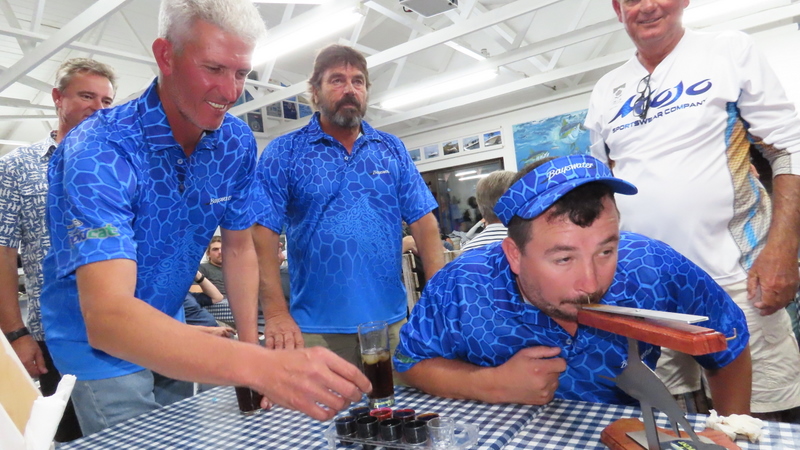
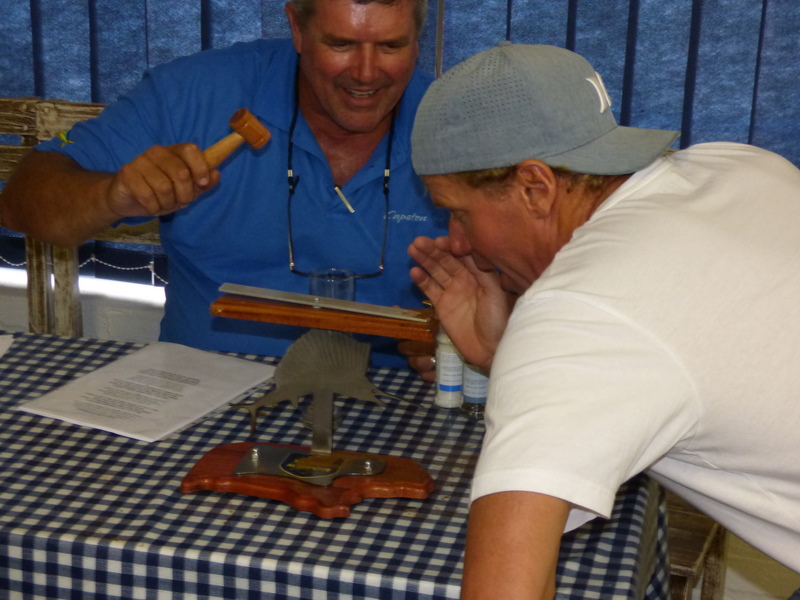
The Two Oceans Marlin Tournament isn’t only about the thrill of the chase out on the water — it’s equally about the magic that unfolds when the weary and hungry anglers stumble into the Suidpunt Diepsesshengleklub’s clubhouse. Here, they find a calm haven where camaraderie, laughter, and shared stories of the one that got away come together as they raise a glass to each other. Grant, our unflappable Tournament Manager, keeps every detail running smoothly, ensuring that the nights are as much fun as the daytime angling. And then there’s Andrew, whose quick wit and effortless rapport turn every gathering into a fun occasion. Under his guidance, spirits stay high, jokes fly, and the anglers find themselves revived.
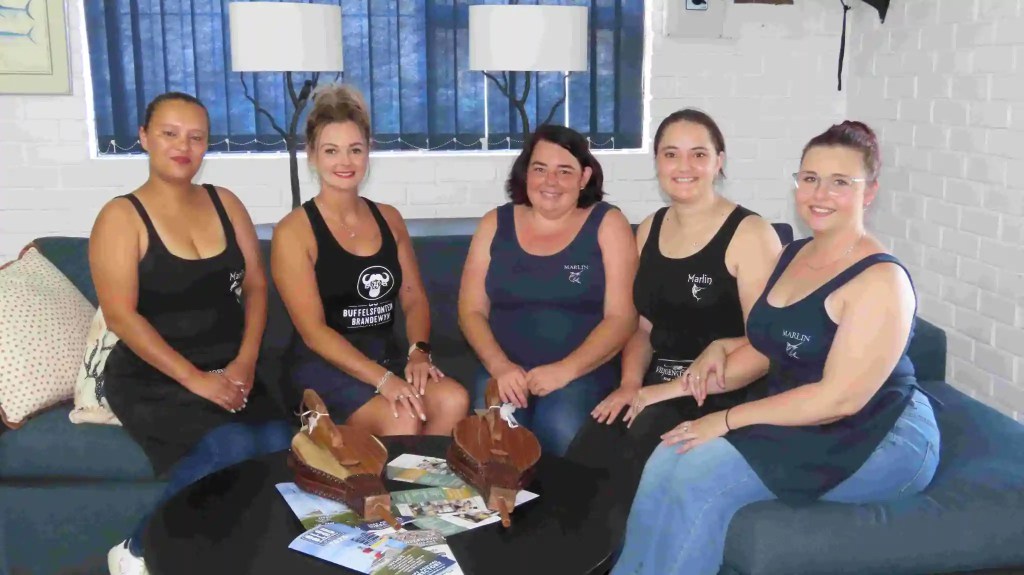
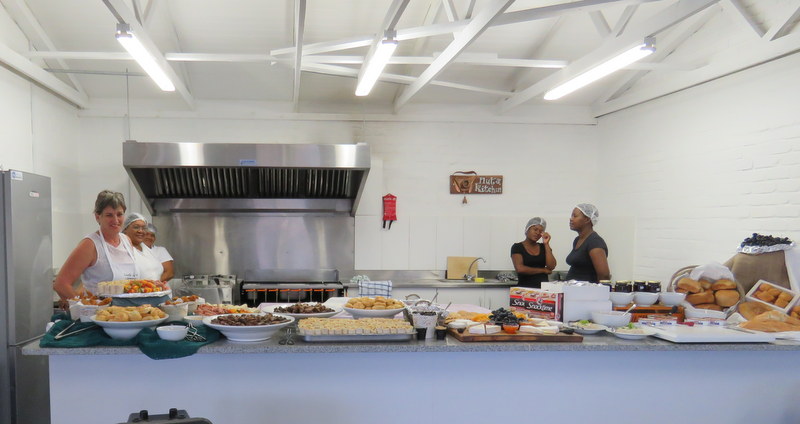
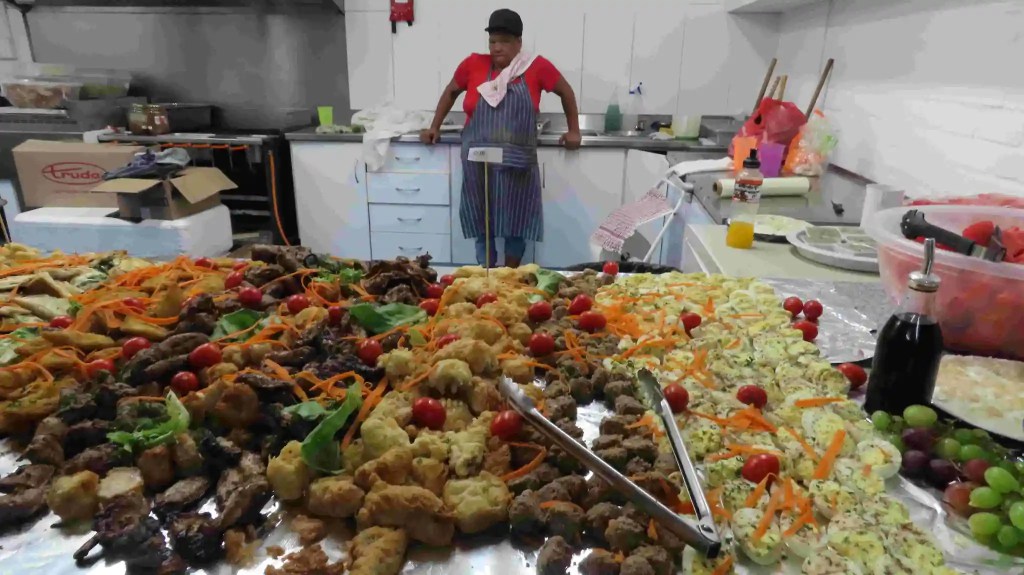
But at the centre of it all is Marinda. Her catering skills have become legendary. After gruelling days at sea, hungry anglers return to feasts that are not only plentiful but crafted with care. The flavours are comforting and the portions satisfying. Her loyal helpers return year after year and provide service with pride, consistency, and good humour.
An Early Photo of Marinda and her Team
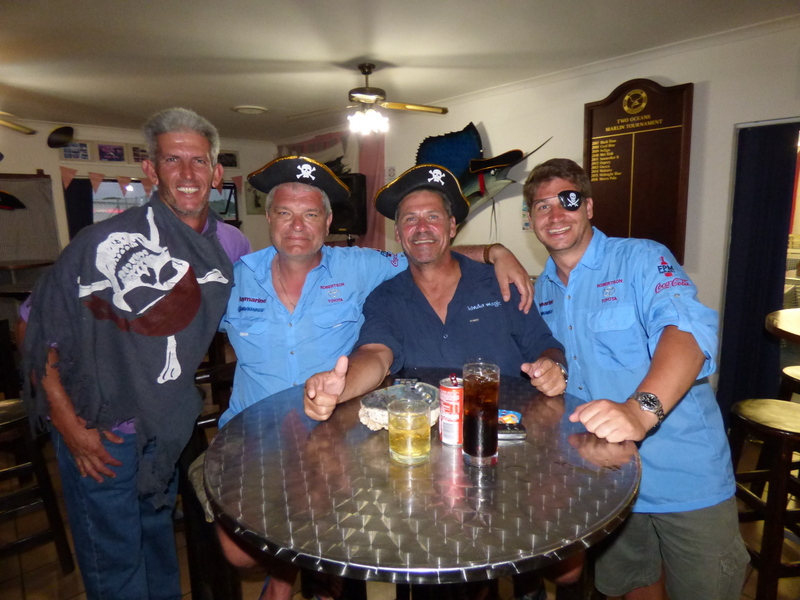
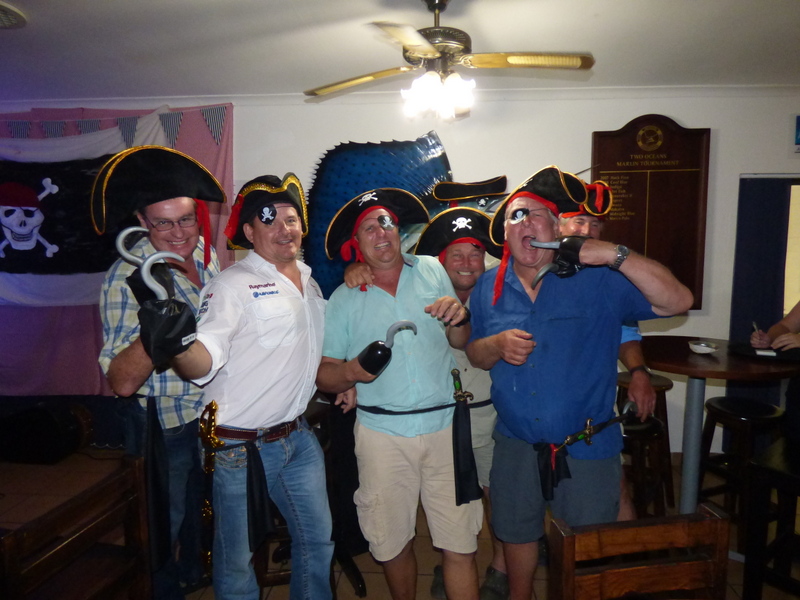
Every year, without fail, Marinda, manageress of Suidpunt Diepseehengelkub, and her staff pour themselves fully into the spirit of the Two Oceans Marlin Tournament. Whether the theme calls for pirates, Valentine’s romance, tropical flair, or something entirely unexpected, they transform the club into a vibrant world of colour, décor, and atmosphere. Their creativity becomes part of the tournament’s identity — an experience anglers look forward to almost as much as the fishing itself.
What makes this team truly unforgettable goes far beyond the décor. The young women behind the bar greet every competitor with warmth, patience, and professionalism, even when the queues get long and the demands get high. In spite of the pressure, their smiles never falter as they calmly handle the needs of each thirsty angler.
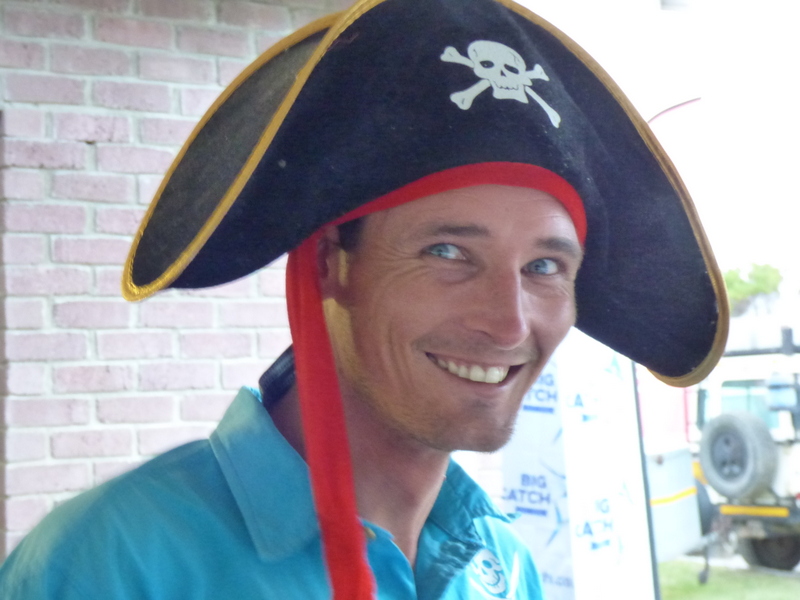
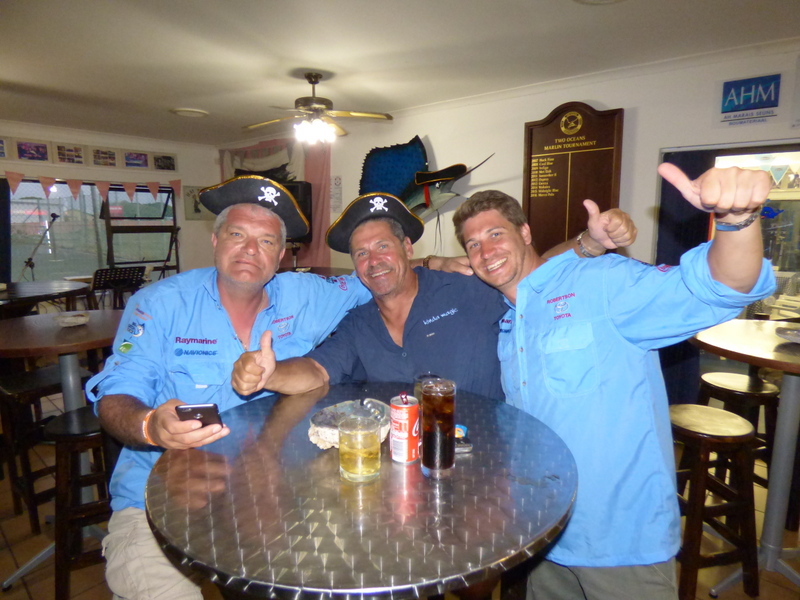
The meals are delicious, the company is warm, and the atmosphere is merry. Auctions spark friendly rivalry, and pirates might even make an appearance. But beware – if you have misbehaved or done something dumb, you will have to sniff some snuff or take a strafdop! After all, my hearties, discipline must be maintained to run a tight ship!
There is another quiet anchor in the background of the Suidpunt Diepsee Hengelklub. Dahlene is the club’s bookkeeper, and she is dedicated to doing her bit for TOMT. She is the custodian of accuracy and order. Every entry, every set of accounts, every financial detail that keeps the club functioning smoothly passes through her hands. Her records are immaculate, and she ensures that nothing is out of place.
Dahlene
Both she and Marinda have an encyclopaedic grasp of the event’s inner workings. They organise sponsorship, deal with the applications and know which anglers are competing, who skippers which boat along with other small details that others might forget. They are both deeply committed to the club, and the competition and competitors and organisers know they can rely on their calm professionalism.
These evenings are where stories are shared, friendships deepen, and the true heart of the tournament shines. Thanks to all involved for making it all so much fun!














 Adventuring into Retirement