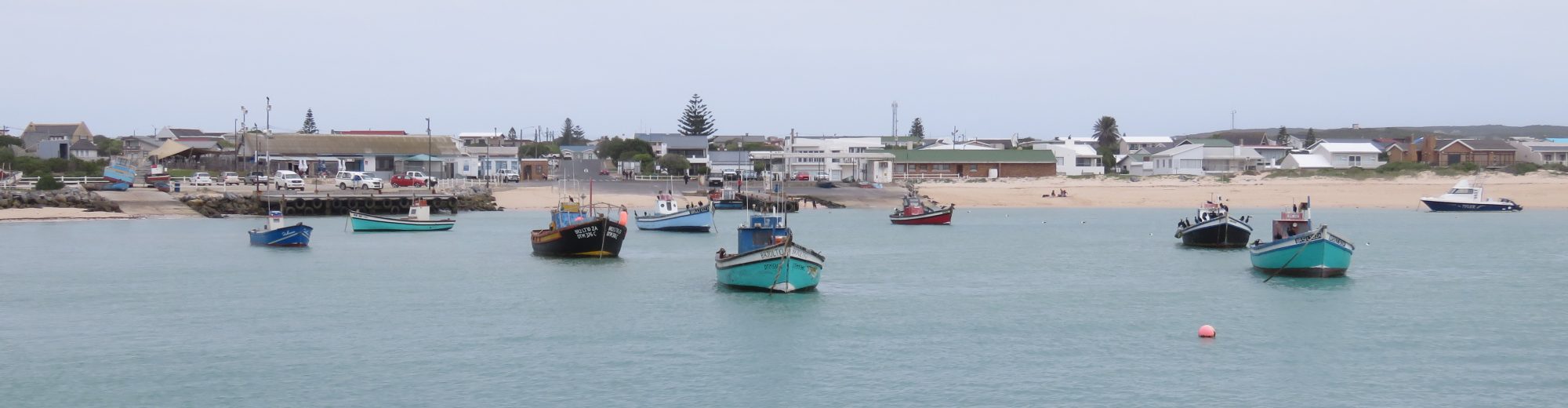
Henties Bay
Our last morning in Swakopmund dawned dull and gloomy with very thick mist and a cold wind. The weather fitted our mood, as we were sorry to be leaving this vibrant town with its incredibly friendly people. Nevertheless, the next leg of our adventure beckoned and around mid-morning, we set off for Henties Bay. It would be a short drive along what is known as a salt road. The surface was excellent and we made good time.
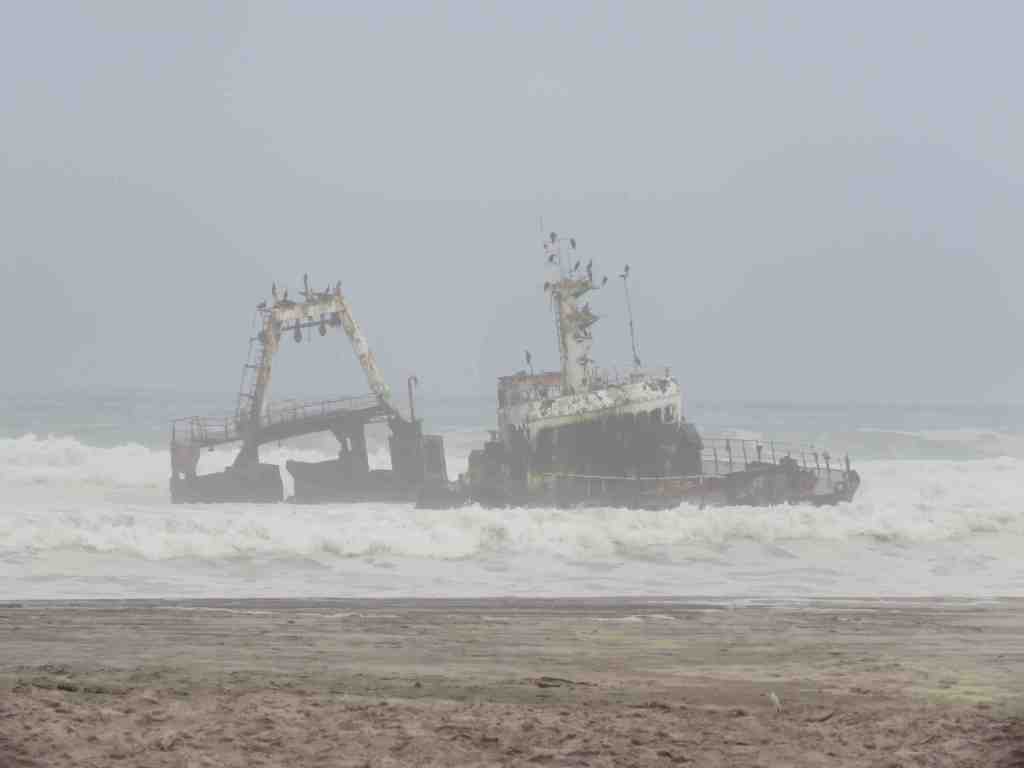
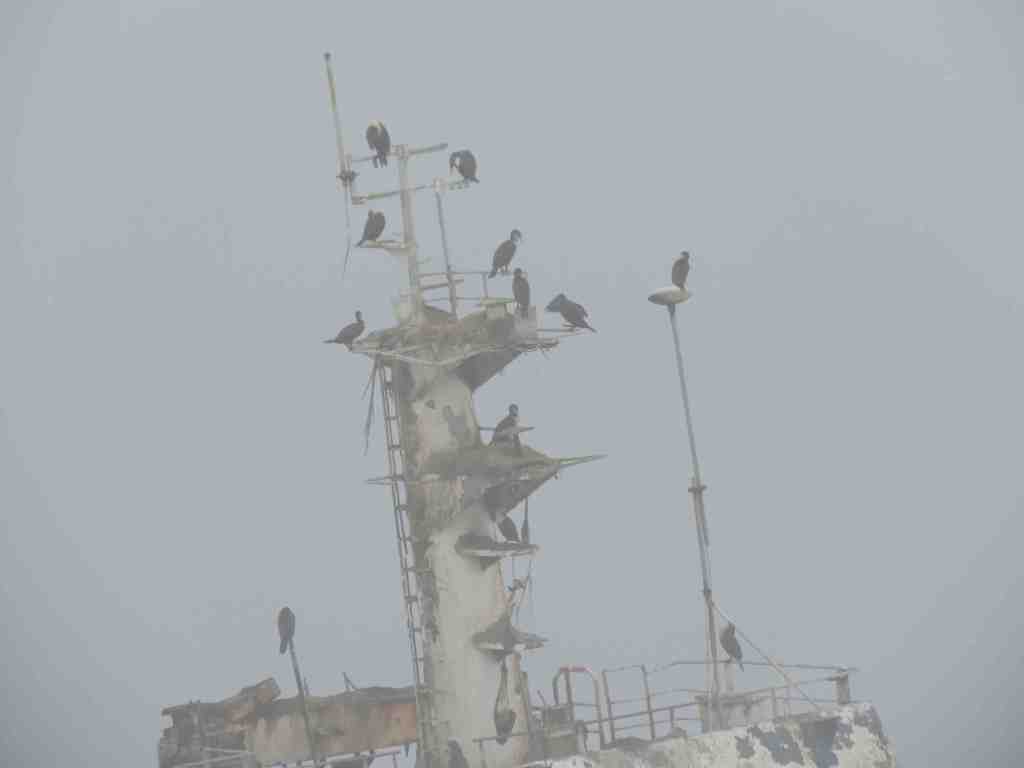
Along the way, we stopped at the wreck of the Zeila. The Zeila was owned by the Hangana Fishing Company based in Walvis Bay. She had been sold for scrap to an Indian scrap yard, and was being towed to Bombay, when she broke her towing line in the early hours of the morning on 25 August 2008 and went aground at a popular fishing spot called “Die Walle”, about 14 kilometers south of Henties Bay. This once proud vessel is now broken up and a perch for cormorants. Such a sad end, but perhaps a little more elegant than being cut up to make tin cans!
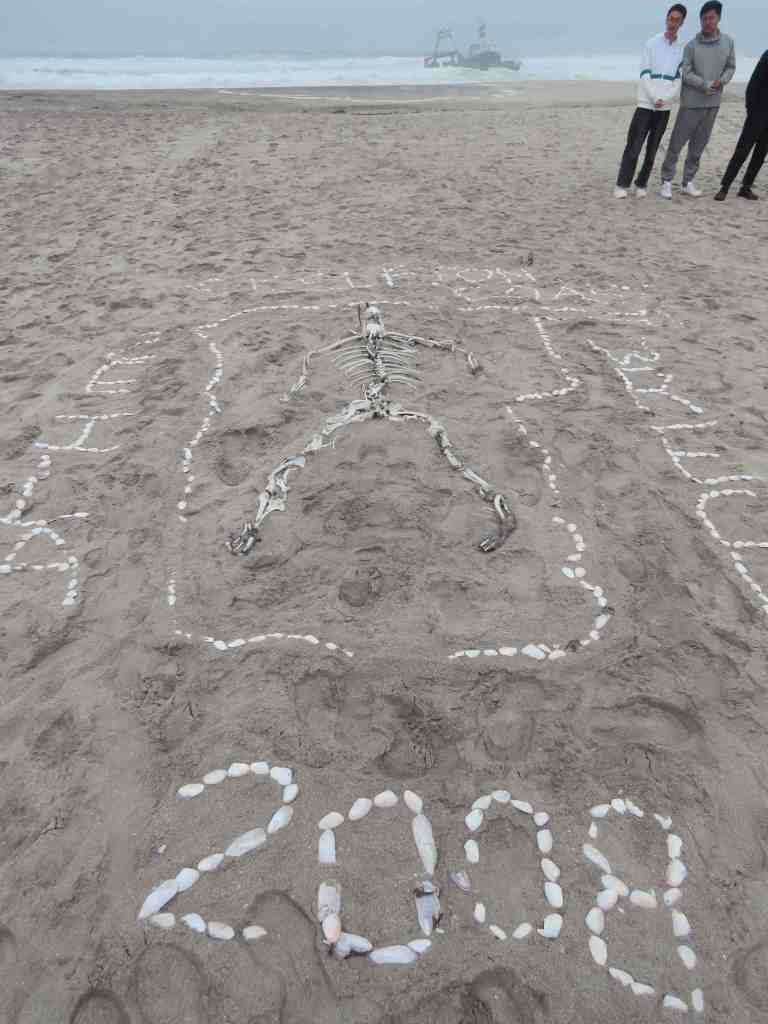
Also at the same spot was a bit of beach art, done by someone with too much time on their hands. The bones all came from seals but the design made them look like it was a human form. I am guessing that this is a much-photographed piece of beach art!
Driving along the Skeleton Coast road, I could not help but notice how stark the landscape was. I remarked to Alec that it must have been dreadful for a sailor marooned along the coast. No shelter, no water, just sand and scrubby vegetation for miles on end.
I must admit that I thought the Skeleton Coast got its name from all the shipwrecks and sailors that died walking the beaches looking for human habitation. I was assured by locals that that was an old wives’ tale. It was named after skeletons, but the majority of the skeletons found were from whale and seal hunting, and only a few were human.
Driving through the heavy mist it was easy to see how ships could run aground on this coast as it was difficult to see far.
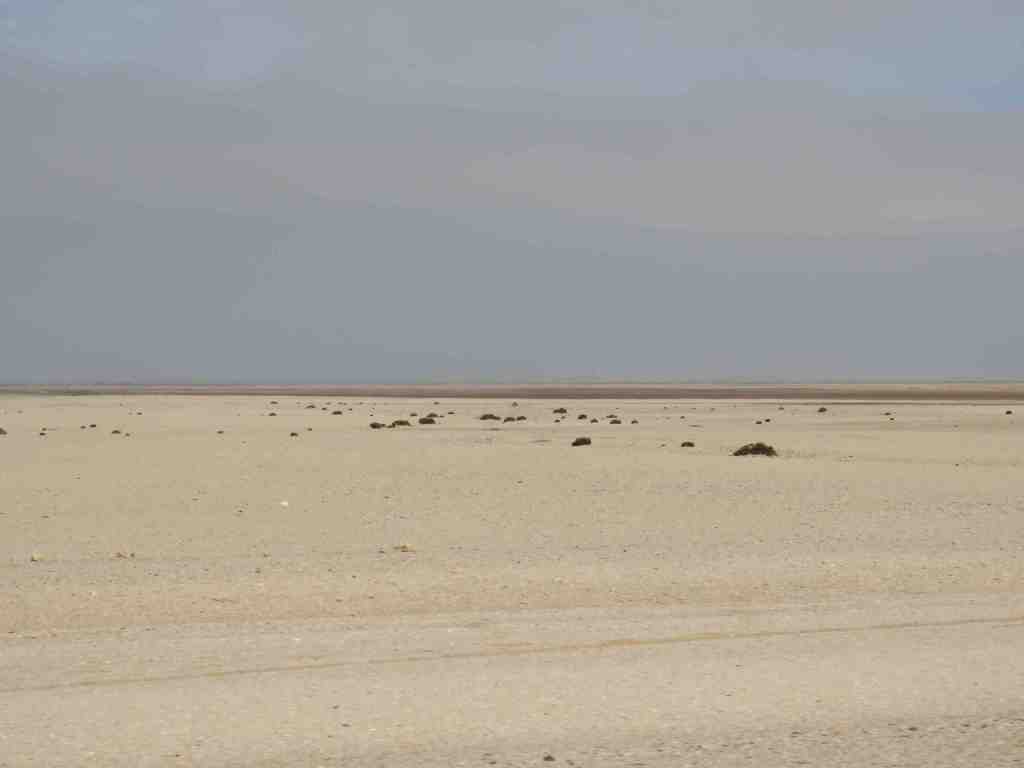
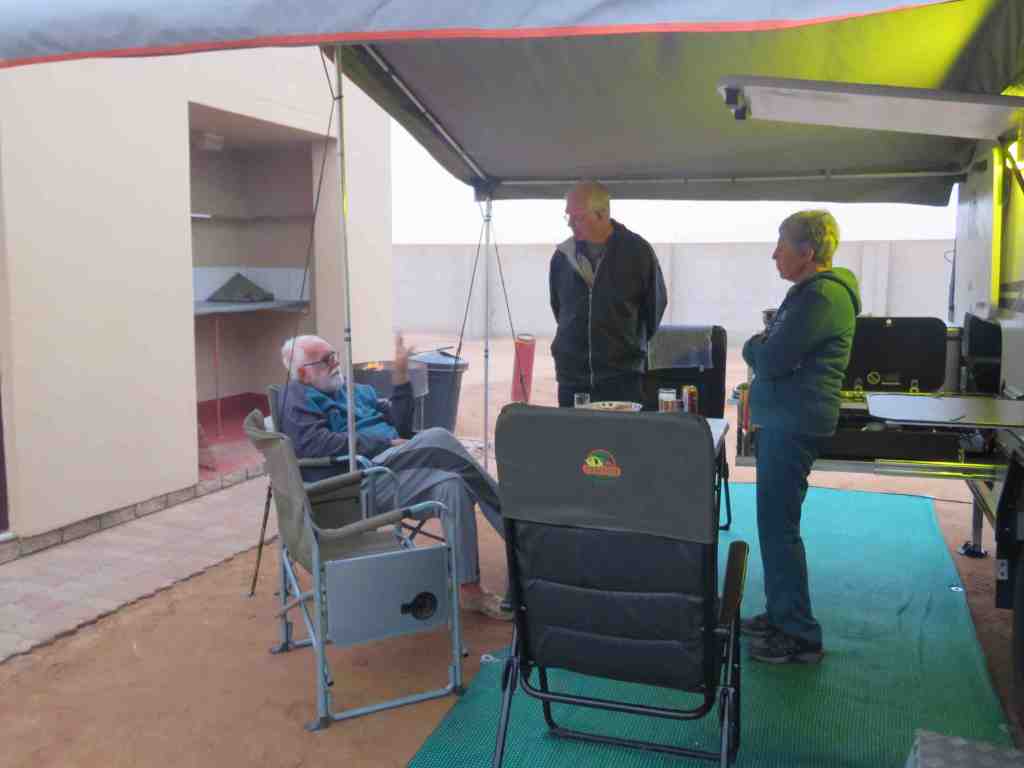
We drove into Henties Bay, with the mist still hanging low and thick. Arriving at Buck’s Camping Lodge we set up camp and the mist was still there, making everything damp and very cold. In fact, the mist did not lift for the entire stay at Henties.
Soon after we arrived, we were surprised by a visit from an old friend from our days in Oranjemund. We had telephoned her from Swakopmund and she arrived to enjoy a cup of coffee and a chat to catch up around 20 year’s news! It was great to see her and we thoroughly enjoyed her visit.
The next morning Ray and Alvan decided to explore the town, while Alec and I took a drive up the coast to Cape Cross as we wanted to visit the seal colony. After paying our entry fee, we drove along the beach and passed a sign saying camping site. What a ghastly place to camp, so exposed and you would have to be a very rugged camper to put up with that site!
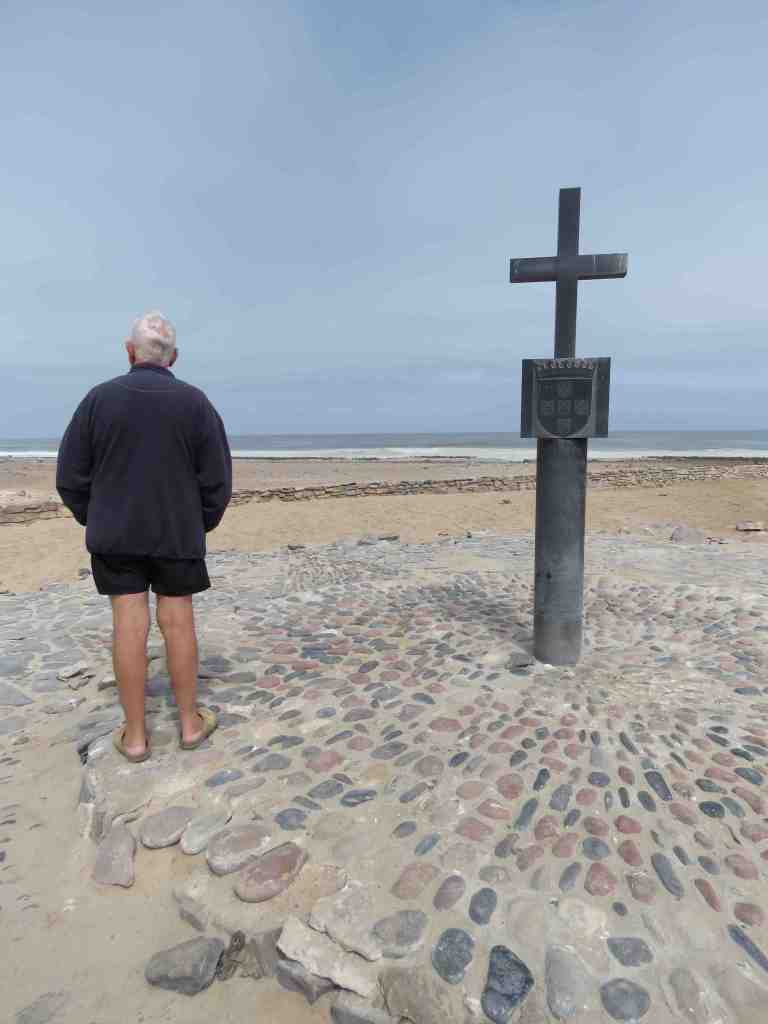
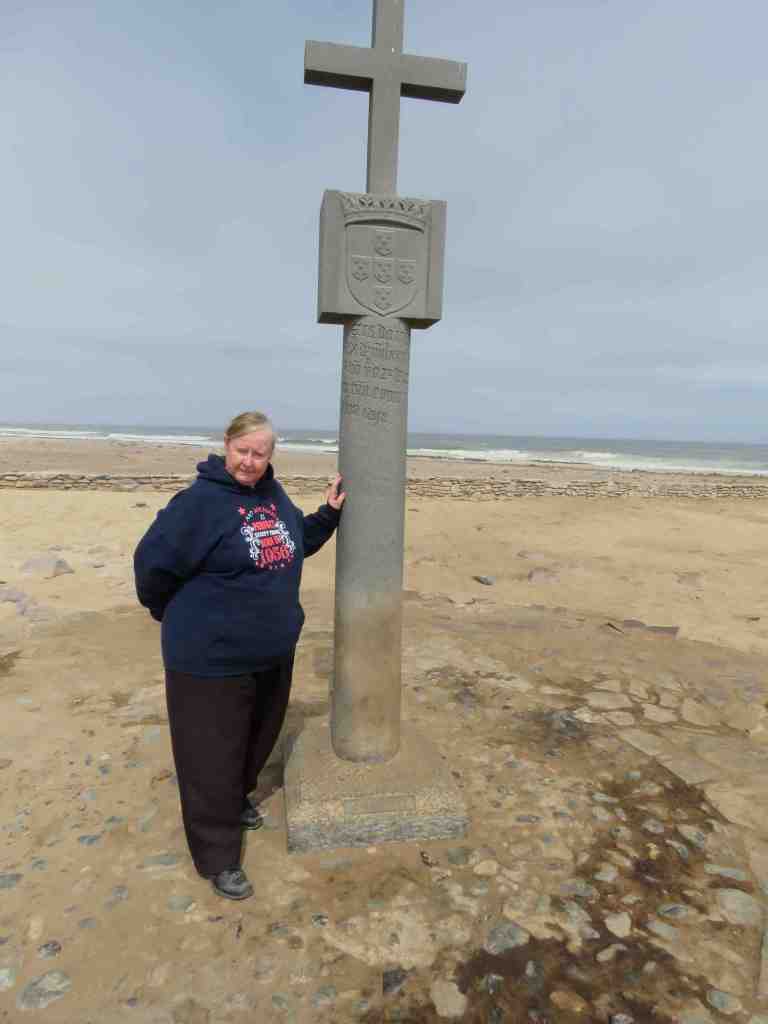
As we neared the parking area it was very apparent that the seal colony was nearby. The noise was deafening and the smell came a close second! Before going to admire the seals we visited the cross or padrão that was erected by the Portuguese navigator Diogo Cão in 1486.
In 1484, Diogo Cão, was sent to search for a sea route from Portugal to the Spice Islands and India and to explore undiscovered regions along the west coast of Africa. Each time he found a place that may be of value to Portugal, he was to erect a stone cross and claim the land for his home country.
Diogo Cão arrived at Cape Cross in January 1486 and he erected a limestone padrão, weighing around 360kg and standing around 2 meters tall.
The original cross stood at the cape for more than 400 years until, in January 1893, it was removed by Captain Becker of the German Navy and taken to Germany. The original limestone cross was replaced by a wooden cross, which was later replaced by a granite replica of the original in 1895. The German cross included the German coat of arms and the inscription in German as well as the original Latin.
In 1980, the Namibian National Monument’s Council commissioned an exact replica of the original padrão and had it erected in the exact spot where the original had stood.
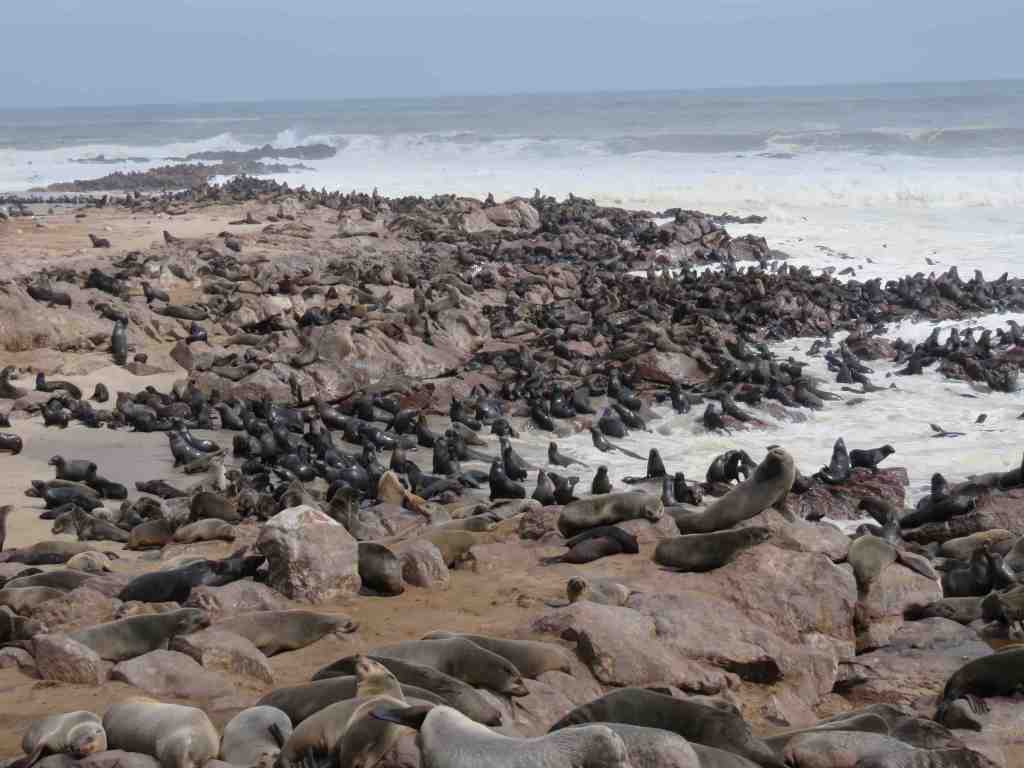
Having admired the crosses, we wandered over to get a closer look at the seals. I was astounded at how many there were, there must have been literally thousands of seals spread along the beach as far as the eye could see. This is one of the largest Cape Fur Seal colonies in the world, a claim that is very easy to believe. We walked along the boardwalk and were able to enjoy viewing many seal up close as they basked on the rocks. Looking out to sea you could see hundreds of flippers and heads as the seals hunted for fish in the breakers around the bay.
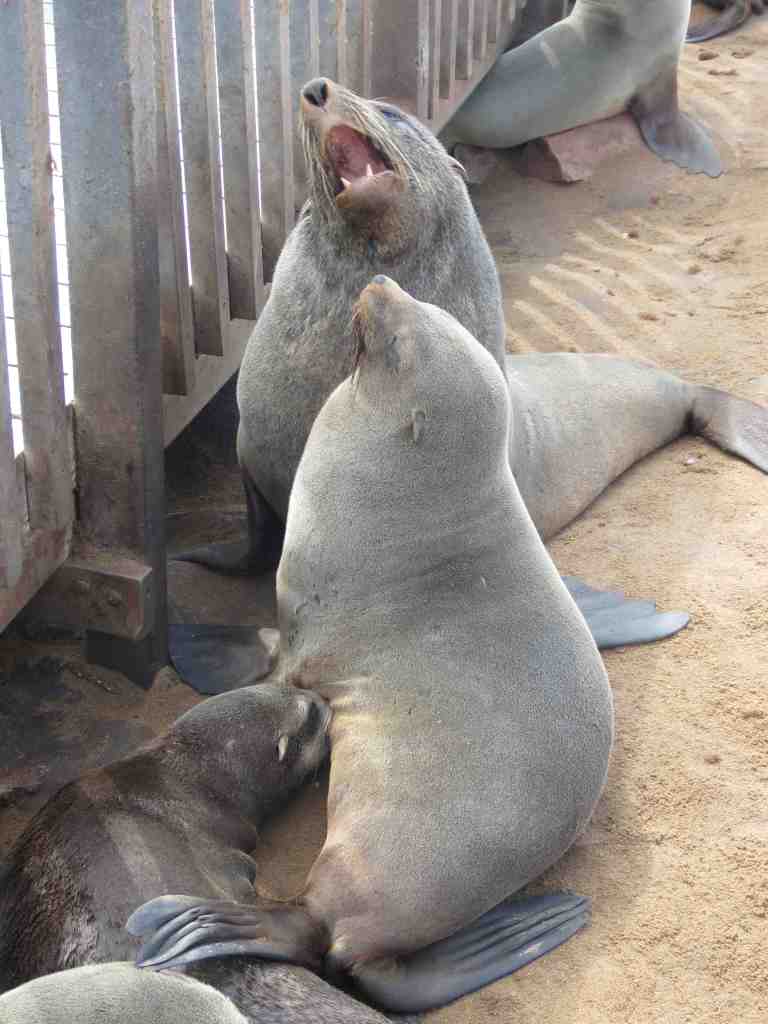
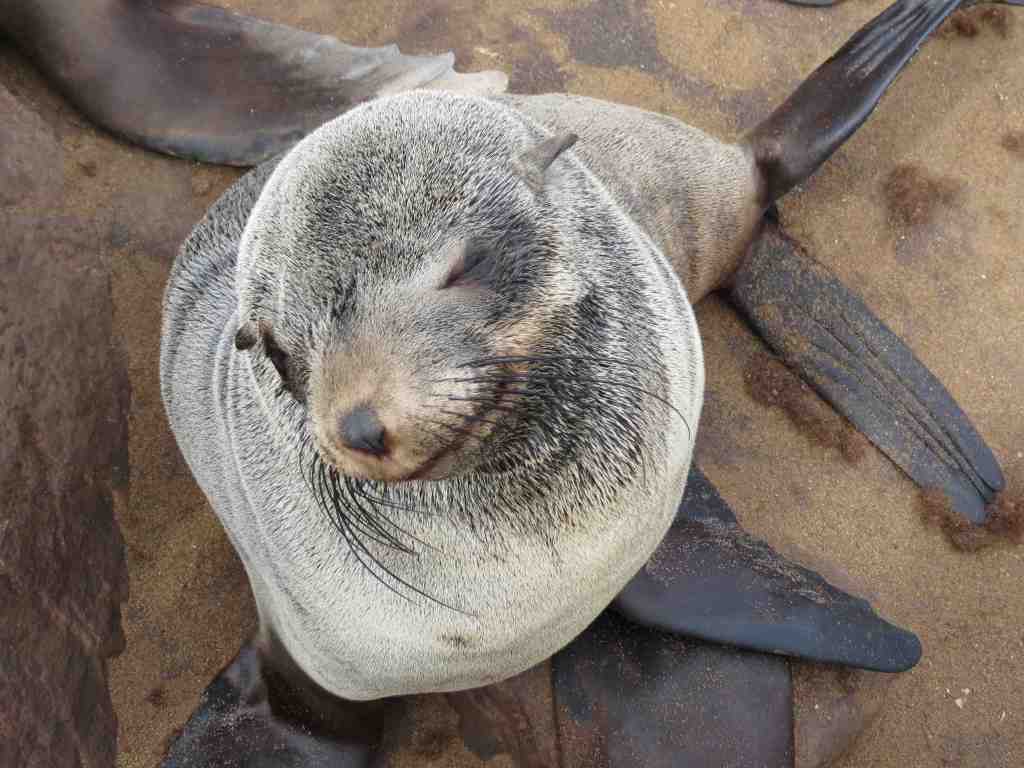
Walking along, we admired the enchanting faces and were lucky enough to come across a female nursing her pup, which must have been born very late. We were told that the majority of pups are born in late November and early December. This little chap is around five months late!
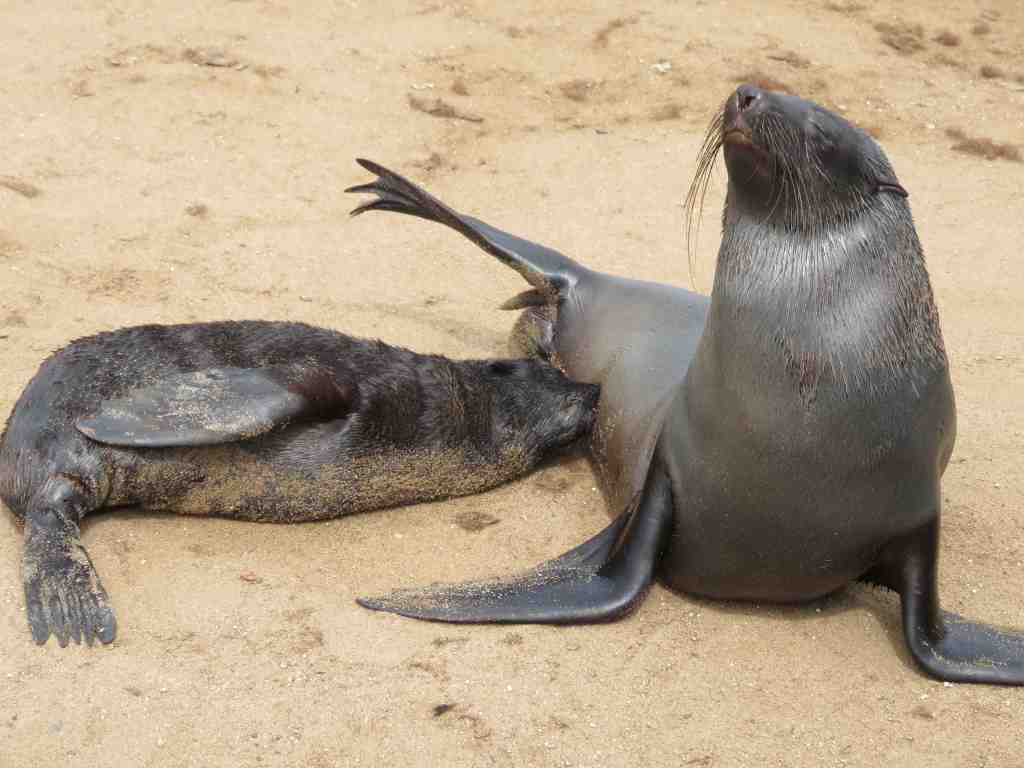
I am so relieved that animal rights groups have put a stop to the barbaric clubbing of the pups for their pelts. I much prefer seeing them with their mothers or playing in the water than on someone’s back!
This was a fascinating visit and we thoroughly enjoyed it, even with the smell and noise!
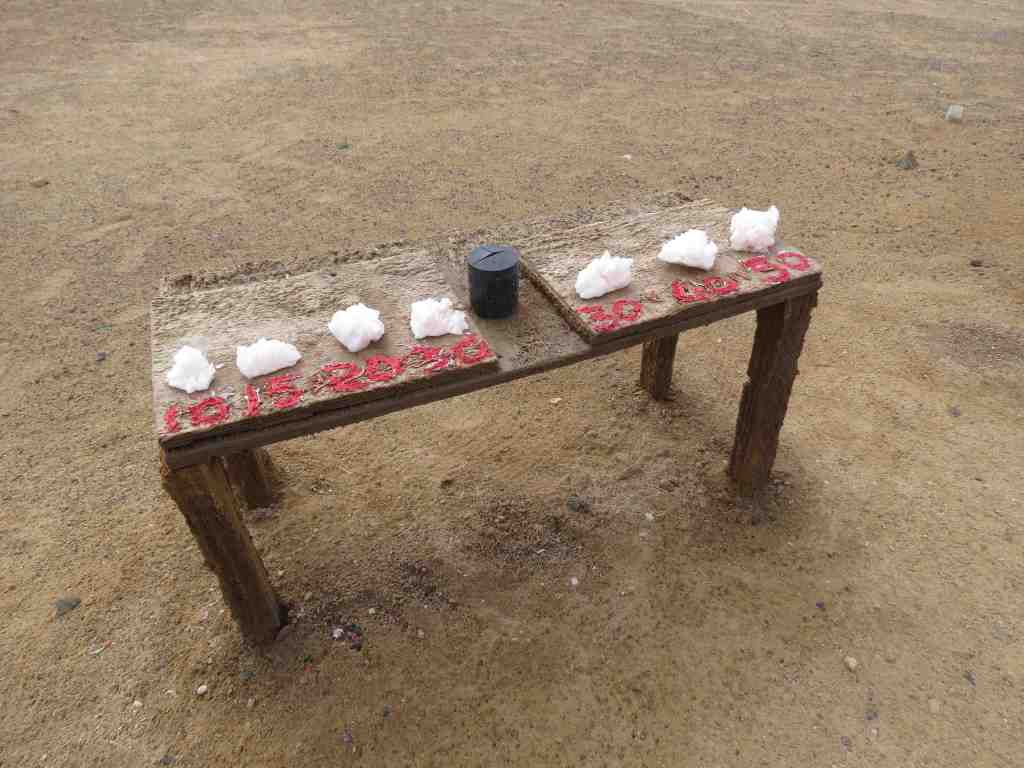
Driving back past another of the numerous salt works found along the coast, we were intrigued by dozens of these little stands dotted along the road. We stopped and found that they were honesty stands selling salt crystals. Obviously, budding entrepreneurs collected the prettiest crystals they could find from the salt pans and placed them on crude stands along the road. Each crystal was priced and there was a little box for the money. At this stand, there was money in the box (thank heavens this wasn’t SA – that stash would have been lifted in a flash!!) but I really couldn’t see the difference between a crystal in the N$10 box versus one marked N$50. You have to admire the entrepreneur that is selling crystals they had no hand in making and obviously doing reasonably well out of it.
I can’t say that we were sorry to depart from Henties. The entire time we were there it was damp and very cold. Buck’s Camping Lodge, had smallish stands, each with their own ablutions. The ablutions were clean but looked a little tired and tatty. The campsite is safe and patrolled at night.
Now we are off back into the interior, where it’ll be much hotter. I hope you enjoyed my history lesson for today, and hopefully, within the next day to two, I’ll find WIFI to send it on to you. We are off to Spitzkoppe, which will be very different to sea, beaches and seals. Take care, everyone!
 Adventuring into Retirement
We used to camp many times during the year at Henties when I was a child. My dad was a big angler. Love your posts Cathy
LikeLiked by 1 person