
Spitzkoppe and Twyfelfontein
We left Henties Bay with the mist still hanging low and a cold wind blowing. Funnily enough, it was the first time both vans were ready early but we were all looking forward to leaving the cold, damp coast behind for a little warmer weather inland.
We took the D1918 from Henties. The road was good and we barreled along listening to an audiobook. The surrounding countryside was very flat but in the distance, we noticed ‘lumps’ popping out of the earth. They were very noticeable against the flat plains.
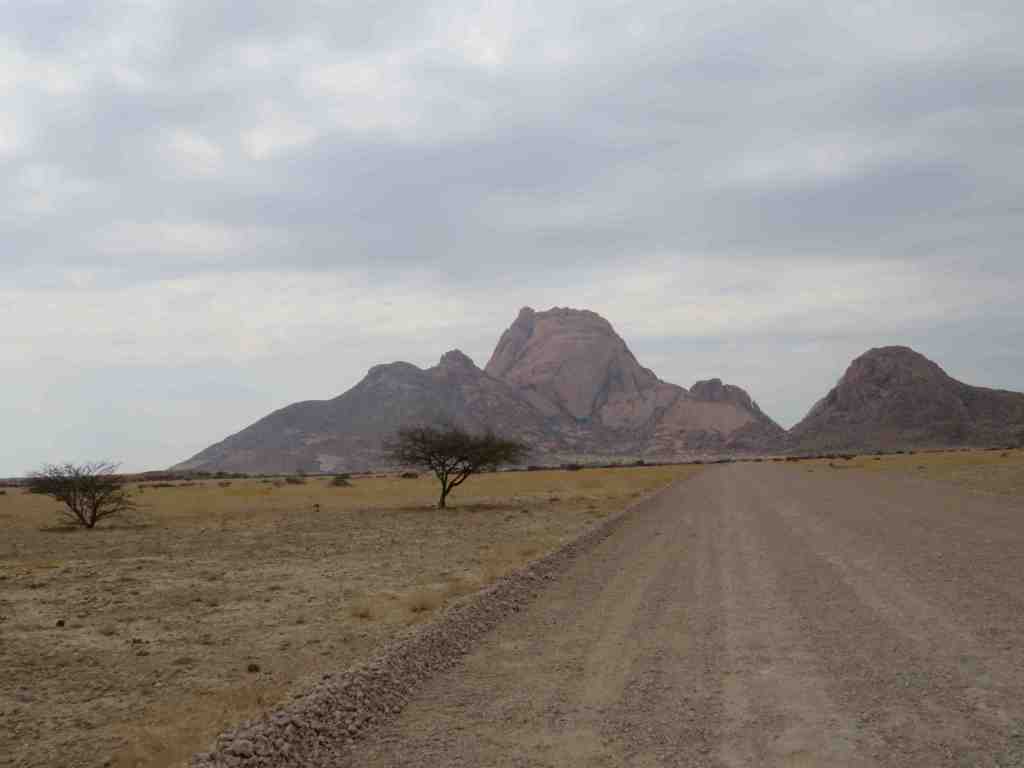
As we got closer they took on form and we could see the most enormous granite boulders. These granite hills stood out in stark contrast to all the surrounding country. We turned early off the D1918 and should have continued to the D3716 which would have brought us to the Reception Office at Spitzkoppe. Instead, we entered through the western gate and drove through the park to the reception at the other end. This gave us a great introduction to the magnificence of the rock formations at Spitzkoppe.
Arriving at Reception we paid our fees and were told to choose any campsite not already occupied. I admit that comment made me smile – did the receptionist think that we were going to challenge someone already camping and demand their spot?
Faithfully obeying her instructions we trundled off to find an unoccupied site which we did close to the Rock Pools. We settled into Campsite #2 with Ray and Alvan next door in #3. We both had a magnificent backdrop of a gigantic granite boulder and a stunning view of the Spitzkoppe in front.


Spitzkoppe is an “almost-wild” camp. They provide no showers or water at the campsites, but these are available at the Reception. They do provide a long-drop toilet for each site. Neither Alvan nor I was keen on this contraption – I imagined any number of things lurking at the bottom of that dark hole! Alec looked sideways at me and just shook his head!
We spent the rest of the late afternoon setting up camp – surprisingly enough the ground was not rock hard and the pegs went in quite easily. Alvan made delicious chicken lasagna for supper and we enjoyed the cool evening, a cold drink and the magnificence of the stars. With no light pollution, the stars were truly stunning – little twinkles in a dense, velvet darkness.
The fact that there was no shower gave us a chance to test Alec’s al fresco shower. He had fitted taps under the kitchen basins and a quick-pitch tent to the side of the car’s canopy. That was one of the best showers I’ve ever had. It was bliss standing under the stars with just a lamp for lighting, enjoying a warm shower after a hot day.

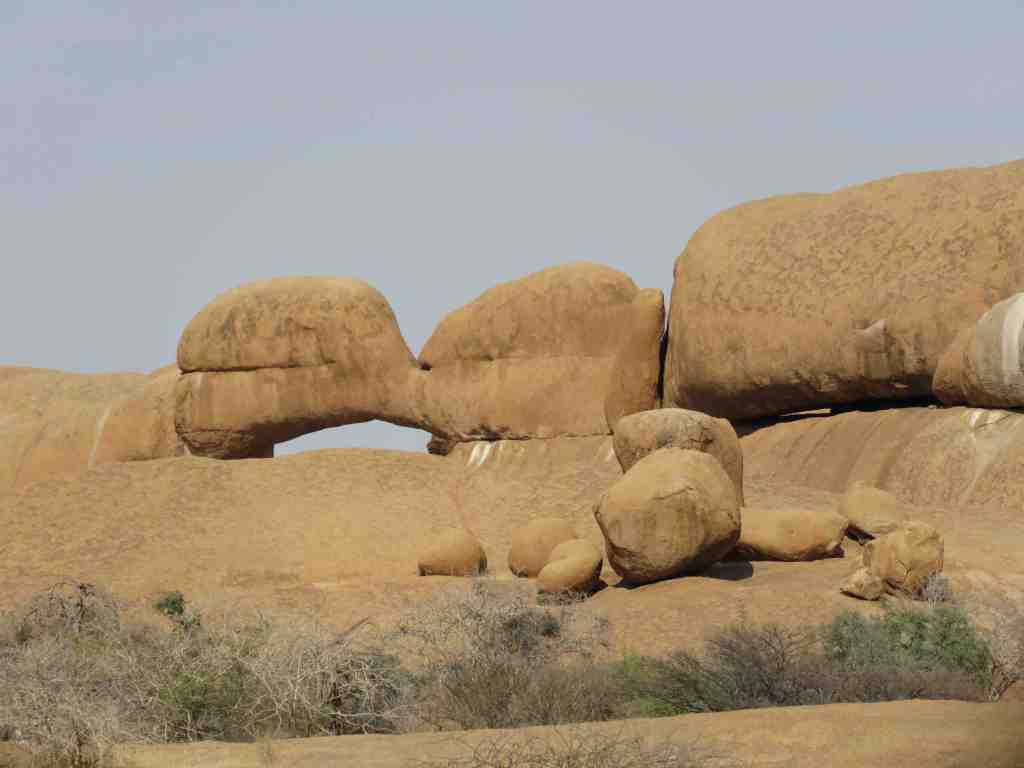
The next morning we set off to discover Spitzkoppe and it is really difficult to convey the grandeur of this place. The granite formations are truly stunning but so large that trying to capture them on film was almost beyond the capability of my little camera.


On our map (issued by Reception), we noticed two spots marked for Rock Art. We decided to pop in at the Restaurant and have a cold drink before visiting the Bushmen’s paintings. The restaurant had a distinctly bohemian flair with almost everything made from recycled materials. The benches were pallets with foam cushions and the décor a collection of old artifacts, found, I should imagine, in the area.


We arrived at the first location for rock art, and found Alvan sitting in their car. As we arrived she climbed out and said that she was waiting for Ray, as he had gone to view the art but she was not prepared to attempt the climb. We looked puzzled until she showed us where you had to go to view this site. I swear my heart stopped! There was a 45º sheer granite rock face with iron rods drilled into the surface. The rods were linked by chains. You had to climb this rock face using the chains to drag yourself up, and then clamber a bit further once at the top.
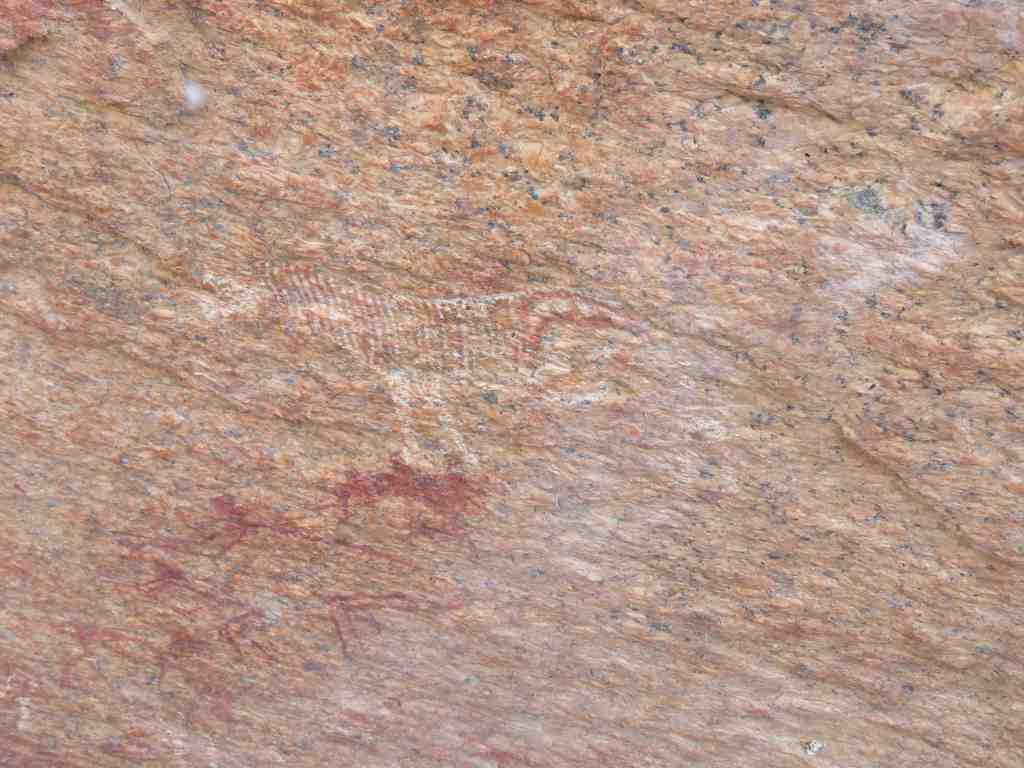
We conceded defeat and agreed with Alvan, that climbing up there was madness! We went on to the alternative site where we were met by a lovely young lady named Ingrid, who took us to a rock face covered with paintings. She explained what they meant and how they came to be painted.
The paintings have been dated between 2,000 and 4,000 years old and were painted by the Khoi San people. The rhino, elephant, lion and giraffe were never hunted as their arrows were of no use against the skin of these animals. But they were used to indicate the way to water and in other ways.
The brown paint was made with animal blood and finely ground red ochre while the white was made with finely ground ostrich eggshell mixed with euphorbia juice. We stood and marveled that these paintings have lasted for such a long time. How is it that ancient man managed to paint animals onto rock faces and they’ve survived for thousands of years, but our modern paints don’t last on our houses for more than 5?


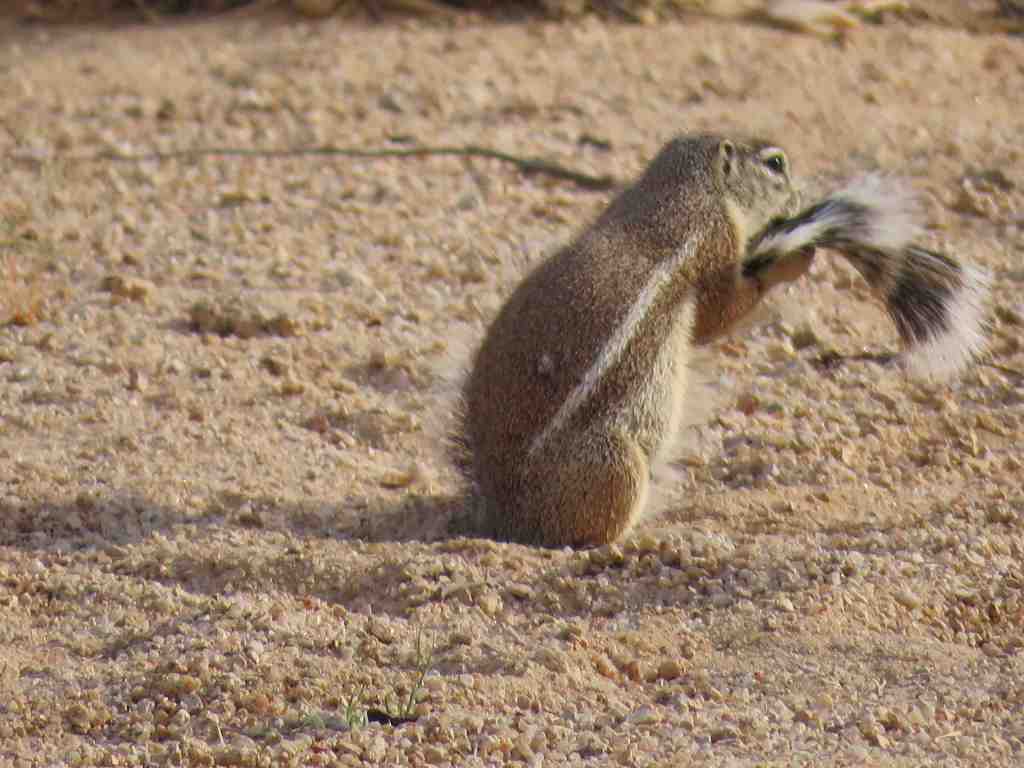
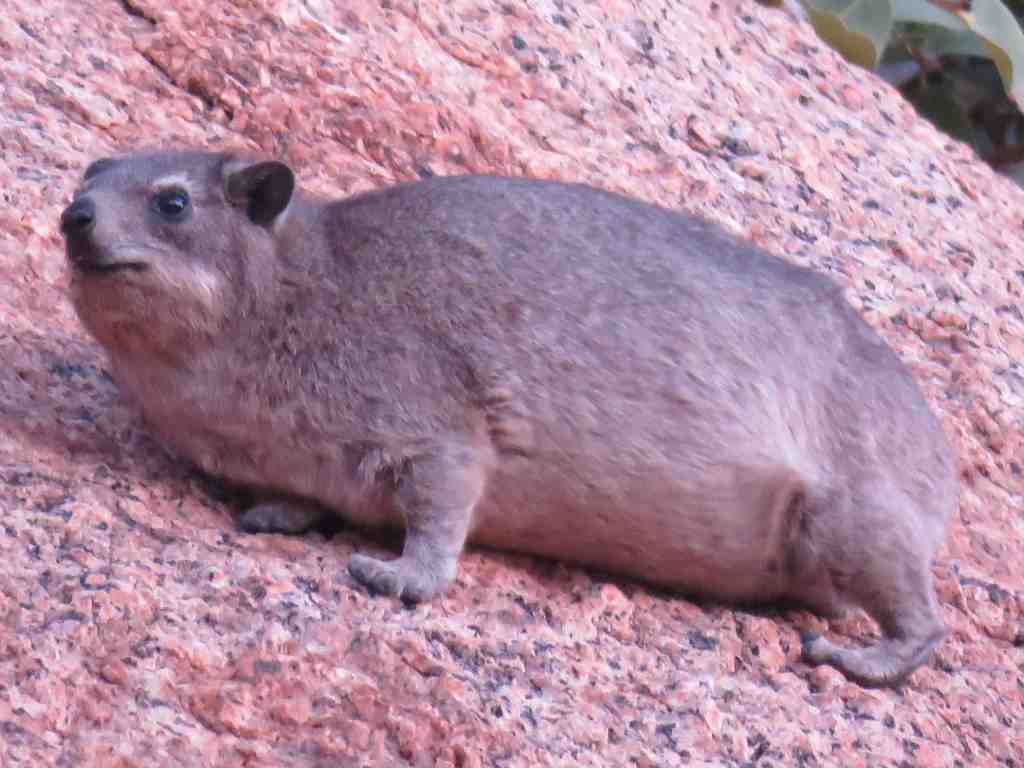
It was now rather late in the afternoon so we returned to pack up camp as we needed to make an early start the next morning. While enjoying a drink, we once again, enjoyed the antics of the wildlife around the camp. There were some gorgeous birds, very fat dassies, playful ground squirrels, and the most gorgeous agama lizards.



Editor’s Note – These two photos are of the same bird. I don’t think it’s a Crombec – it might be a Yellow-bellied Eremomela.

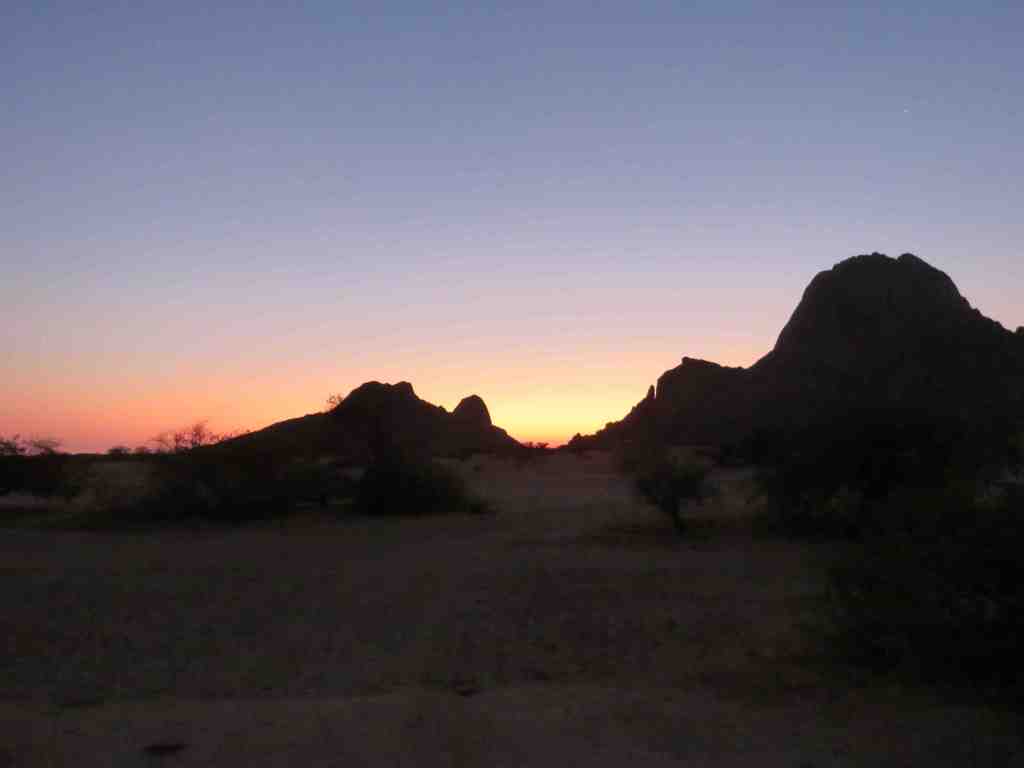
Spitzkoppe should be a bucket list destination for everyone. The stunning scenery and fantastic rock formations must be seen. These dramatic granite hills will long remain in my memory.
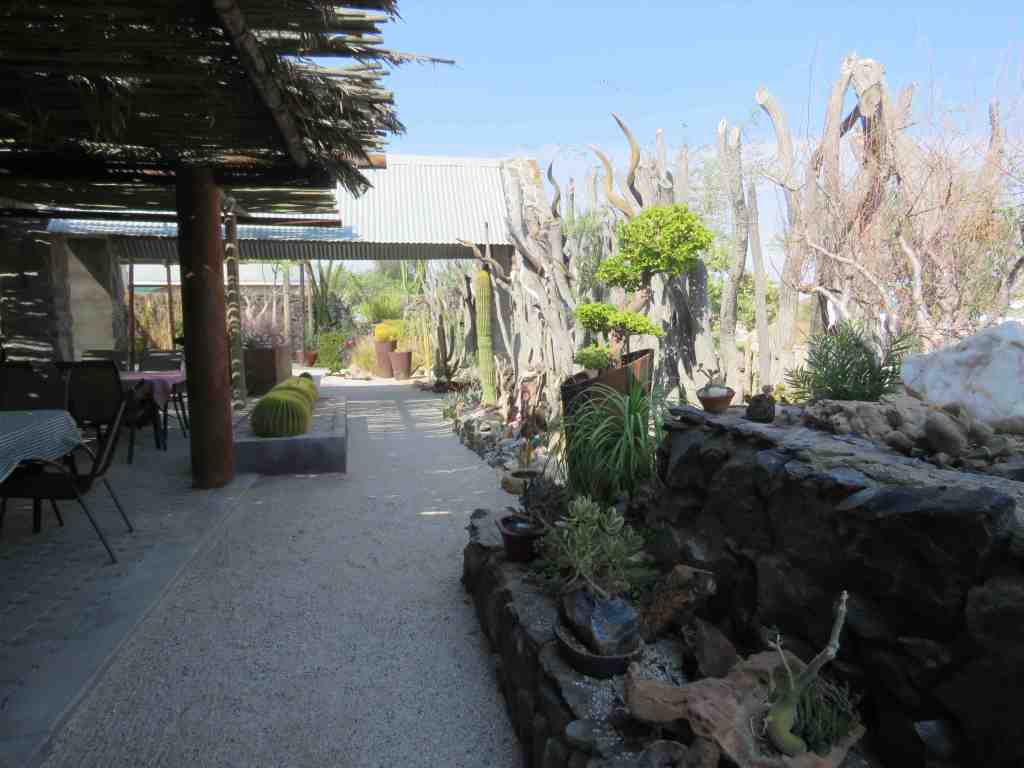
The next morning we were off early on our way to Twyfelfontein. What a day’s travel this was going to be. The D3716 to Uis was not bad and we continued our audiobook. We stopped in Uis for fuel and found the most gorgeous coffee shop called Cactus and Coffee. Ray and Alvan stuck to their tradition and had coffee and cake while Alec and I had tea and shared a piece of the most decadent cheesecake. This coffee shop is thoroughly recommended.

We left Coffee & Cactus suitably refreshed without realizing what we were about to face. We tackled probably the worst road that we have ever driven on. In fact, it is an insult to other roads to call this a road! If anyone says for you to drive on the D2612, run in the other direction. This was a rutted, bumpy, rocky mess of a road that is so bad that previous motorists have created a bypass road alongside the main road. Never have we been on such a hugely rutted track, with the complete road covered with corrugations at least 3-4” deep. This was beyond testing bra straps and the strength of fillings. Eventually, my eyeballs felt like they were vibrating in their sockets! Most of the time we were down to 25km/hr and driving on the by-pass road, which came with its fair share of washouts and rocks.

The bad thing about the bypass was that when it gets rutted, everyone seems to move into the grass next to it and another bypass is created. Soon the road stretched 20 or so meters across the veld. We were told that the road was in such bad condition because heavy rains had damaged the surface. I can accept that rain had damaged the surface but I don’t think that road had seen a grader for many, many months.
All along the road there were little stalls, most of which had an elephant as a decorative item. These elephants were crafted from a wide array of materials. This one used elephant bones, others used sticks and mud and still others used cloth. The stalls were selling craft items and many had gemstones for sale. I am no geologist but they looked suspiciously like lumps of quartz to me! At the fuel station at Uis, there was a large sign saying not to buy gemstones as this trade was illegal, so perhaps they were semi-precious stones.

It was an exhausted group that finally arrived at Camp Xaragu near Twyfelfontein. This camp was more than a little disappointing. The shelters for the caravans were very nice, but the ablutions were a bit of a disaster! We used the loo in one, as it worked but the shower didn’t, so we showered next door because that worked (well sort of!) Ray and Alvan had a similar experience with flooded loos and showers that sort of worked – the donkeys for hot water didn’t do a very good job!

The next morning we set off for Twyfelfontein which was about 12 kilometers away. Again the road surface was abysmal and, once more, a bypass road had been created. Really, Twyfelfontein is a World Heritage Site and the Namibian Government should be ashamed of the road access to the site. It is unconscionable that such a magnificent place is impossible to get to without a high-clearance bakkie.
We eventually arrived at the site and parked under shelter, which was very nice as it was already getting hot. We paid our entry fee and were allocated a lovely lady named Mona-Lisa, as a guide to show us the site. A word of warning, the first site is about half a kilometer from the entrance and the path is sandy in places and rocky in others, so good shoes, a hat and water are essential.
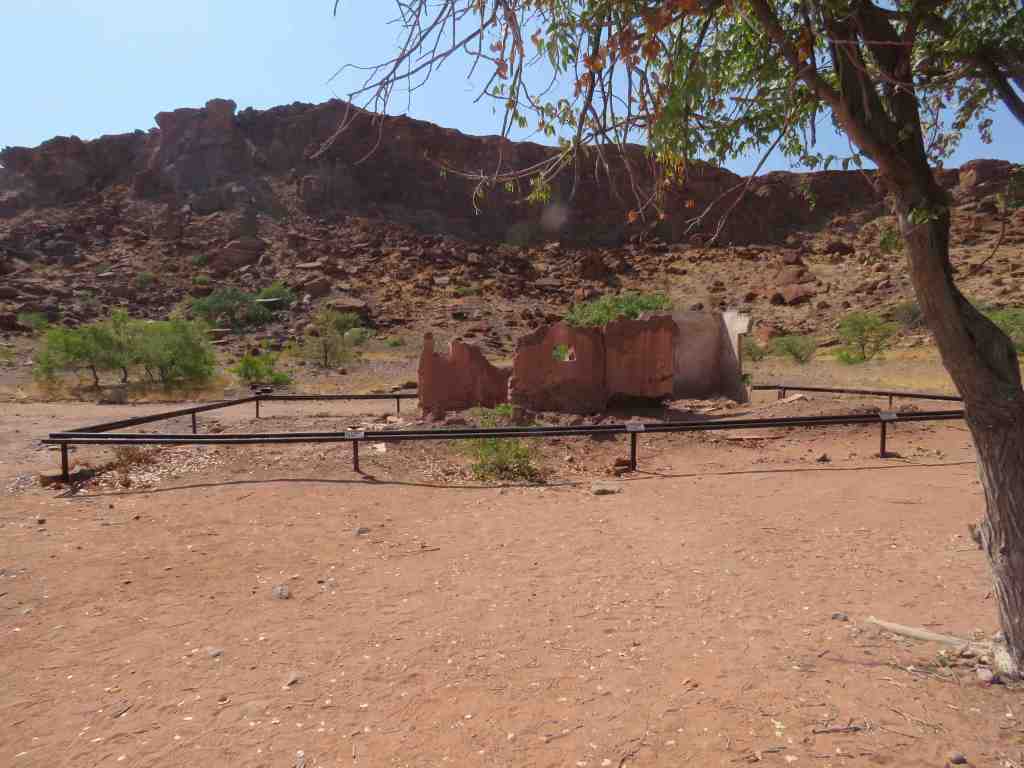
They offer a long walk that takes around 45 mins or a shorter one of 30 mins, which is what Alec and I opted for. Mona-Lisa led us along the path until we came to this broken-down farmhouse. This is the farmhouse where the original farmer, Mr Levine, lived until drought and a lack of water drove him out. The original spring which provided water is still there but the water flow is so reduced that it is now just a watering hole for the local baboon troop.
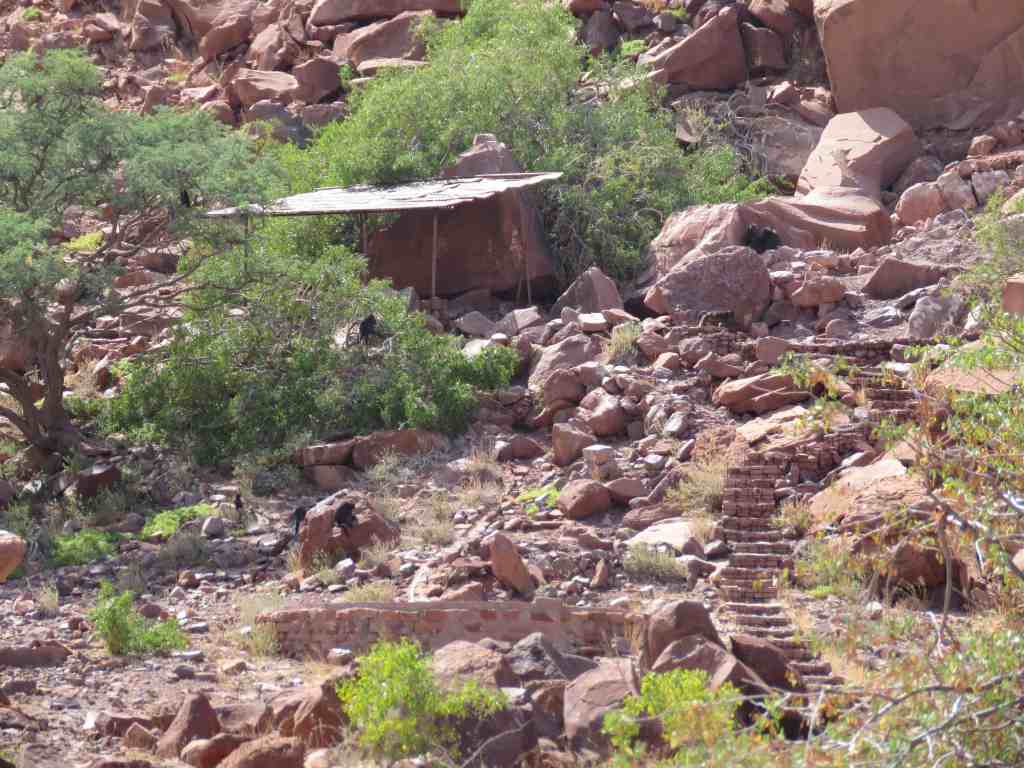
We continued our walk and came to the first set of engravings. At Twyfelfontein, there are no painted images; all of the images have been chipped out of the sandstone by the Khoi San, using a piece of quartz. Again these images have been dated to 4,000 to 2,000 years old.
The images are very clear and Mona-Lisa’s commentary was exceptional. She chatted about these people as though they lived today and she had a wealth of information about them and what the engravings represented. She was an excellent ambassador for the site.
As it was now nearing midday and the temperature had risen significantly, we decided to call it quits and walked back to the reception area for a long, cold drink.
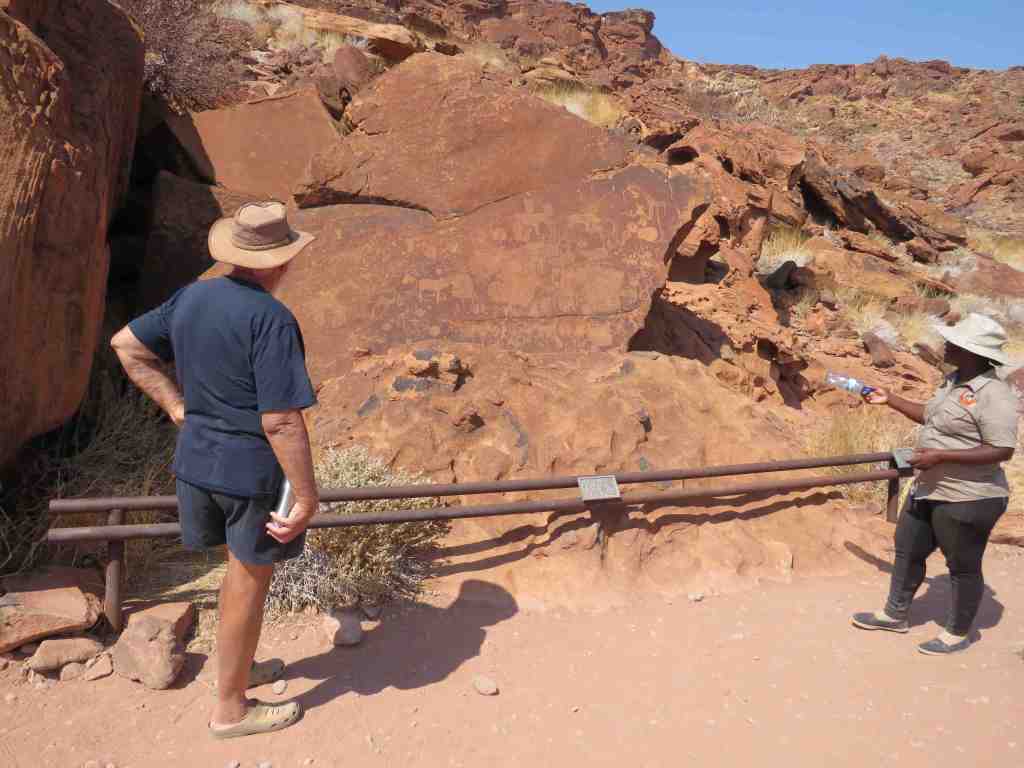

At the reception, there were lots of these great information boards that help you understand all that you have seen.


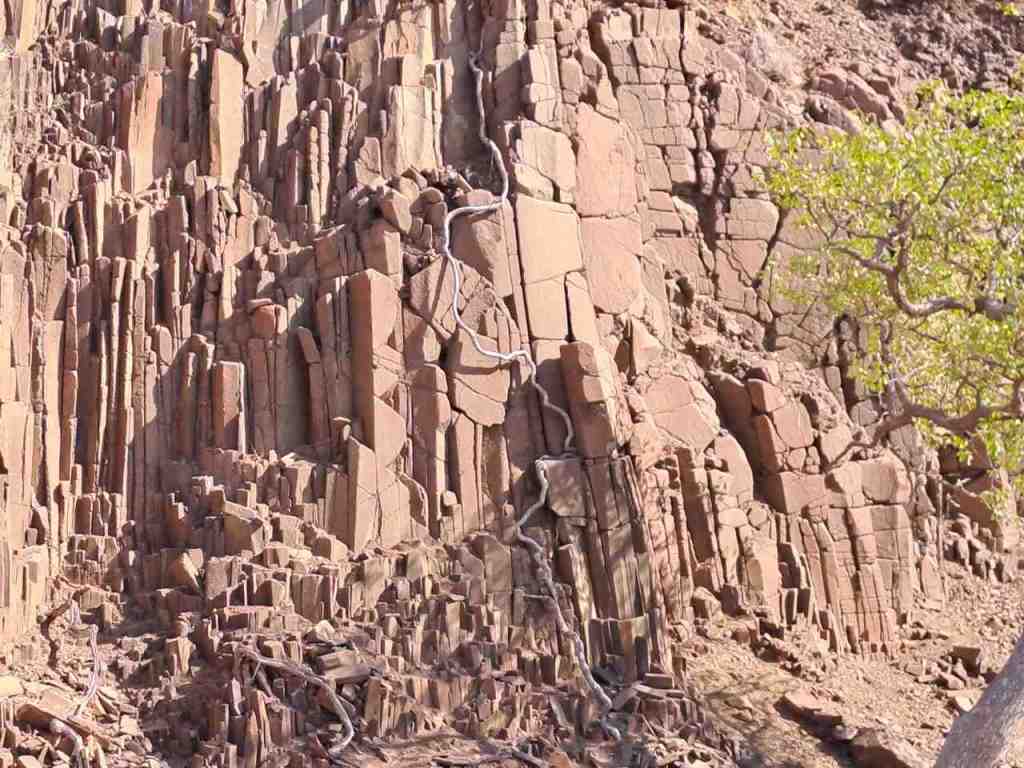
While we enjoyed our walk at Twyfelfontein Ray and Alvan visited two interesting geological sites close by; The Organ Pipes and Burnt Mountain.
The photographs of the Organ Pipes and Burnt Mountain were all taken by Alvan Mandy.
The Organ Pipes are a geological feature that are around 150 million years old. They were formed by lava being forced into slate rock formations. Over millions of years, erosion has exposed the basalts which are arranged in columns looking like organ pipes.
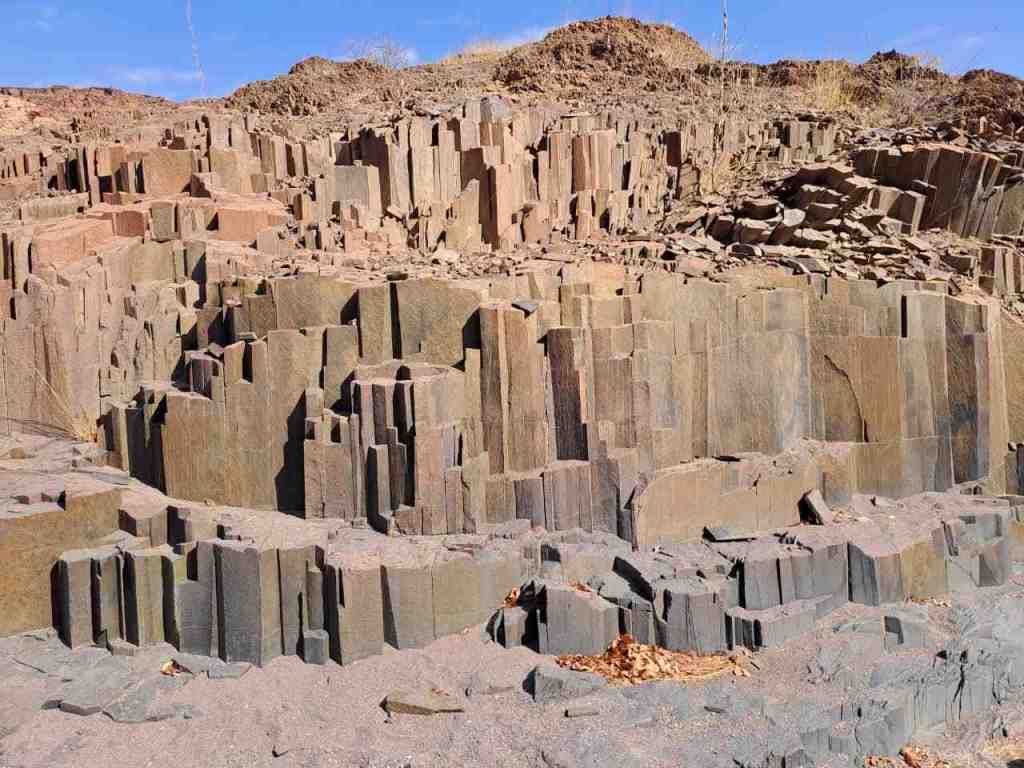

Ray and Alvan then went on to Burnt Mountain, another geological feature in the area. The mountain itself comprises Karoo slate which is a beige colour. Slashed through this is a layer of solidified lava. The lava is around 80 million years old and makes a striking contrast with its brown and purple colouring.

We were very impressed with Twyfelfontein but felt irritated that such a magnificent place was at the end of such a horrid road. Our camp was also something of a letdown. Never mind, all these things add spice to our adventure around Namibia and next, we are off to Etosha. We’re all looking forward to a visit to a game park. Take care, everyone.


I cannot remember what our site nr was but we had a wash basin in the open and camped near the famous bridge. We want to go back again.
LikeLiked by 1 person