
The JusJoJan prompt for today comes from Joanne Thank you Diane for this word as it is one very close to my heart,
When I was growing up and in primary school, handwriting was considered a very important skill and our teachers insisted upon correct pencil grip, correct letter formation, and above all neatness. This was in the days before children with difficulties were sent for occupational therapy, remedial tuition, and psychological counselling. While I was learning my letters, I now realise, I needed all three!
First, we learned to print in the ball and stick fashion. In Standard One/Grade Three we started on cursive. By then I had mastered the difficult skill of printing and was really keen to get to cursive which I found a tad easier to learn. According to my very strict but excellent teacher, my handwriting was very neat. But it was also very slow! I spent so much time concentrating on neatness that speed fell by the wayside. Once I reached the higher grades speed became important so guess what -neatness fell by the wayside simply so that I could keep up!
From then on my teachers despaired of ever getting me to write neatly and accurately. I could spell but I made ‘careless’ mistakes – and still do! I had to make a choice, write neatly and win the teacher’s praise for pristine penmanship or get the work done in the required time and avoid being scolded for tardiness. Time won! These days children with learning issues are given extra time to complete – I had no such privilege. How I envied those children who managed to complete tasks with awesome handwriting and no errors.
I liked writing – not handwriting but writing and I still do. When it came to writing compositions I just needed so much more time so usually did not write quite as much as I would have liked to.
When I was teaching in the seventies and eighties, handwriting was still an important subject in the curriculum. Now that I was the teacher I was a little more sympathetic toward those who struggled with this skill. My training had prepared me how to help those with fine motor coordination problems and I never penalised a child for untidy work. Some of my colleagues were still strict about neatness but having had problems myself as a child I was more interested in what the child wrote rather than how he wrote it.
However, I was strict about pencil grip and correct letter formation. In other words, I encouraged my learners to start the letter correctly, to start next to the margin, and to try to keep between the lines. The reason for this is that the physical act of writing is good for the brain.
Learning to physically write is still important because writing uses more complex motor and cognitive skills than is required to use a keyboard. Knowing how to write also helps with reading fluency as writing activates the visual perception of letters. There are many other benefits to having good handwriting but I won’t bore my readers with those now.
I learned to type when I was in Standard 7/Grade 9 and it changed my life! It is the best thing I ever learned at school, besides reading, because although I did not need to type during my early career it was a skill I could use on a computer which from the nineties on became a huge part of both school admin and creating teaching aids. I welcomed the digital age with open arms as it made everything a thousand times better for me. Doing admin for school records was a nightmare – no mistakes were allowed at all – one mistake and you had to begin again! It took me five times longer than my more accurate colleagues. I was one of the first on my staff to welcome a computerised system while many of the older teachers were resistant to the changes!
Yes – I love technology and it is a great tool for those who struggle to physically write. Screens are being used as a learning tool in school. I used them myself and found them a tremendous aid as they capture the attention of children and enable you to do so much more in the classroom. But handwriting is still important and we must still teach children to read and write.
The pencil will one day become obsolete as did stone tablets and quill pens. But it’s not time to throw the baby out with the bath water yet!
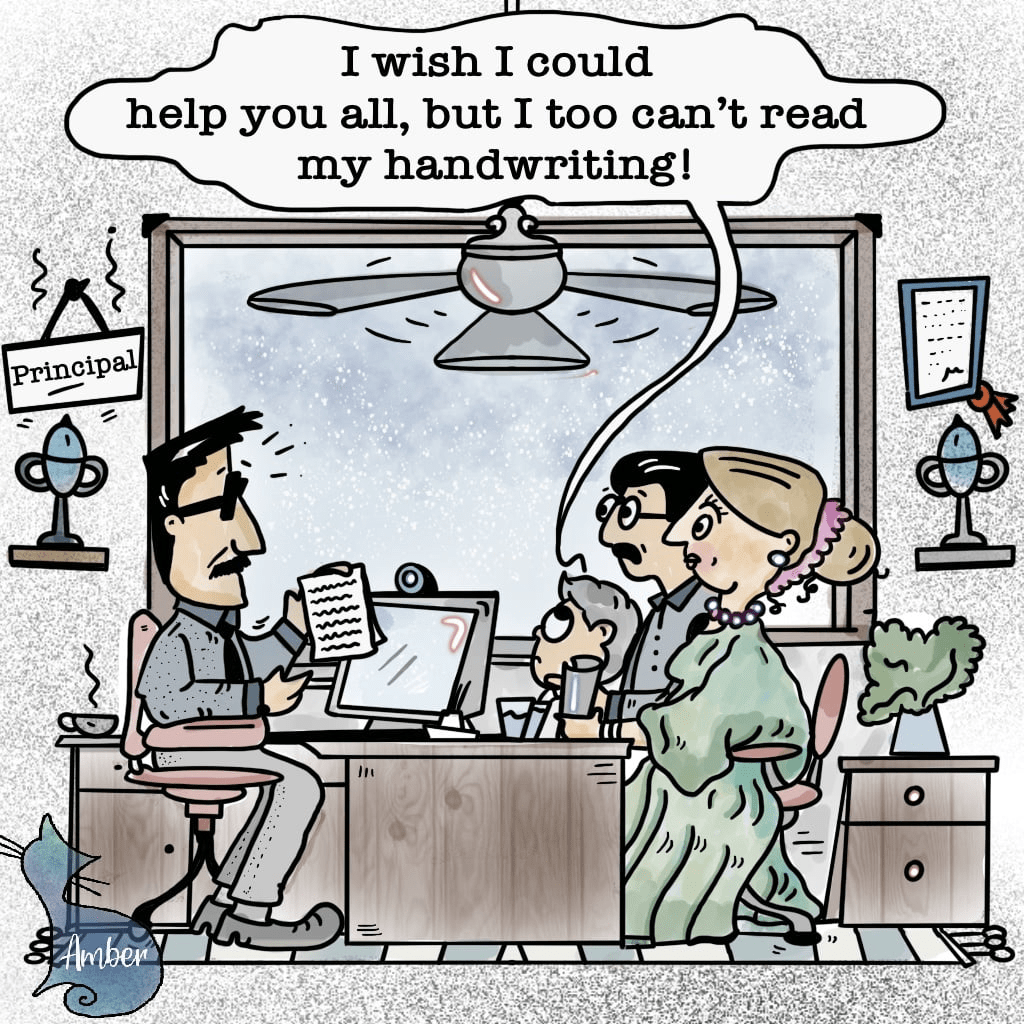


I well remember the days when school reports were hand-written: what a nightmare! Now I proofread and edit reports for a school in Limpopo – it’s a real breeze!
LikeLiked by 1 person
I love modern technology😀
LikeLike
I grew up legally blind (now totally blind), but still I’m very glad I learned to handwrite as a young child, because it helped me form a concept of print letters more easily than would just reading large print have. Now I must say I never learned to handwrite beyond an early first grade level (ie. still get some letters wrong) and my pencil grip is horrible. I do think the skill is important as long as it’s still useful. Like you say, don’t throw the baby out with the bath water.
LikeLiked by 1 person
Just about everything can be done on the computer these days which makes life easier for many but old fashioned skills are so satisfying.
LikeLiked by 1 person
This sounds so familiar Helen. Neatness and all that were necessary using pen and ink in the early years 😁
LikeLiked by 1 person
Yep – standards have dropped 😆
LikeLiked by 1 person
Even mine. I used to have beautiful hand writing but since the keyboard age, I could become a doctor 😂😂
LikeLike
Yes, I’m afraid that is exactly what happens! My hubby had lovely handwriting and now complains that he can no longer write! Mine was always awful and nothing’s changed!
LikeLiked by 1 person
The Earl sounds like me 😂
LikeLiked by 1 person
I really enjoyed reading your experiences with handwriting, and also I enjoyed your experiences of teaching children how to write. I agree, technology does make things nowadays much faster and quicker to do!
LikeLiked by 1 person